
WHAT KIND OF FENCE POST SHOULD YOU USE IN AUSTIN, TX?
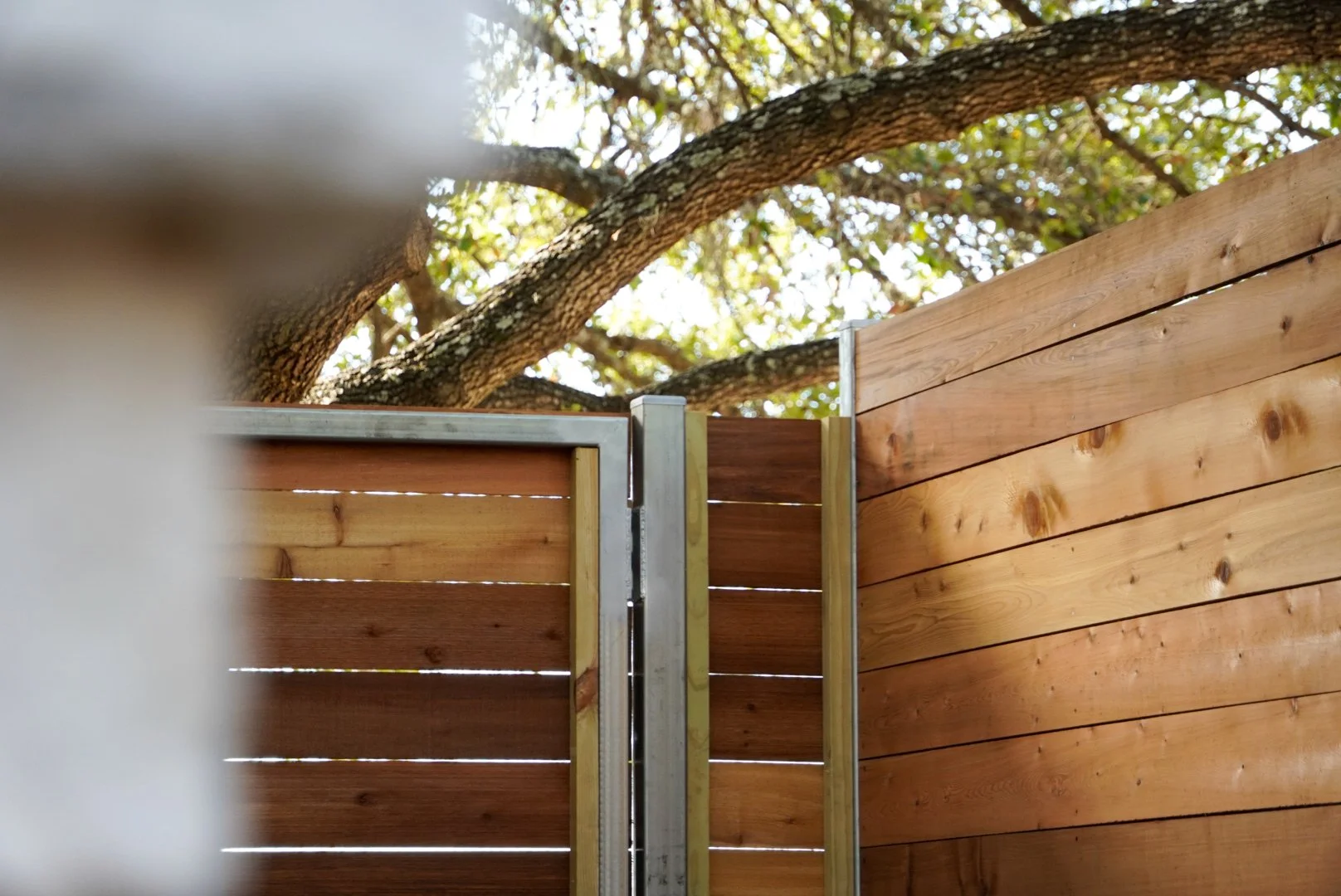
If you’re planning a fence project in Austin, most people focus on the pickets, the style, or the layout.
But the part that actually determines how long your fence lasts? The posts.
And not all fence posts perform the same—especially in Central Texas, where heat, soil movement, and moisture swings put materials to the test.
Here’s a straightforward breakdown of the most common fence post options, and what actually holds up in Austin.
TREATED PINE FENCE POSTS (BUDGET-FRIENDLY)
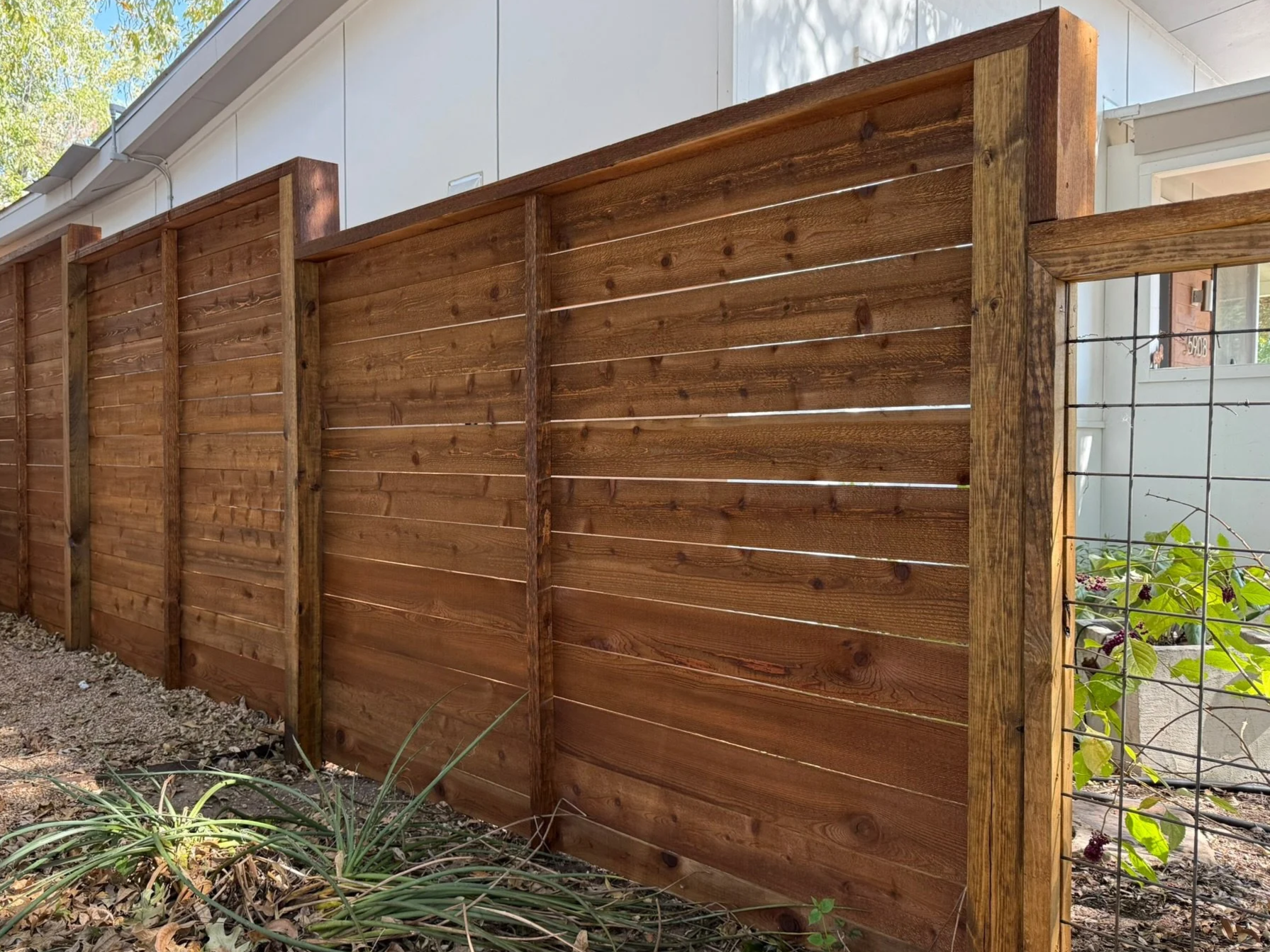
If cost is the main priority, treated pine is the most affordable route.
It gives you that natural wood look, which some people prefer, and is treated to resist pests and decay. But in Austin’s heat, it’s common to see these posts twist or warp over time. Typically, the amount of warping is small and not very noticeable, but sometimes it’s substantial. Because we can’t control against that warping, most contractors do not warranty these posts.
There are some style choices can help, though, like the 2×6 cedar cap in the fence above. That cap helps unify the treated posts and minimizes warping.
Modern treated pine posts last about 20-25 years.
CEDAR FENCE POSTS (HIGH-END WOOD LOOK)
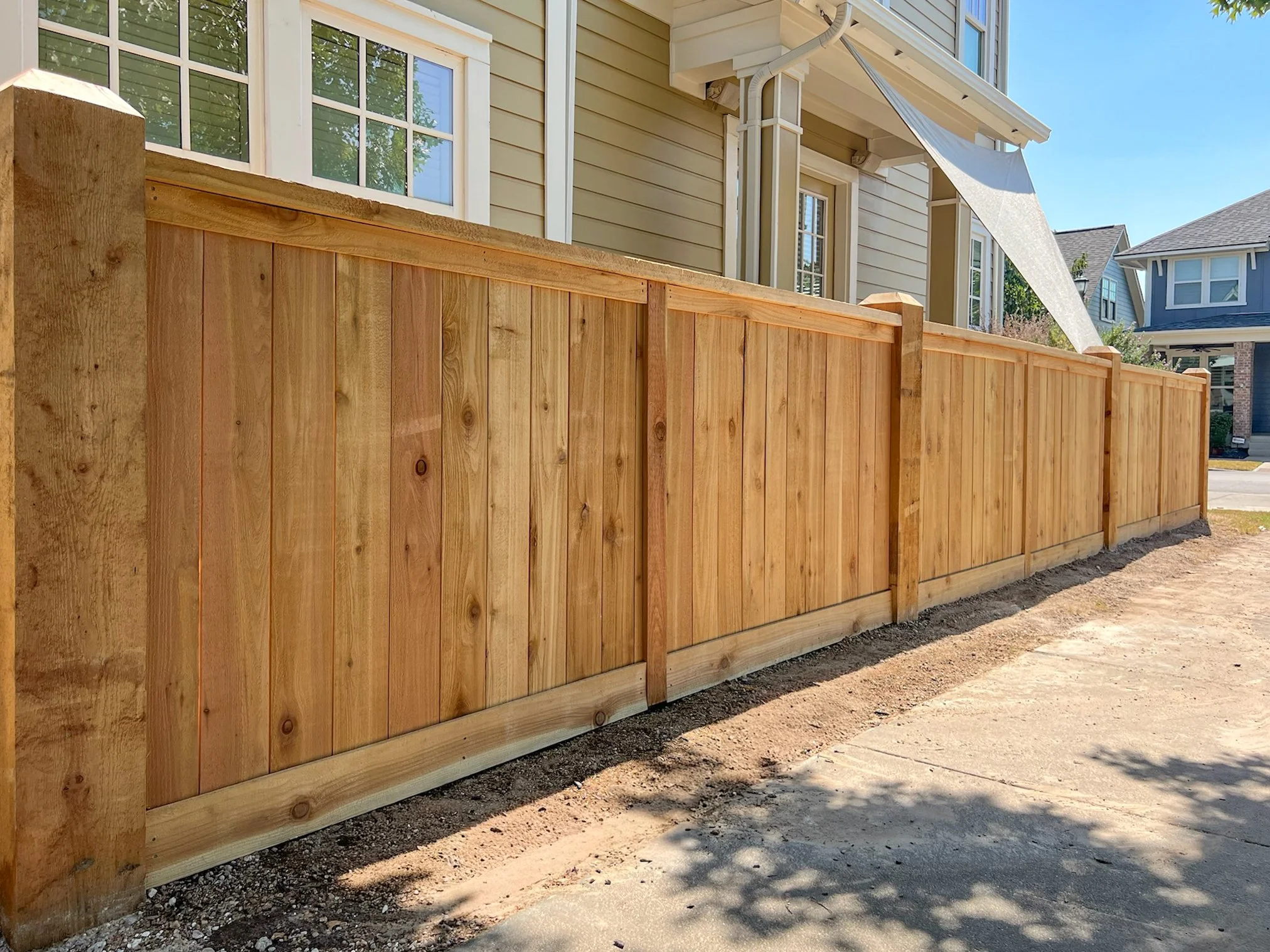
Cedar posts look great—there’s no way around that.
They’re a step up visually and are less prone to warping compared to pine. But when they’re buried directly in the ground, they tend to rot faster than most people expect.
Like treated pine, they usually aren’t backed by manufacturer or craftsmanship warranties, which makes them a bit of a gamble long-term.
In most areas of Austin, these posts will last about 10 to 15 years before some will start to fail. When that happens, they can be fortified with steel to buy some more time.
BLACK POWDER-COATED STEEL POSTS (BEST ALL-AROUND OPTION)
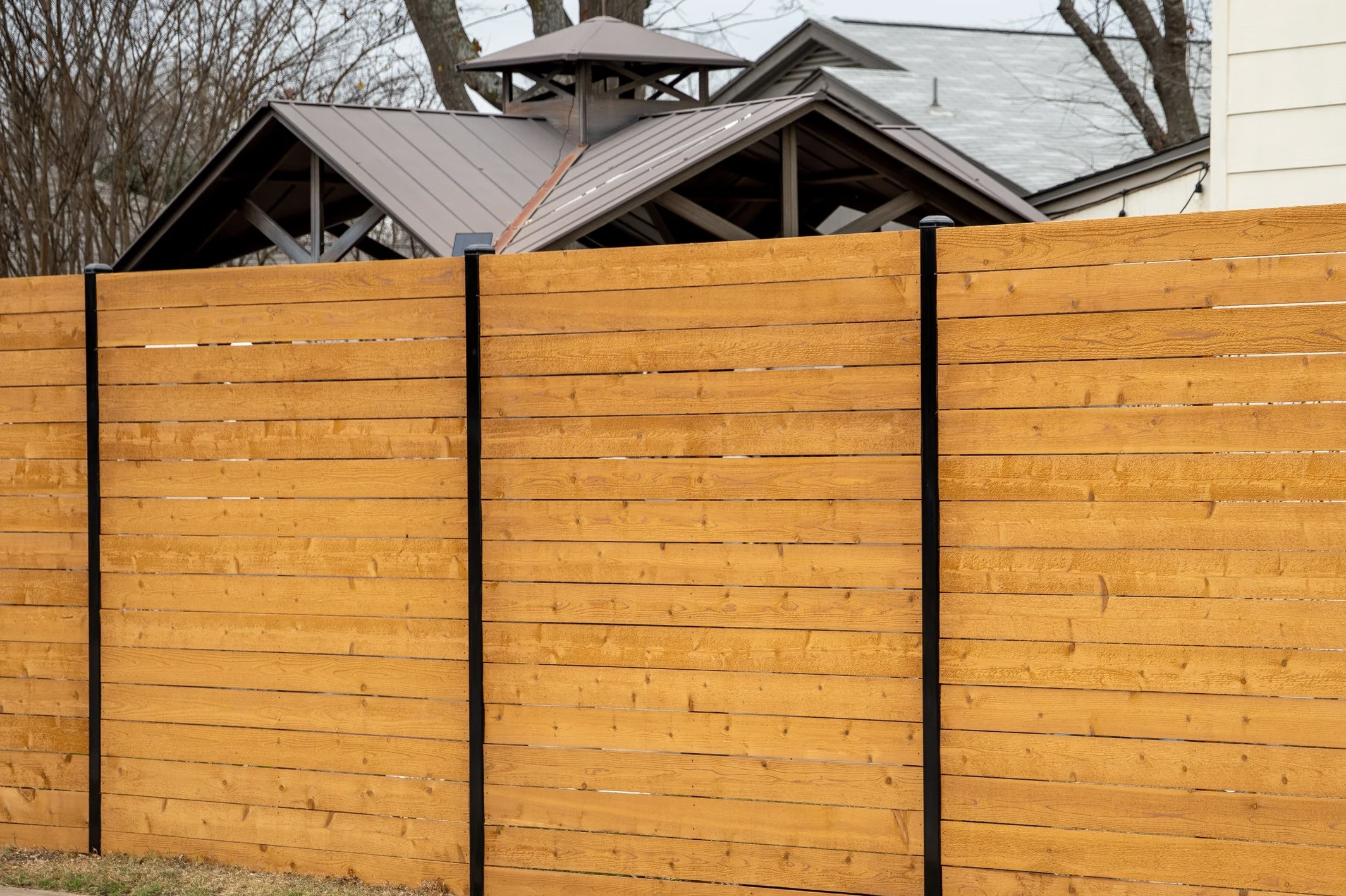
This is where things start to balance out.
These posts are galvanized first, then coated in a black powder finish. That combination gives you strong protection against the elements and a clean, modern look that actually complements most fence styles. However, make sure to ask if they’re galvanized. Sometimes, steel is just powder-coated. If that protective covering is damaged, moisture can still penetrate to the steel underneath, leading to rust and corrosion.
One limiting factor here is the thickness of the steel. A 2×2” square post is typically only available in thinner steel, so we like to use 3×3” square posts for privacy fences.
MILD STEEL FENCE POSTS (RUST PATINA LOOK)
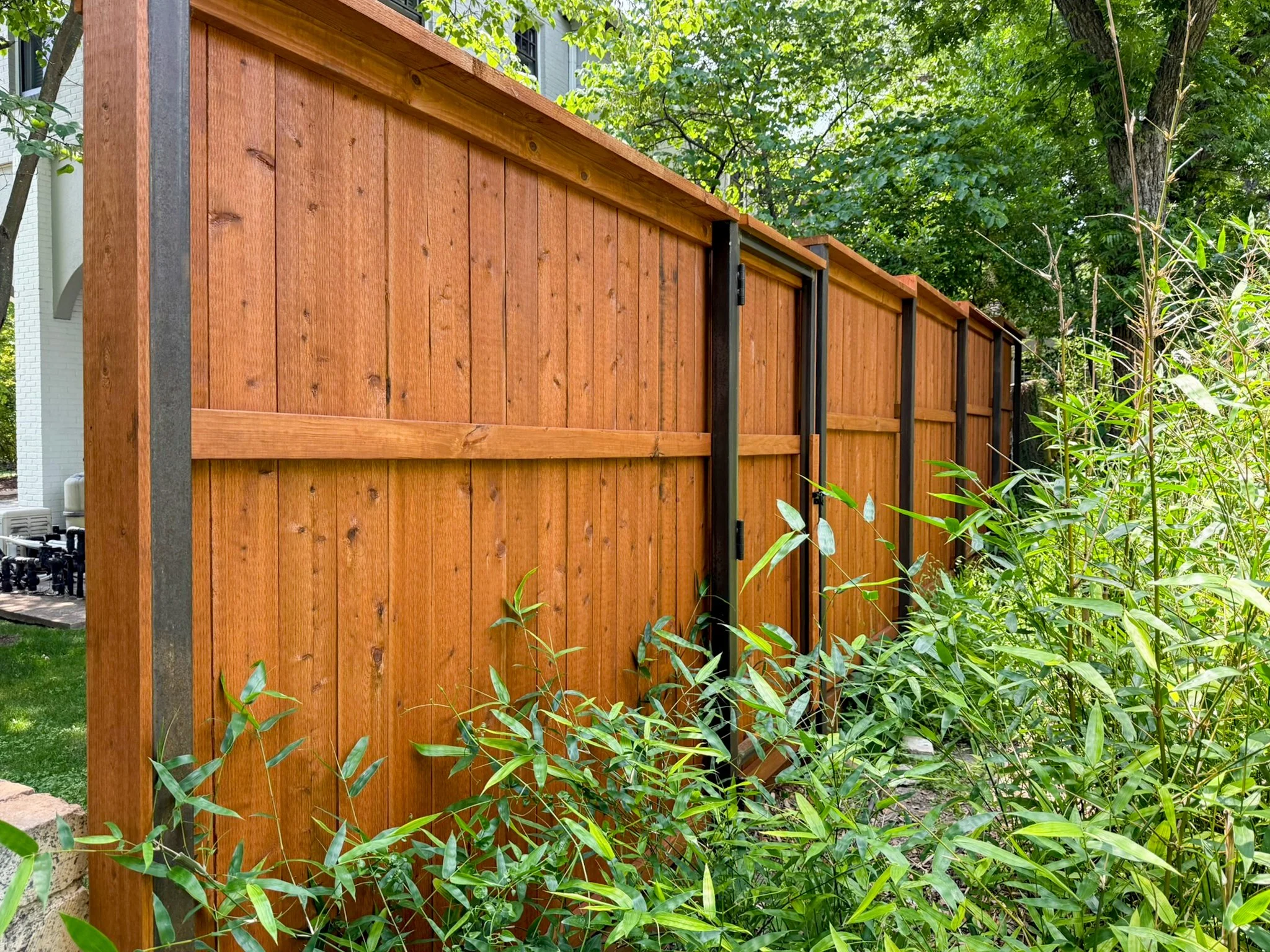
Mild steel starts off looking clean and sharp.
Over time, it develops a rust patina that a lot of people like from a design perspective. However, since this is basically just raw steel, the issue is that the rust doesn’t stop—it continues to break the steel down over time. You can offset that risk by choosing thicker steel options and making sure to use drainage rock under the posts.
GALVANIZED STEEL FENCE POSTS (STRONG & LONG-LASTING)
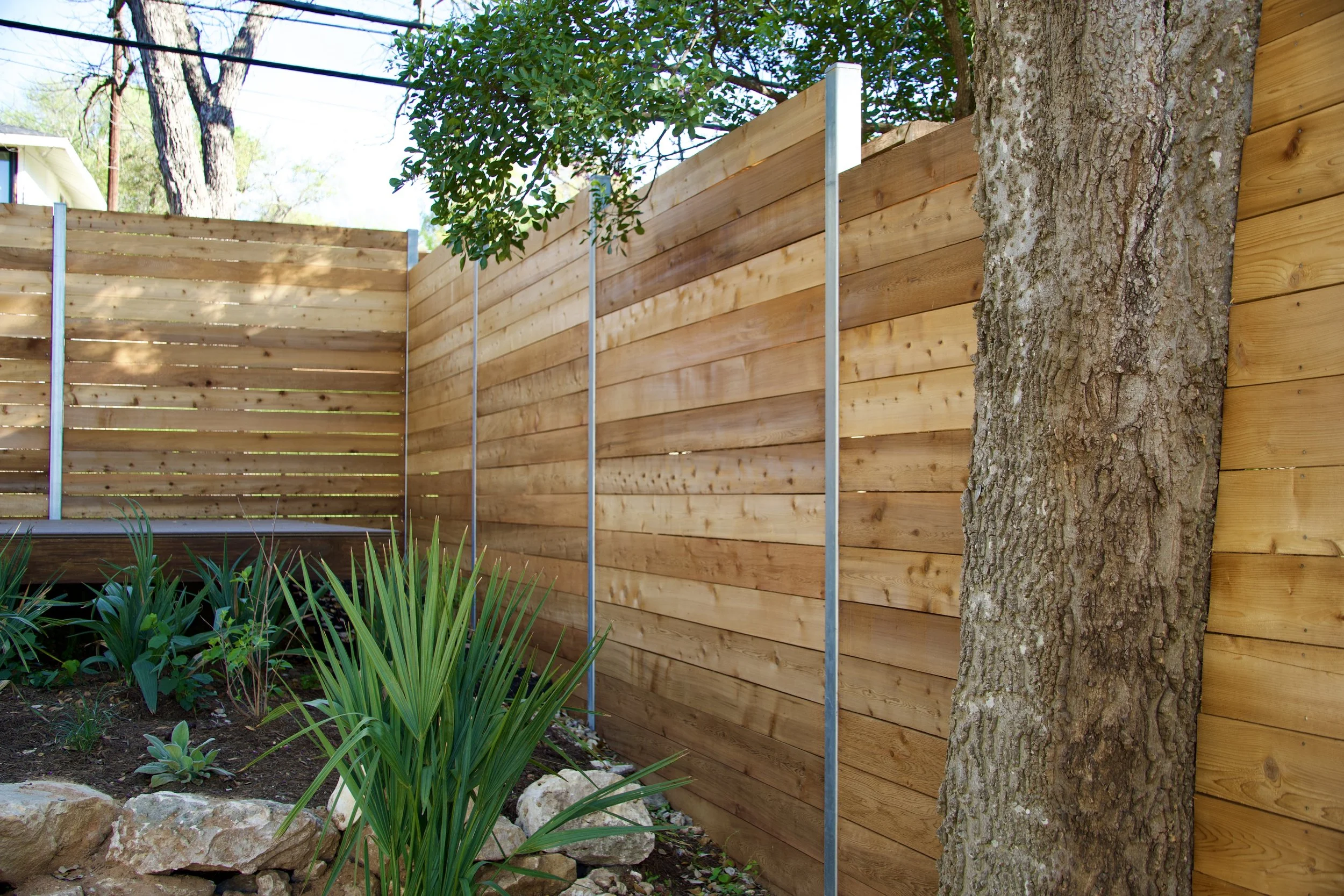
Galvanized steel is designed to prevent corrosion.
It will still rust eventually, but at a much slower rate compared to mild steel. That makes it a more durable option overall, especially for long-term performance.
It’s available in a lot of sizes and strengths, with the most common choices being a 2 3/8” round post (more budget friendly), a U-shaped “postmaster” post (which can be hidden with wood easily), or a 3×3” square post (higher price point). For many homeowners, the added lifespan of galvanized steel makes it worth it.
Make sure to pay attention to the thickness of the steel, here. Some builder-grade fences are made with 2 3/8” round galvanized posts, but they’re made from thin steel, which can bend easily. For round options, we recommend schedule 20 or schedule 40 steel, and for square options we recommend 14 gauge or 11 gauge, depending on height and style.
CORTEN STEEL FENCE POSTS (PREMIUM OPTION)
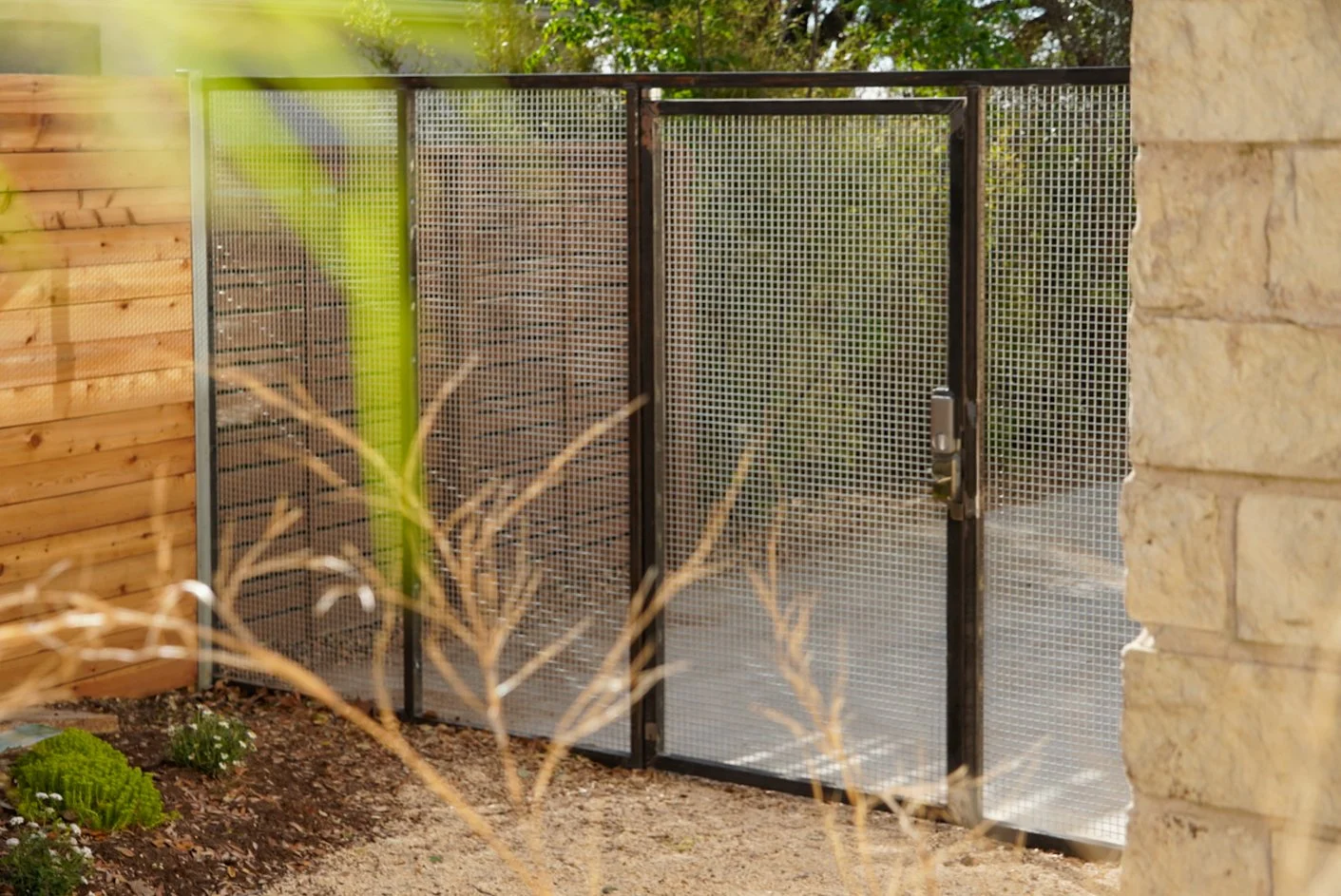
Corten steel is less common, but it stands out.
Like mild steel, it forms a rust patina. But unlike mild steel, it’s a stable rust patina that actually helps protect the steel underneath. That means it can last for many decades—even in harsh conditions, which is why it’s preferred for bridges, architecture, and other long-term projects.
The tradeoff is cost. This is one of the most expensive options out there, so it’s usually a material of choice on high-end or design-focused projects.
IT ALL COMES DOWN TO PRIORITIES
It really comes down to three things:
Your budget
How long you want the fence to last
The overall look you’re going for
In Austin, you can’t ignore the climate. Heat, shifting soil, and moisture all play a role in how these materials perform over time.
A fence that looks great on day one doesn’t mean much if the structure behind it fails a few years in.
If you’re not sure what makes the most sense for your property, it’s worth talking through your options before committing. The right post can be the difference between a fence that lasts 5 years and one that looks good and holds up for decades.
PLANNING A FENCE PROJECT IN AUSTIN?
If you’re in the Austin area and trying to figure out the best materials for your fence, we help homeowners make that call every day.
Whether you’re prioritizing budget, durability, or a specific design, there’s a right way to build it—and it starts with the posts.