HORIZONTAL FENCE STYLES
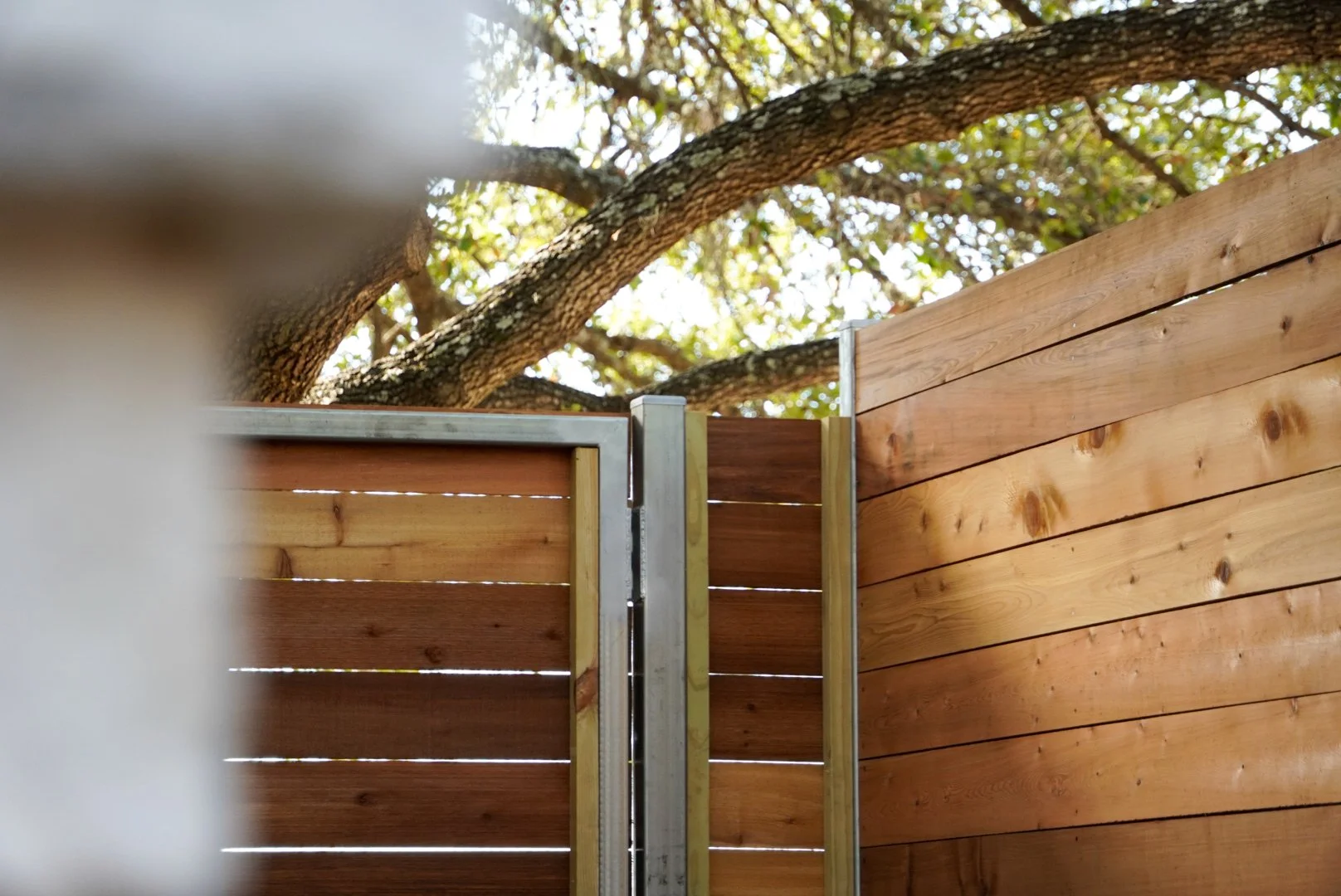
Horizontal fencing has become one of the most requested styles across Austin over the past several years — and it makes sense. The long, clean lines work naturally with modern and contemporary homes, and when you pair Western Red Cedar with steel posts, the result holds up really well.
The idea is straightforward: instead of pickets running up and down, they run side to side. That single change in orientation gives a fence a completely different feel — more architectural, more intentional, and in a lot of cases, better suited to the way newer Austin homes are designed. Whether the house is in Tarrytown, Travis Heights, Westlake, or a newer neighborhood in Cedar Park or Round Rock, horizontal fencing tends to fit right in.
There are a few distinct horizontal styles, and the right one depends on how much privacy you want, the landscaping and design, and how you want it to feel. We've laid out the main options below — each with material tiers and upgrade options — so you can get a clear sense of what's possible before we ever talk numbers.
Horizontal privacy fence
Horizontal board-on-board
Horizontal semi-privacy
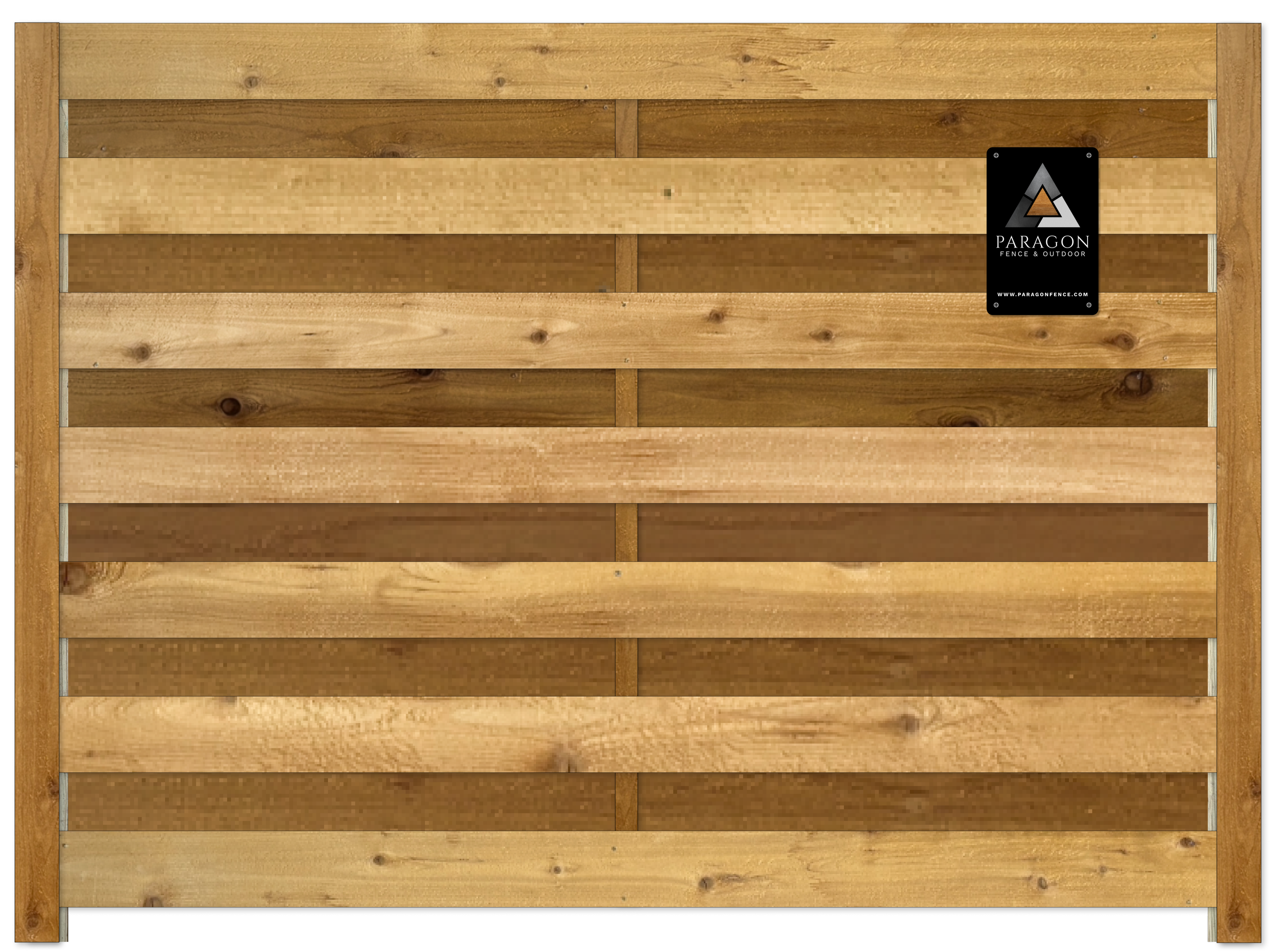
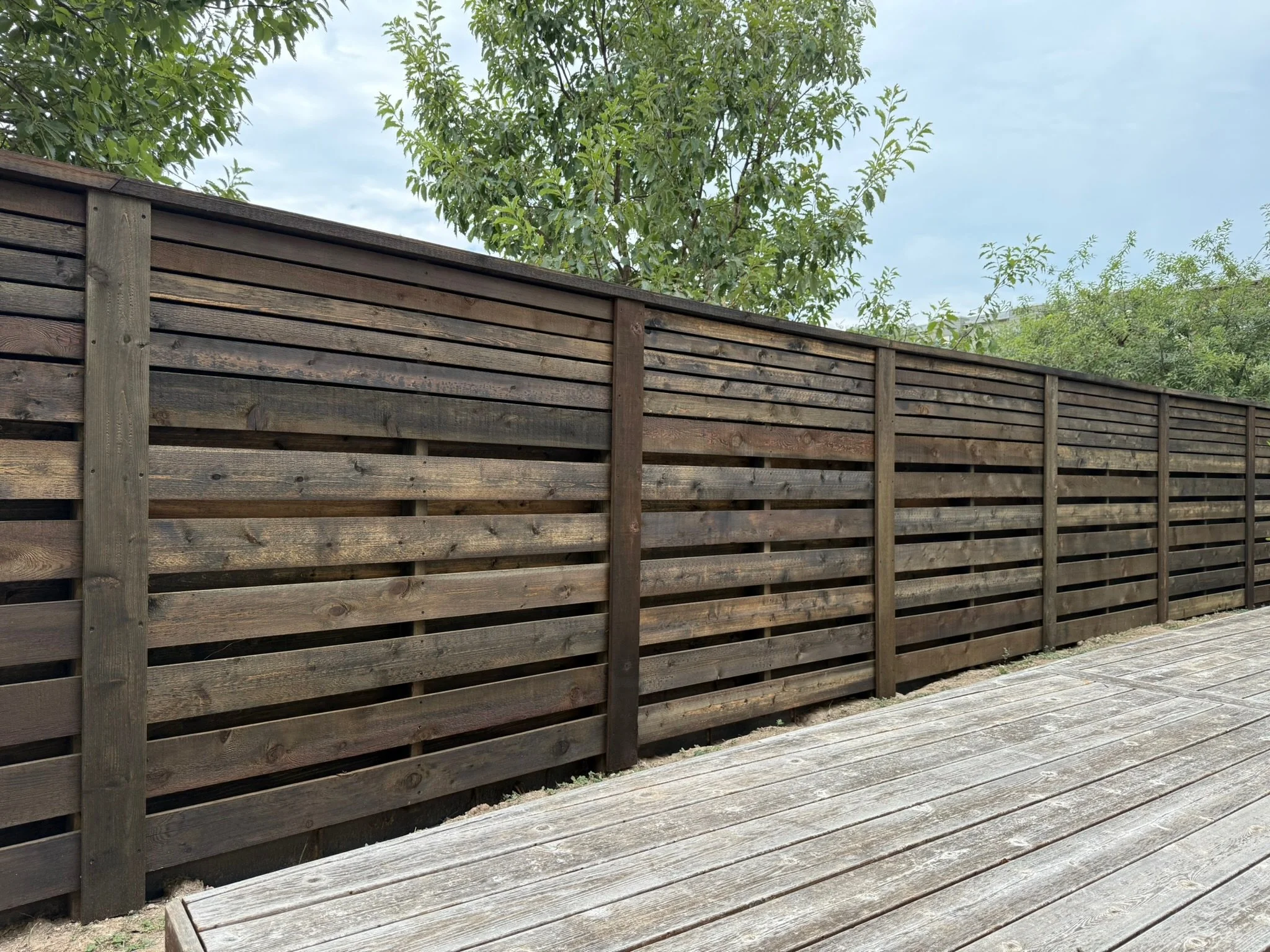
Horizontal shadow box

Horizontal with semi-privacy top
horizontal fence gallery
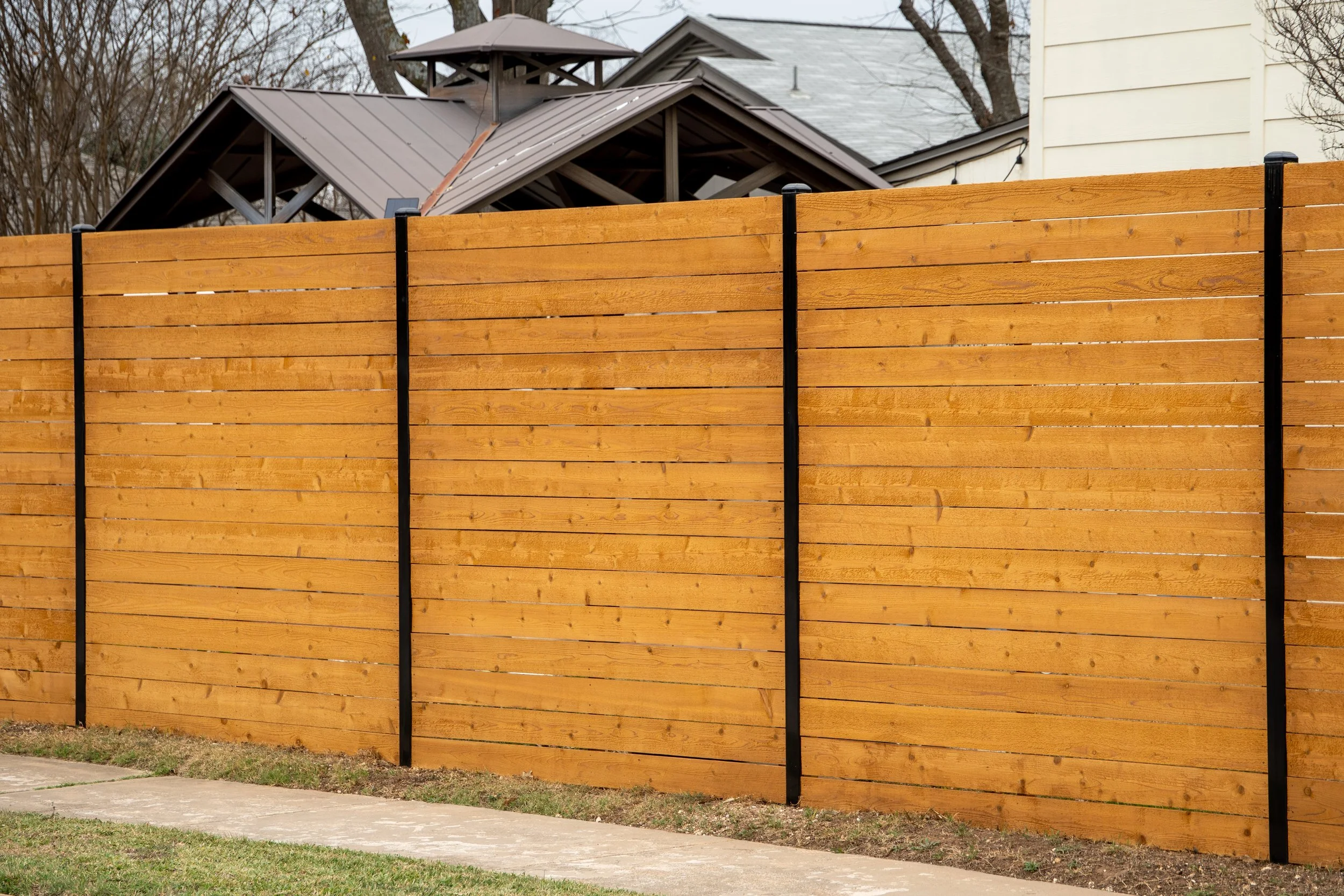
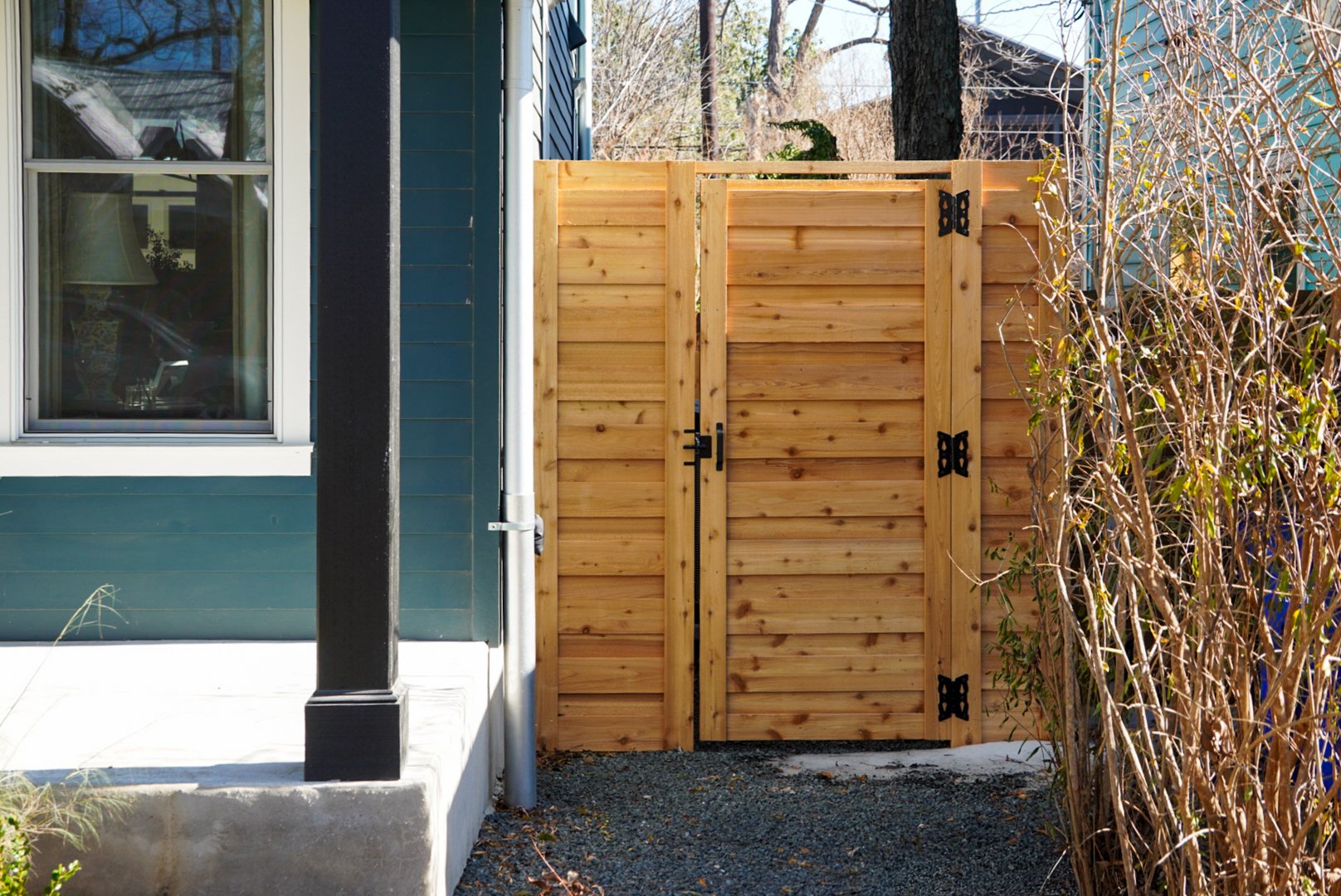
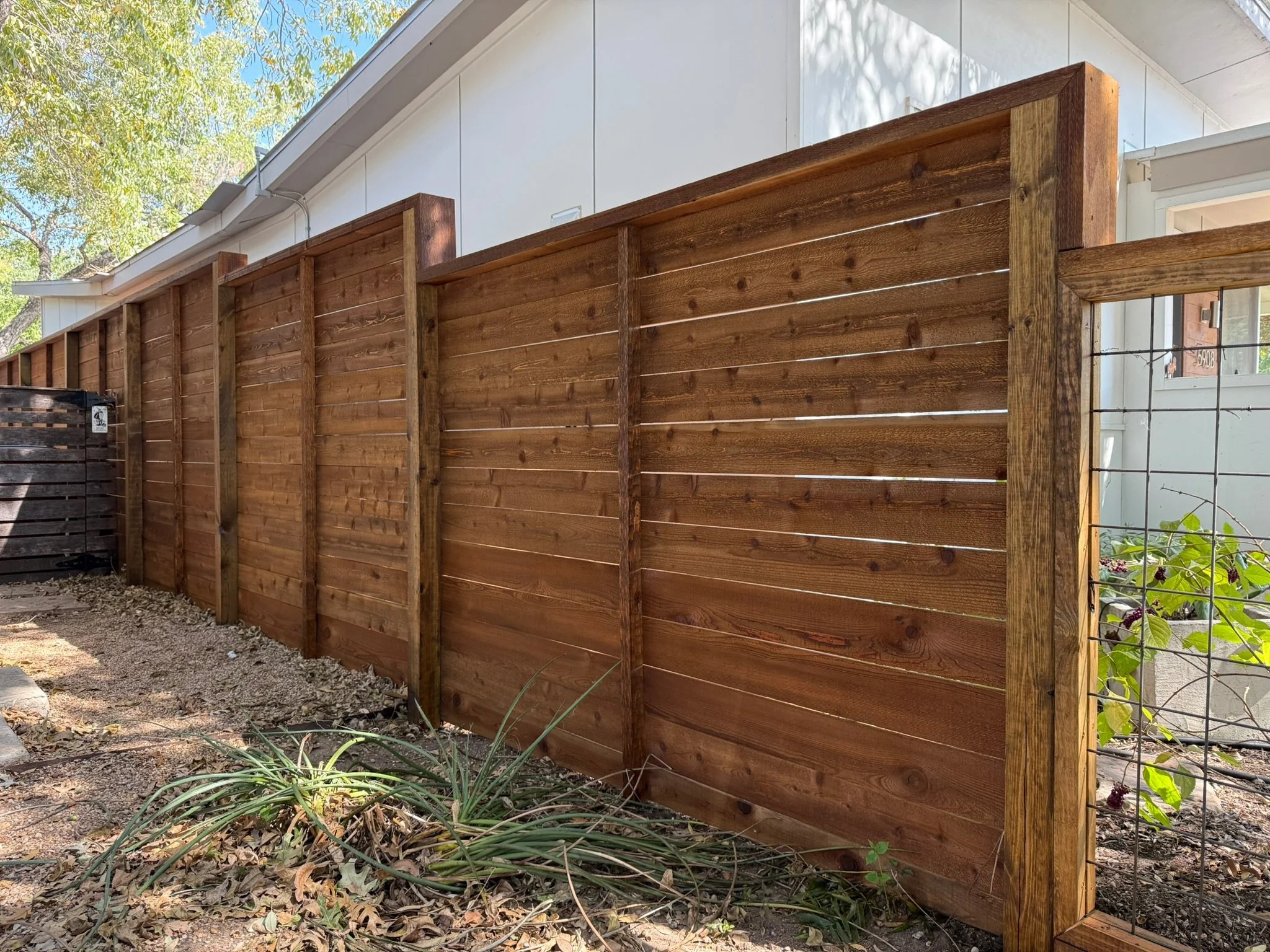
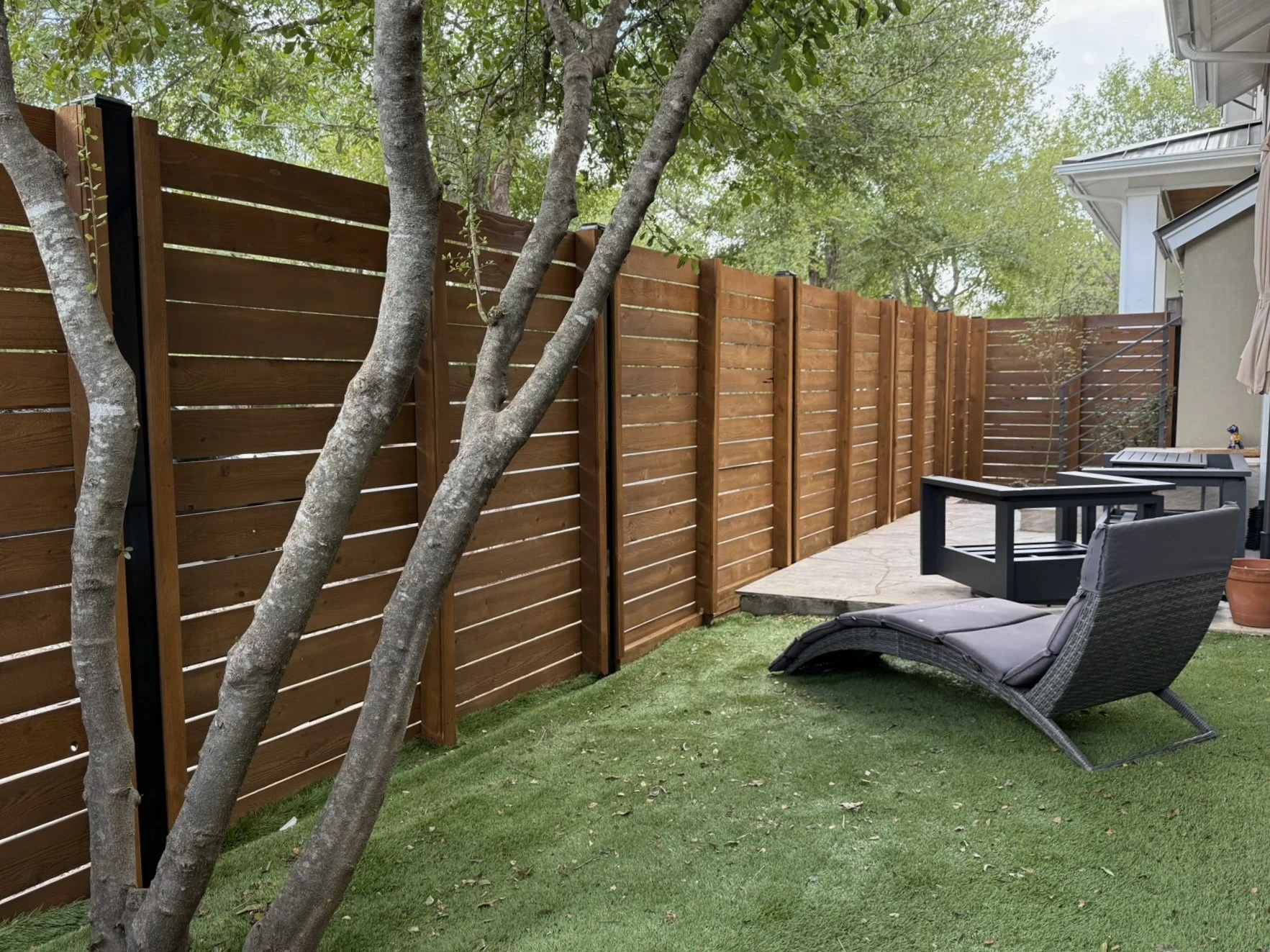
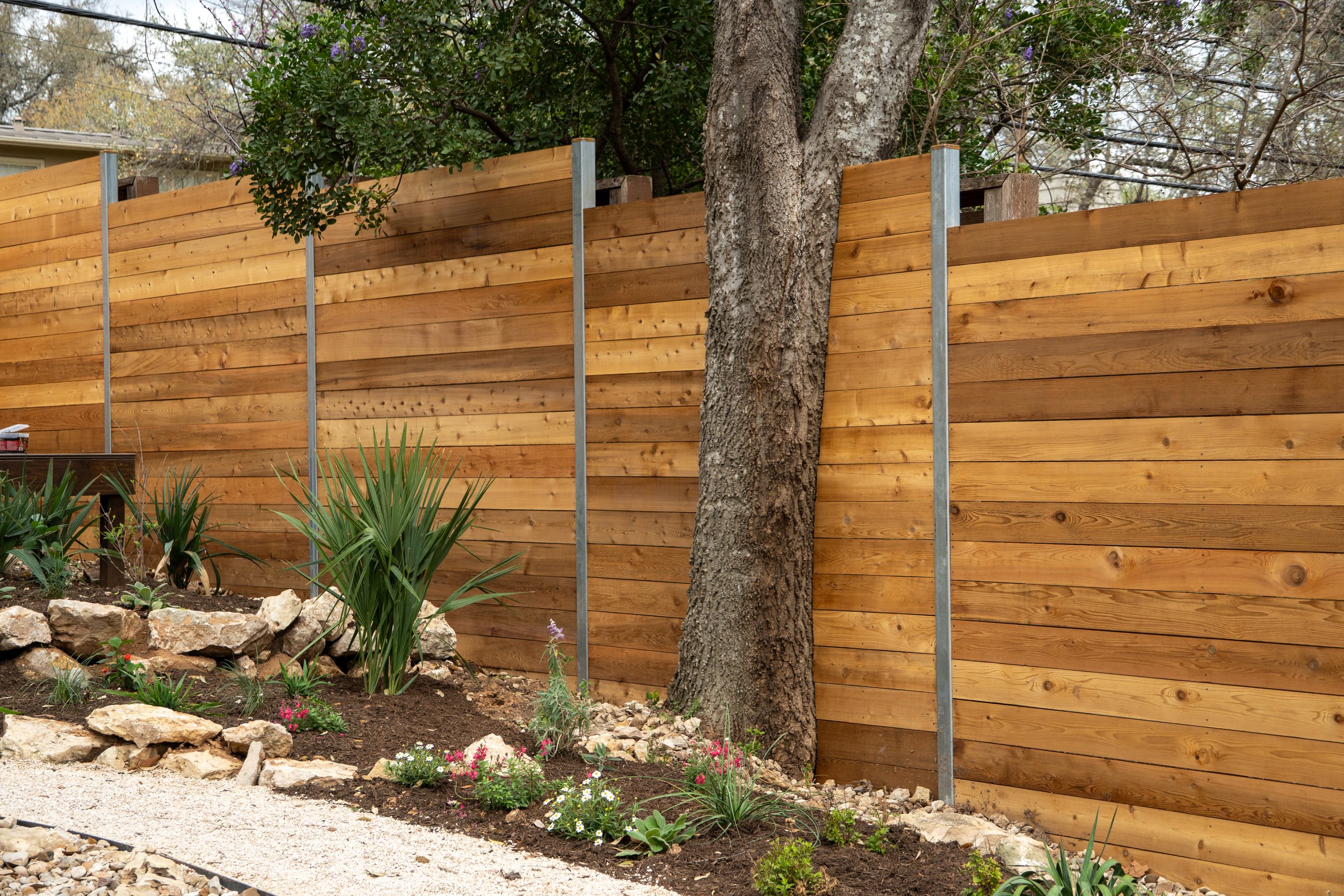
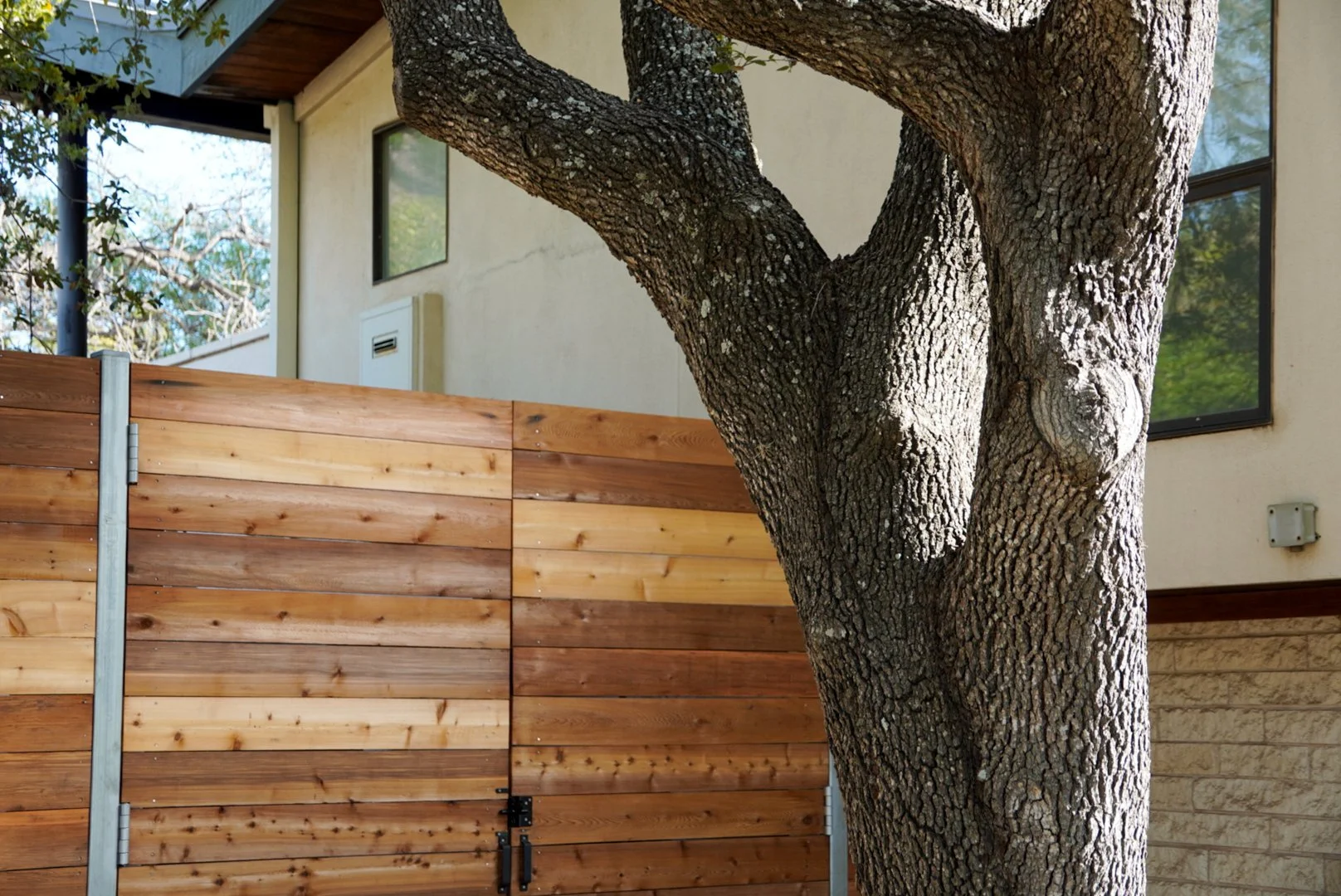
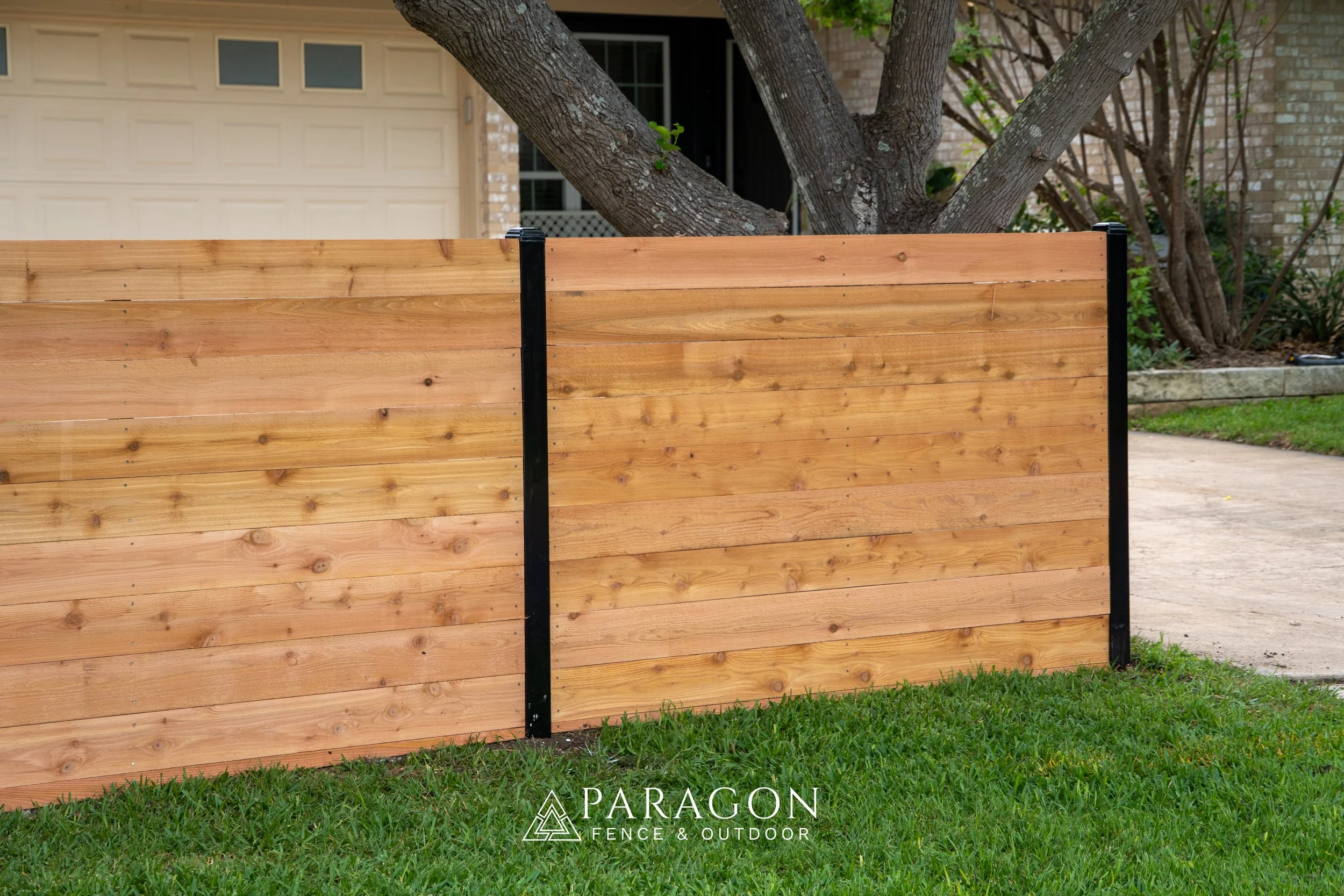
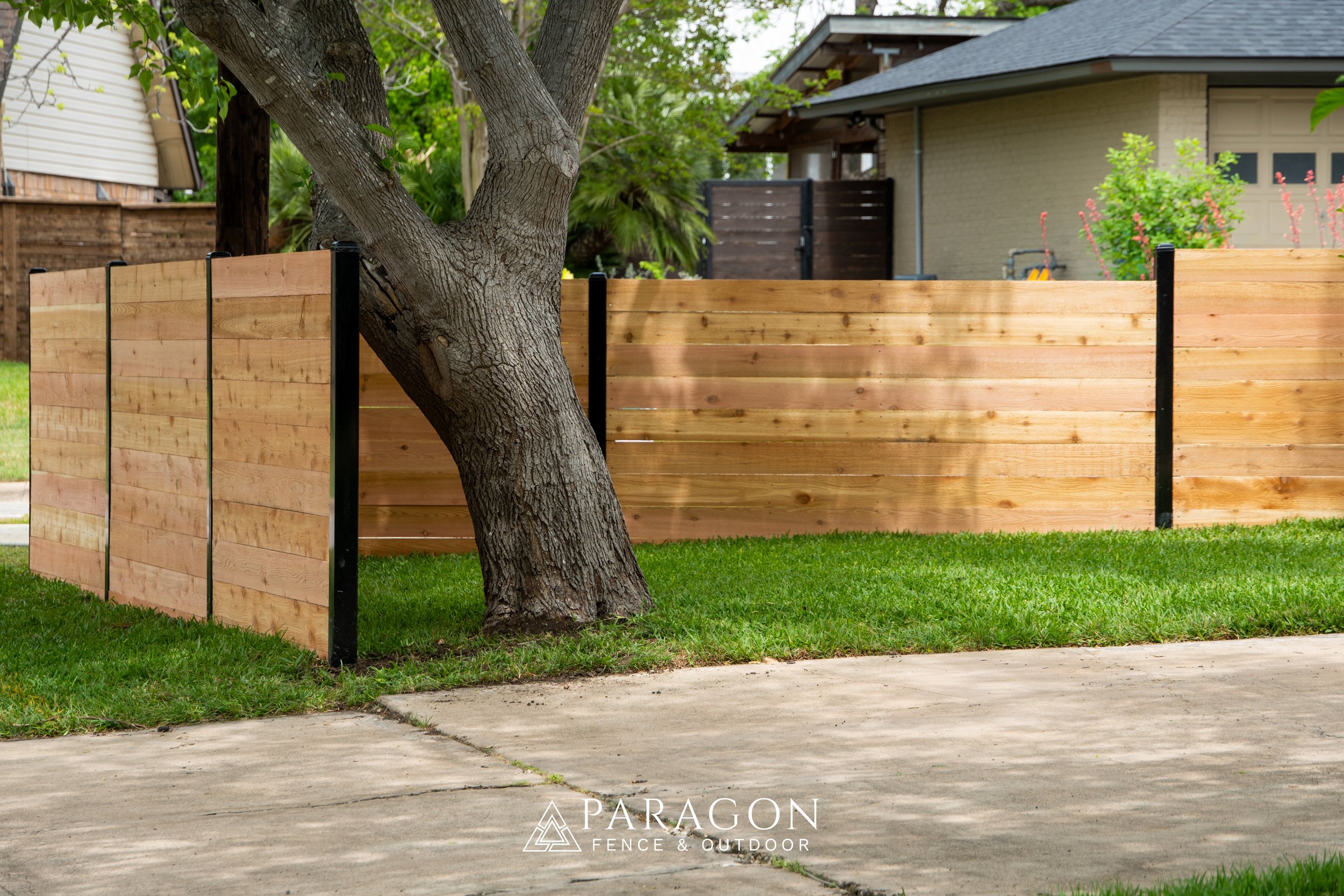
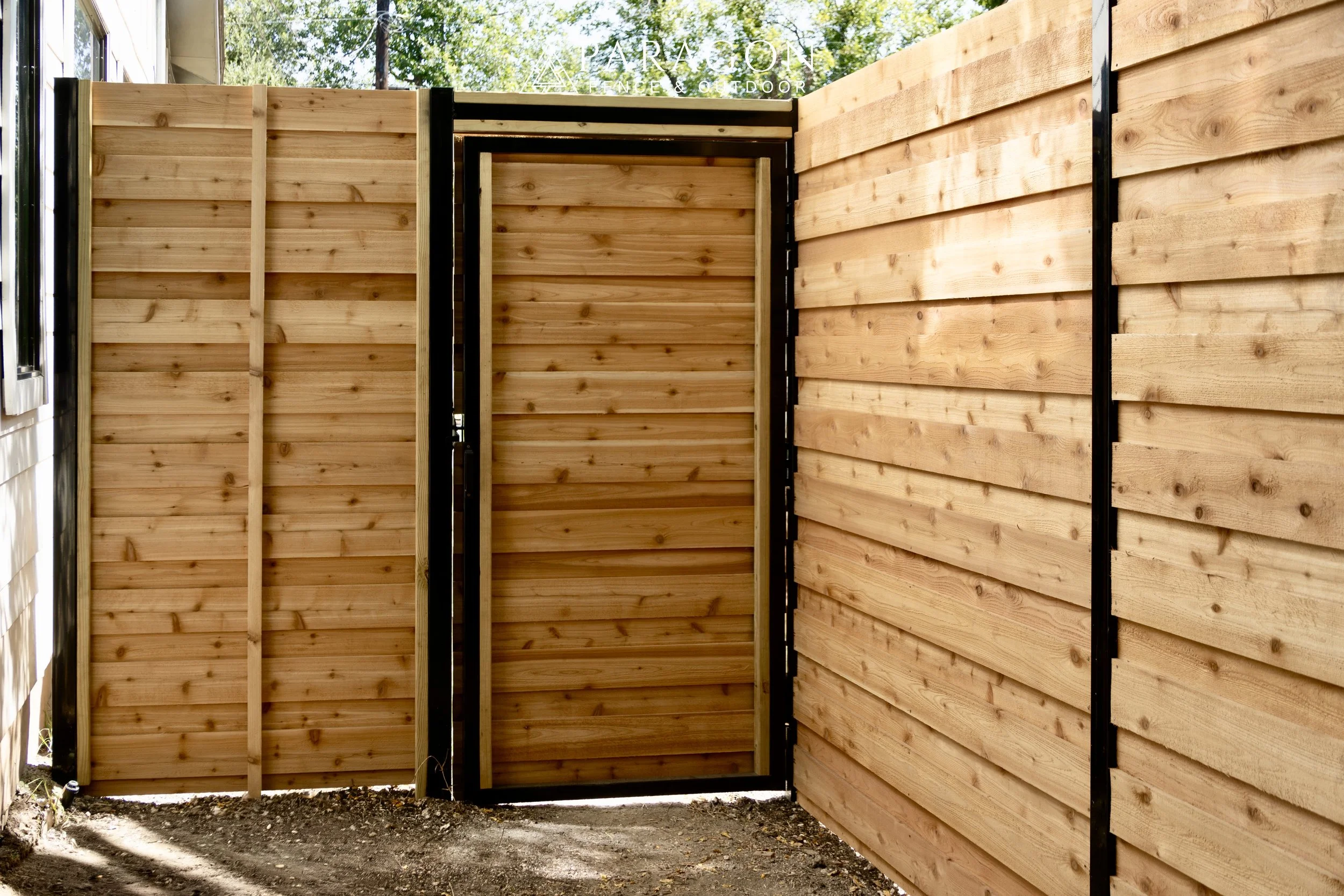
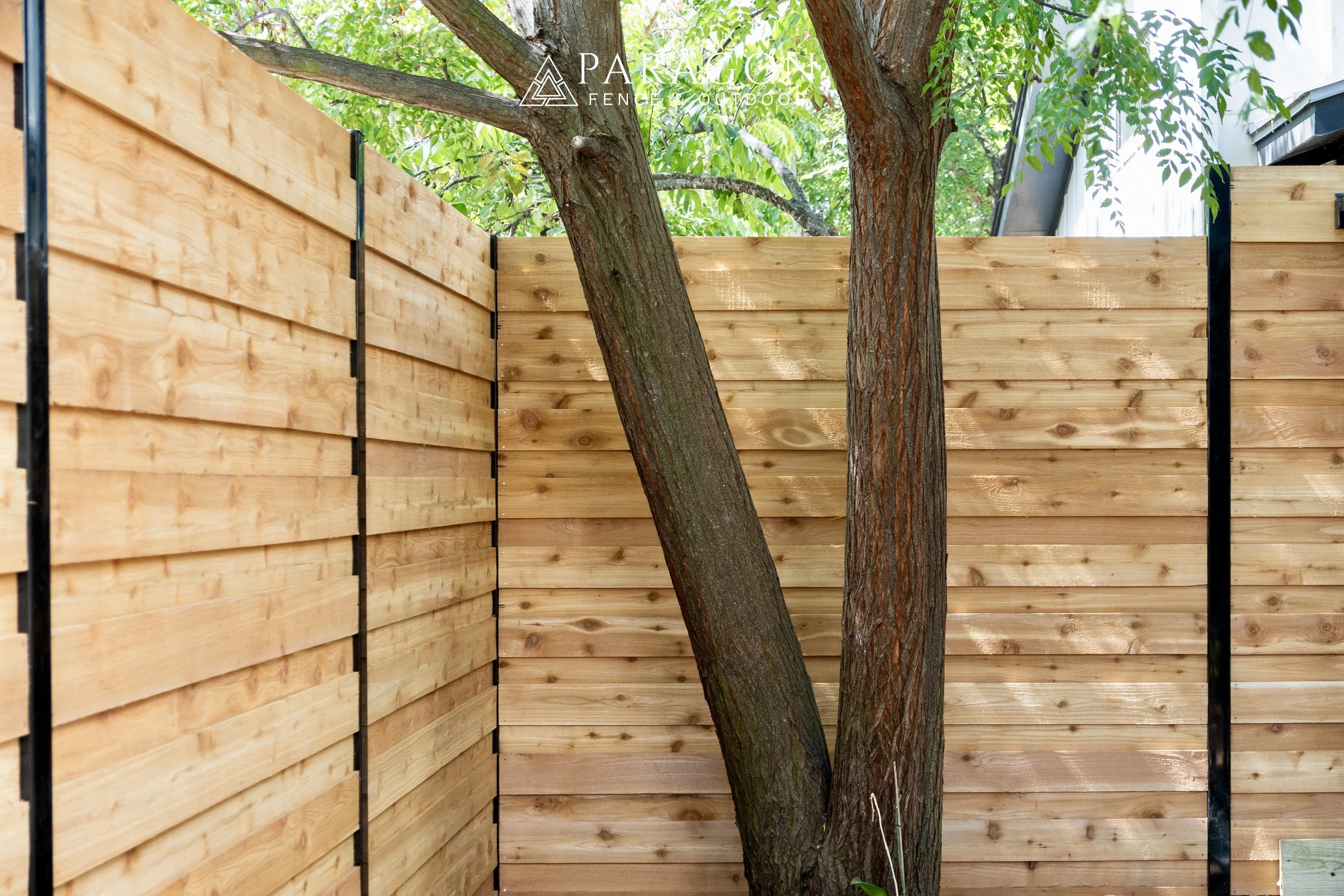
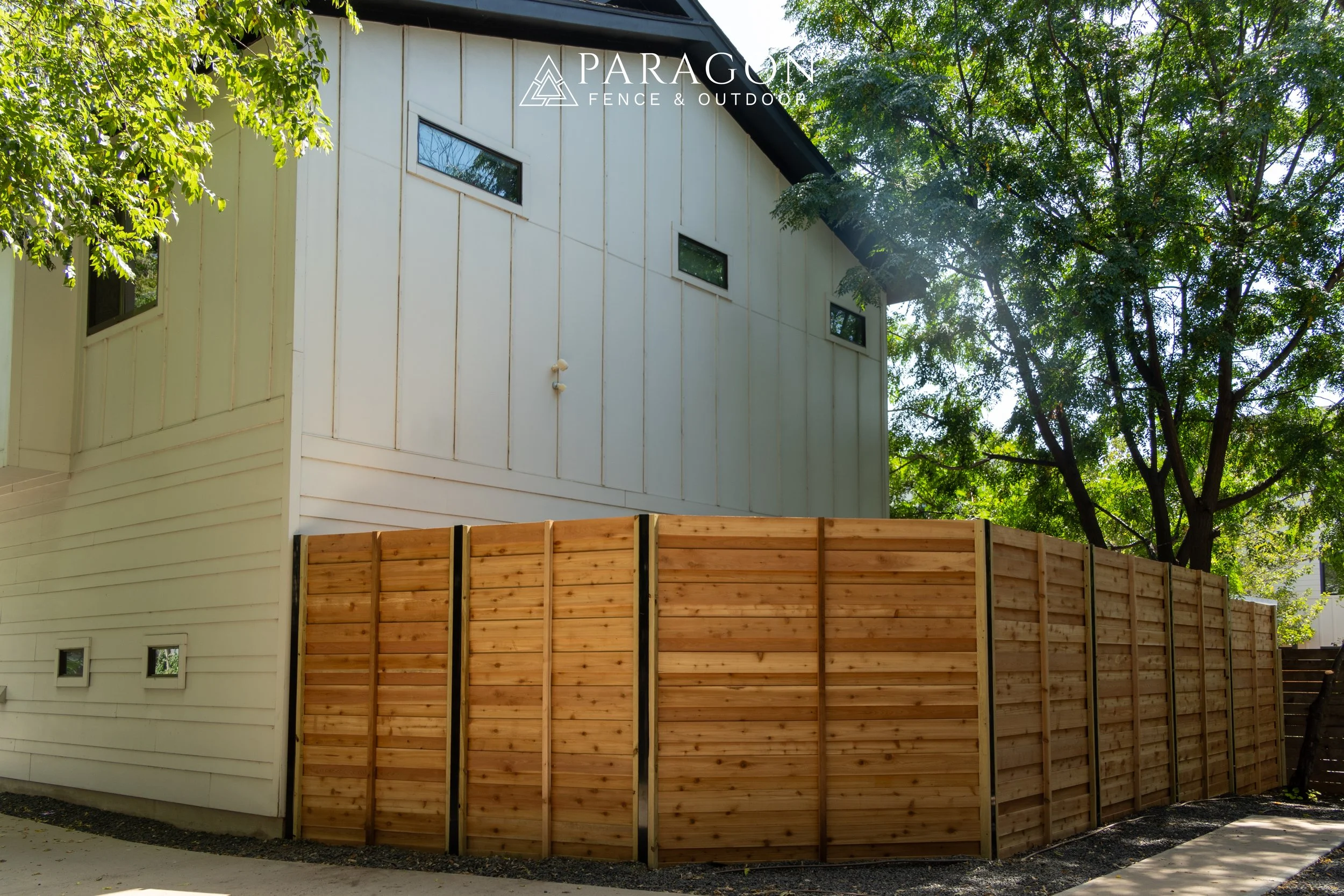
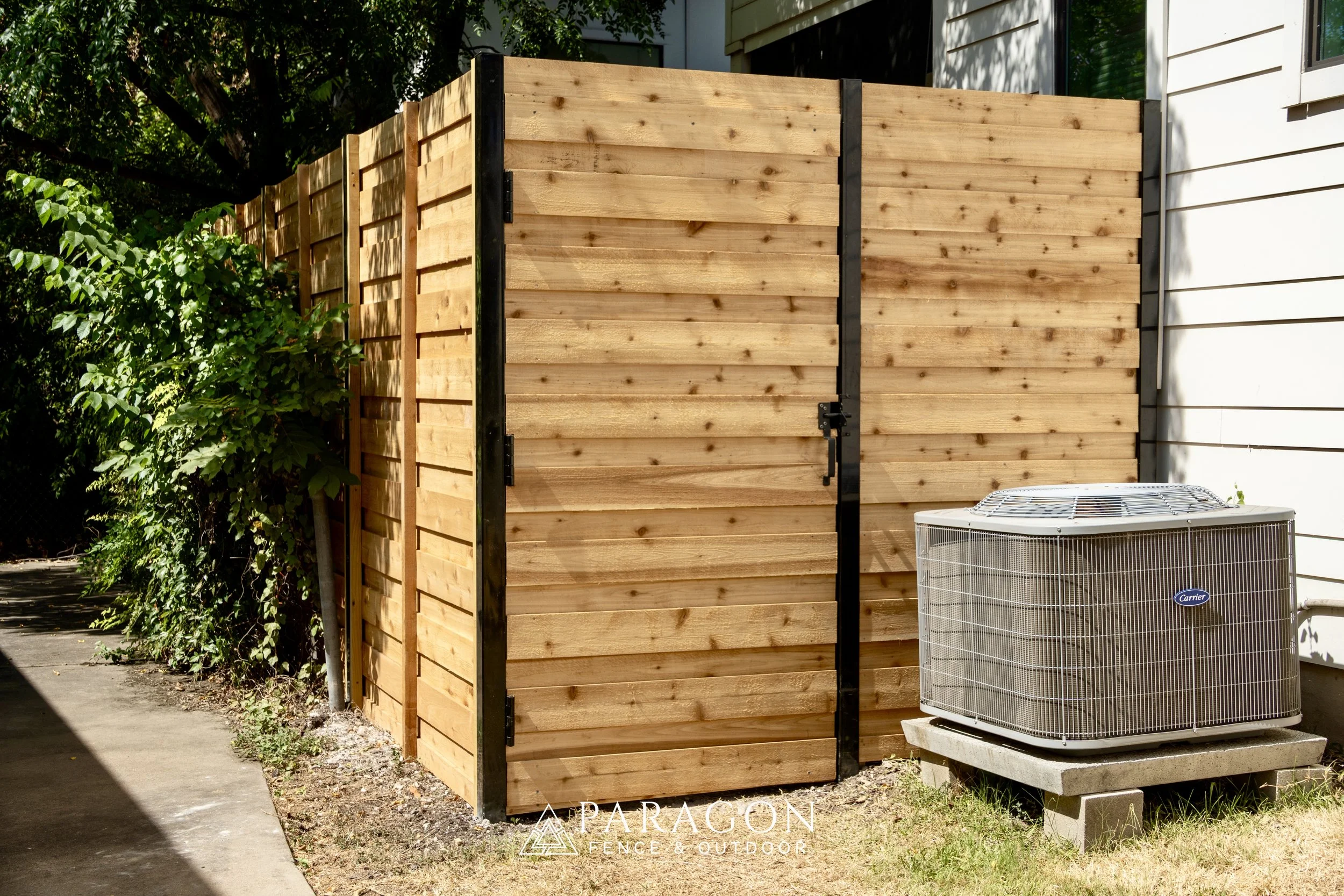
With Paragon Fence and Outdoor, you’re in great hands. Our horizontal fence gallery features real projects (no AI images here) personally managed by Paragon’s owner — including pre-Paragon projects.
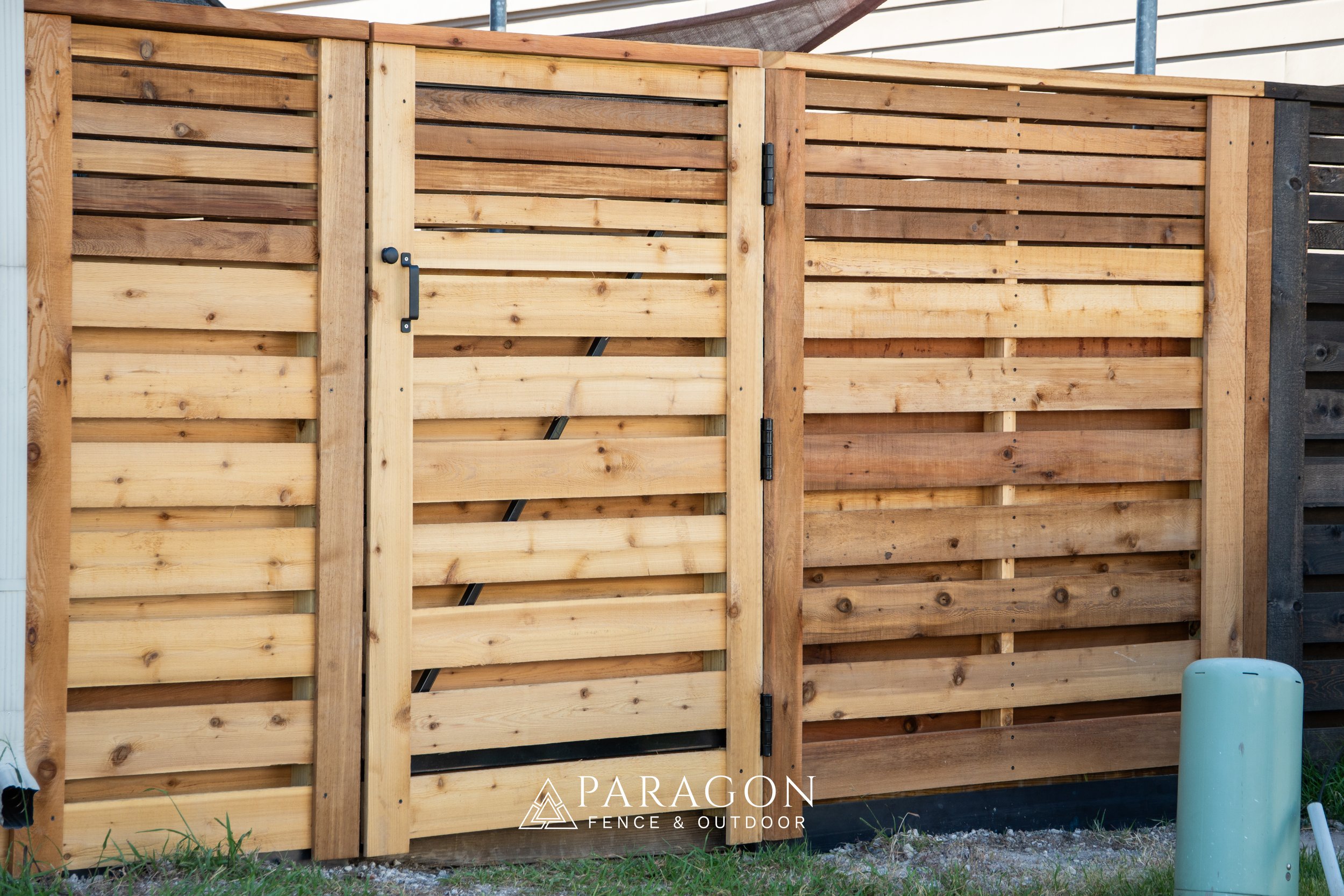
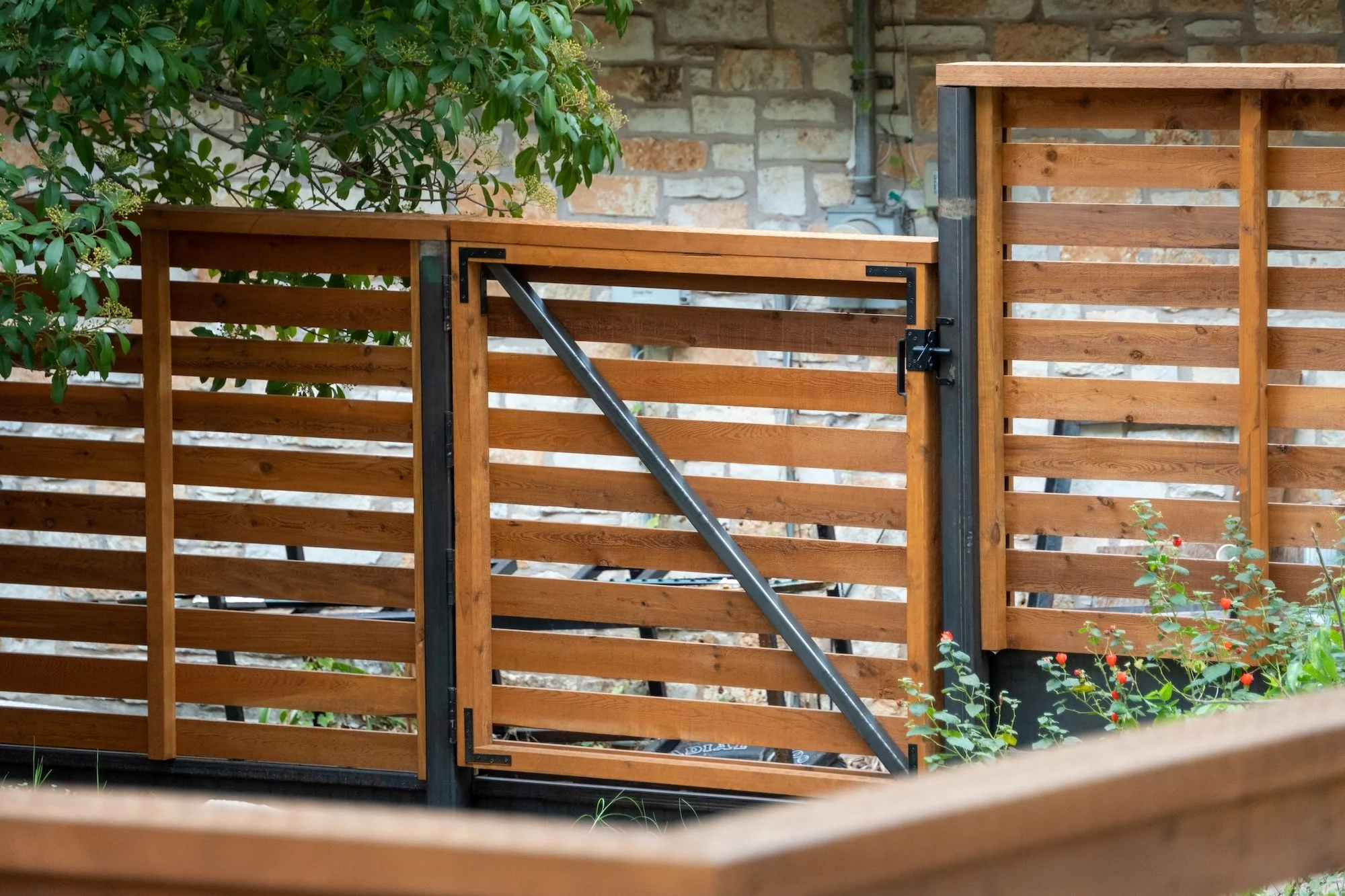
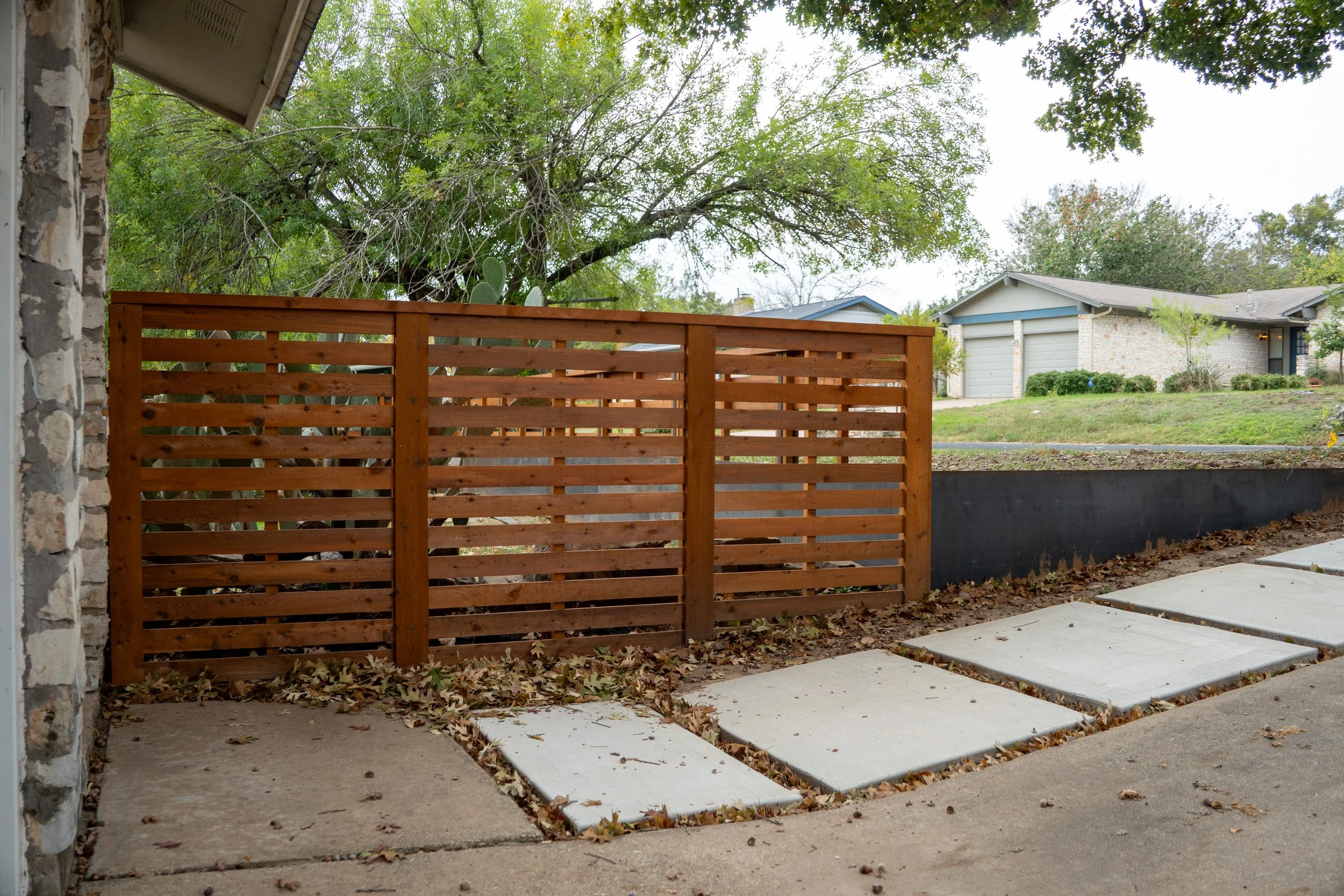
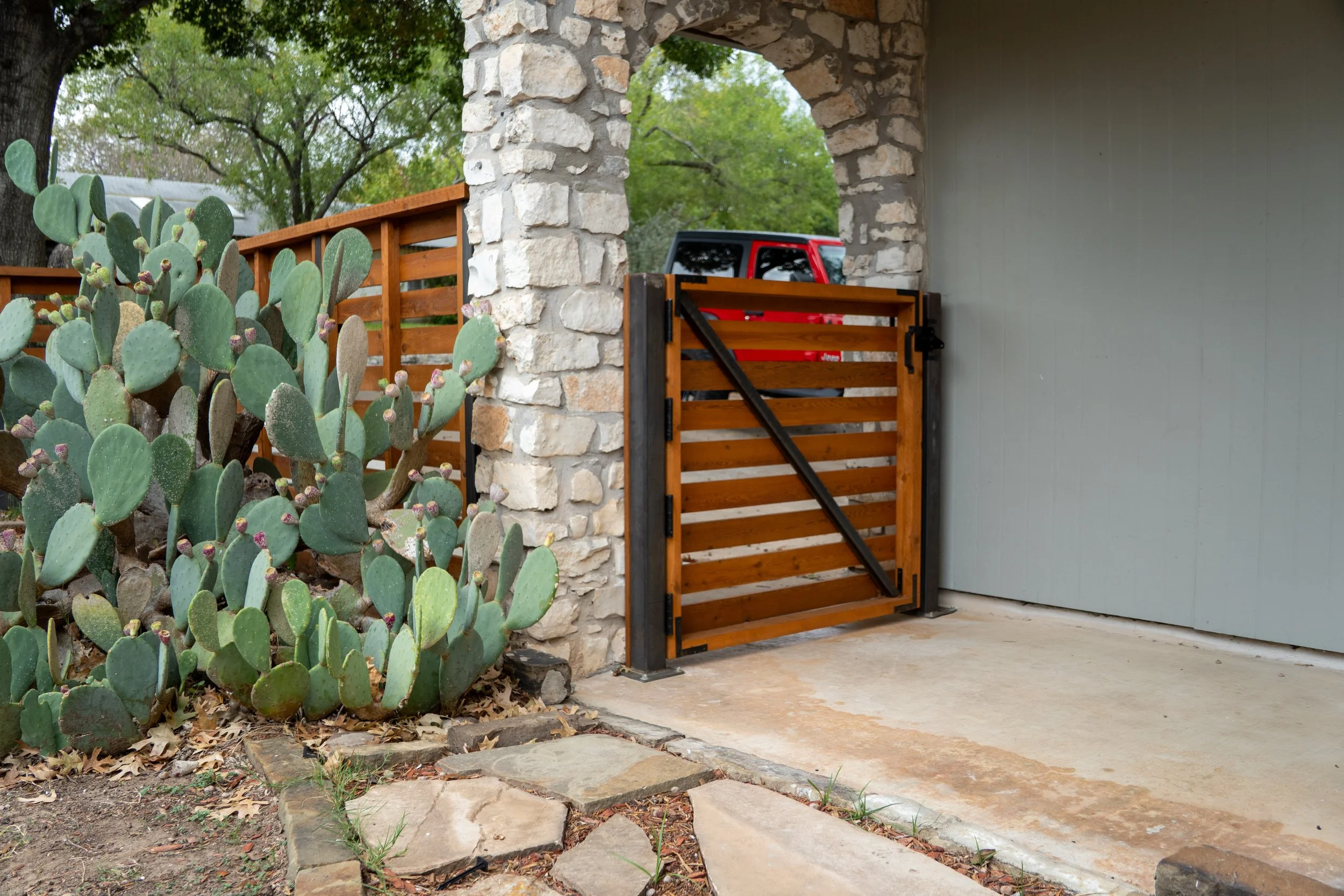
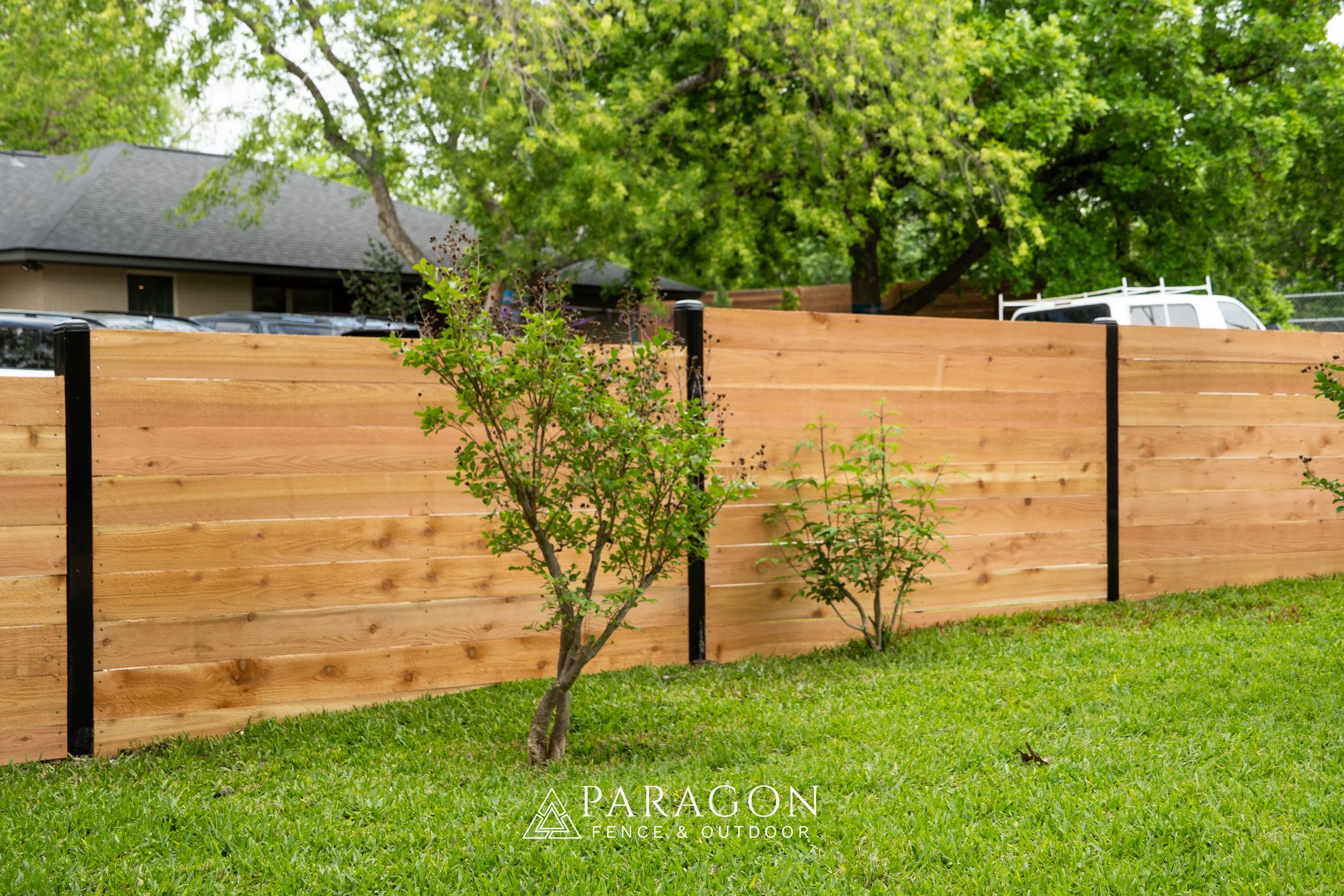
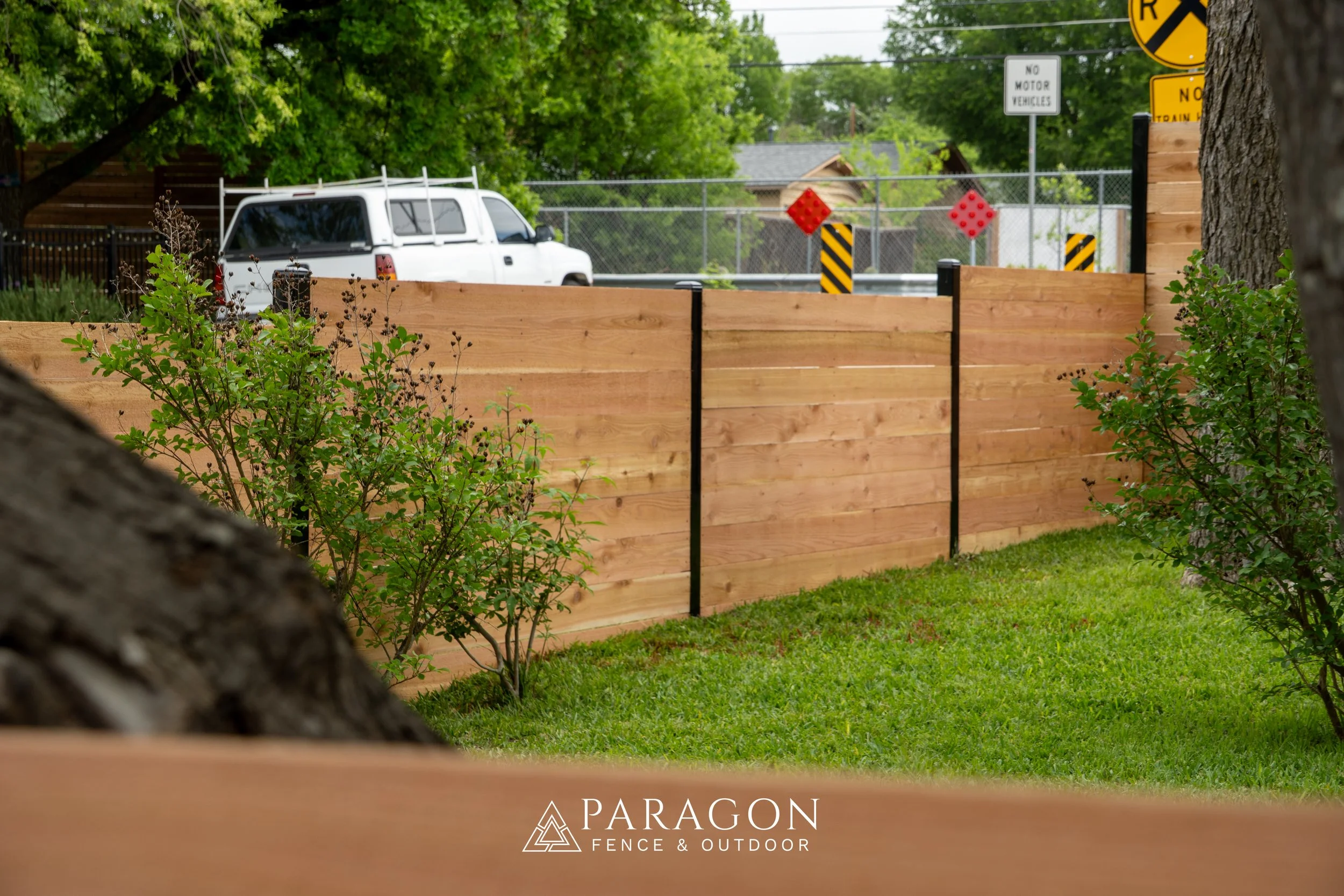
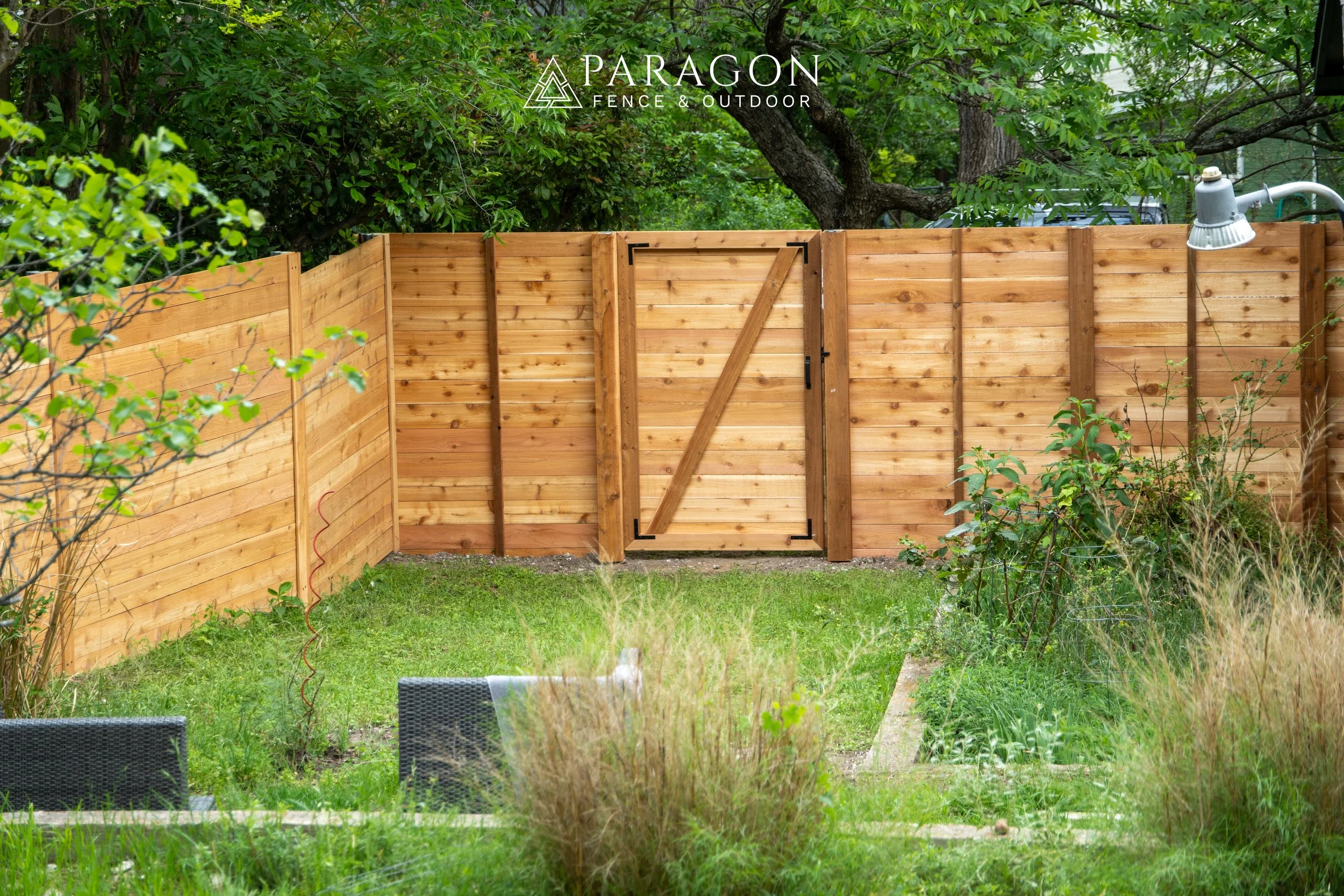
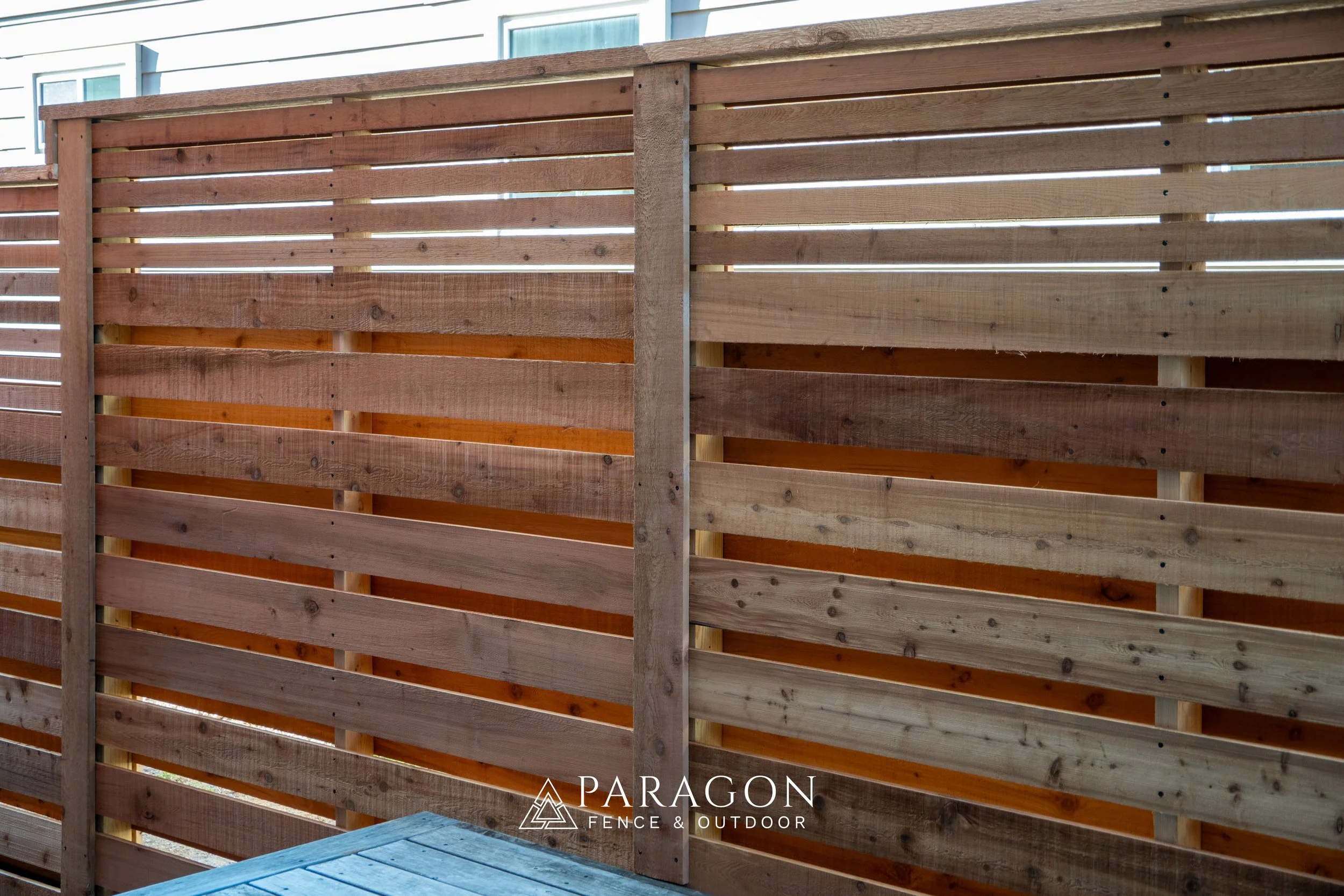
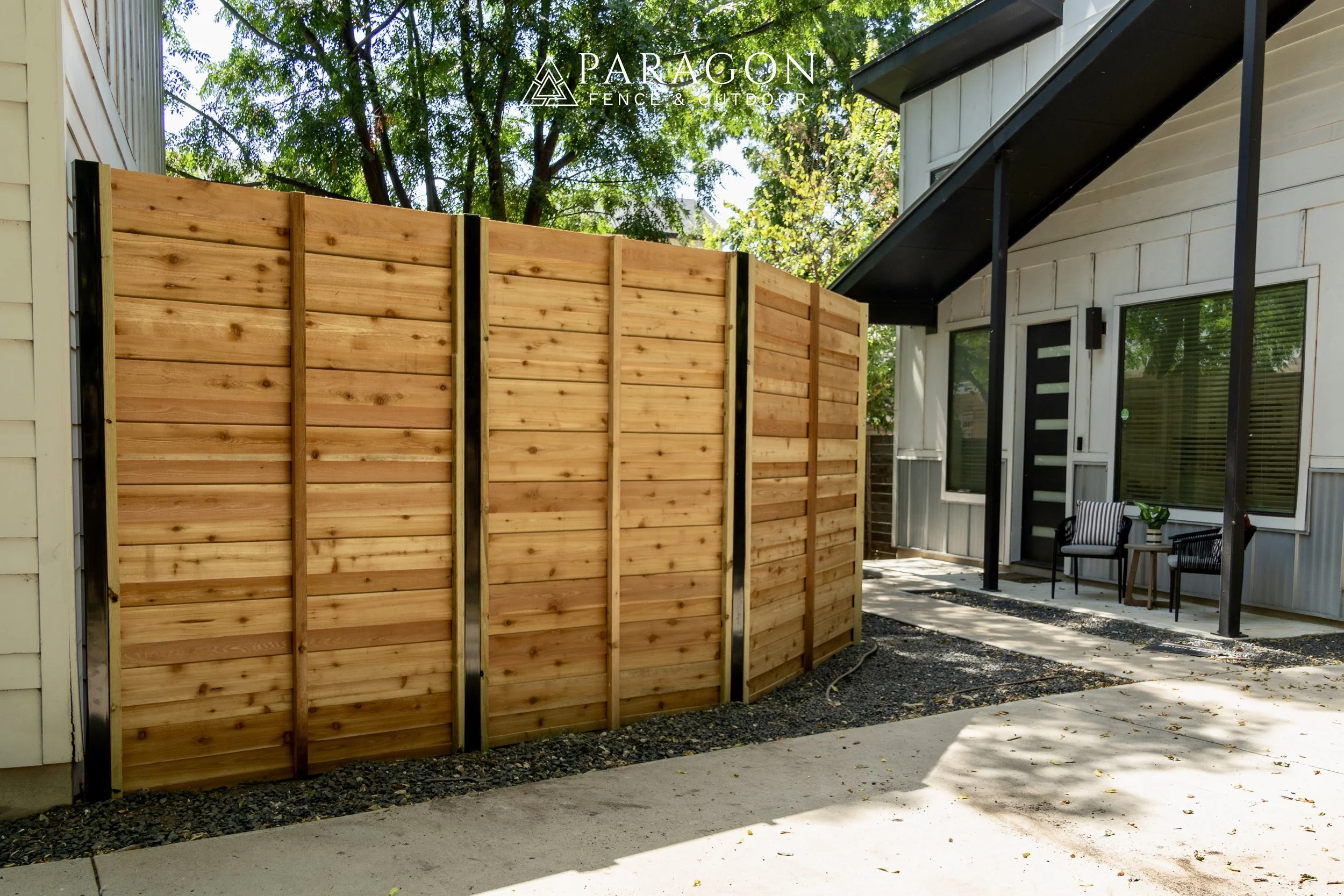
horizontal privacy fence
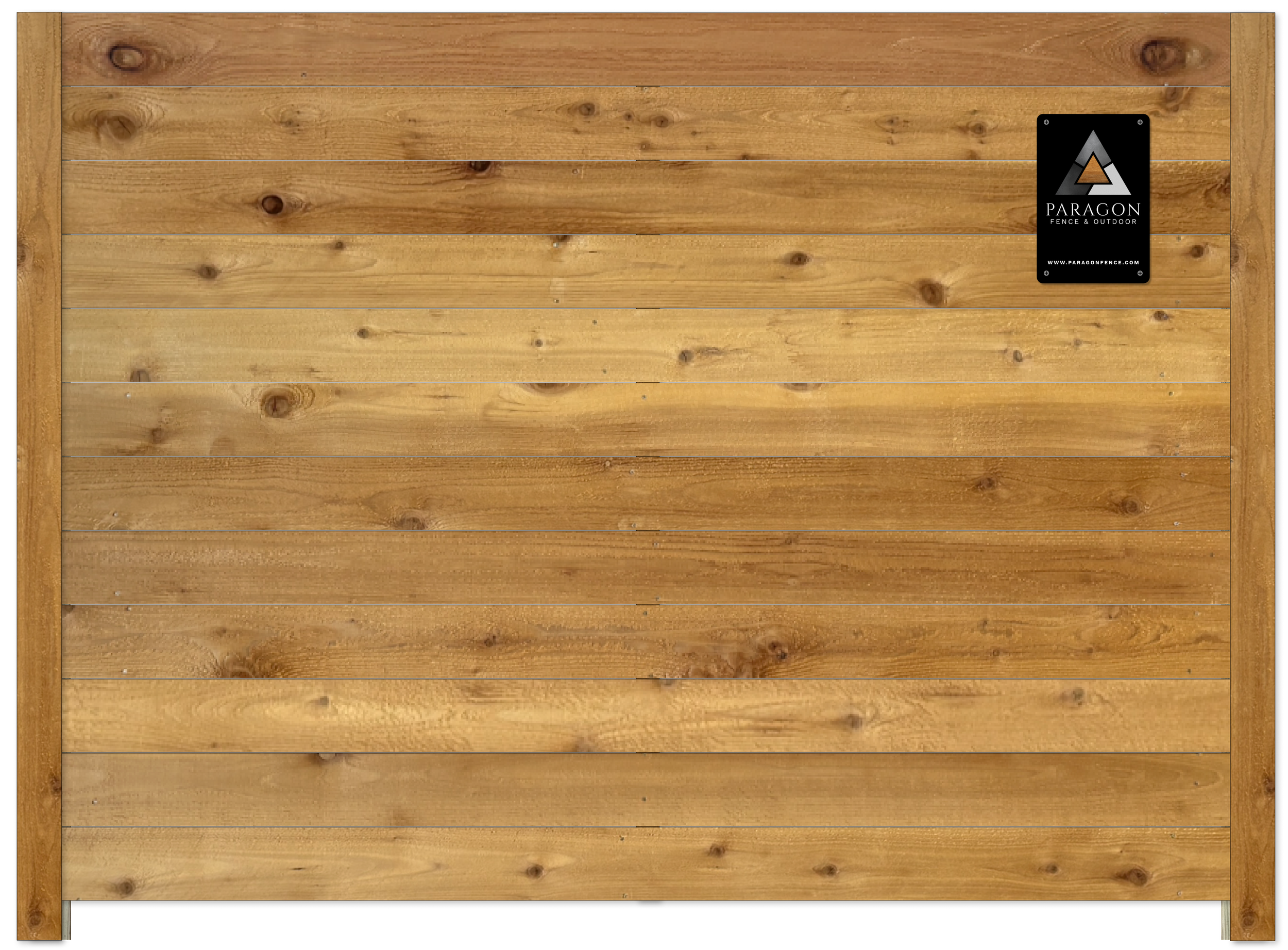
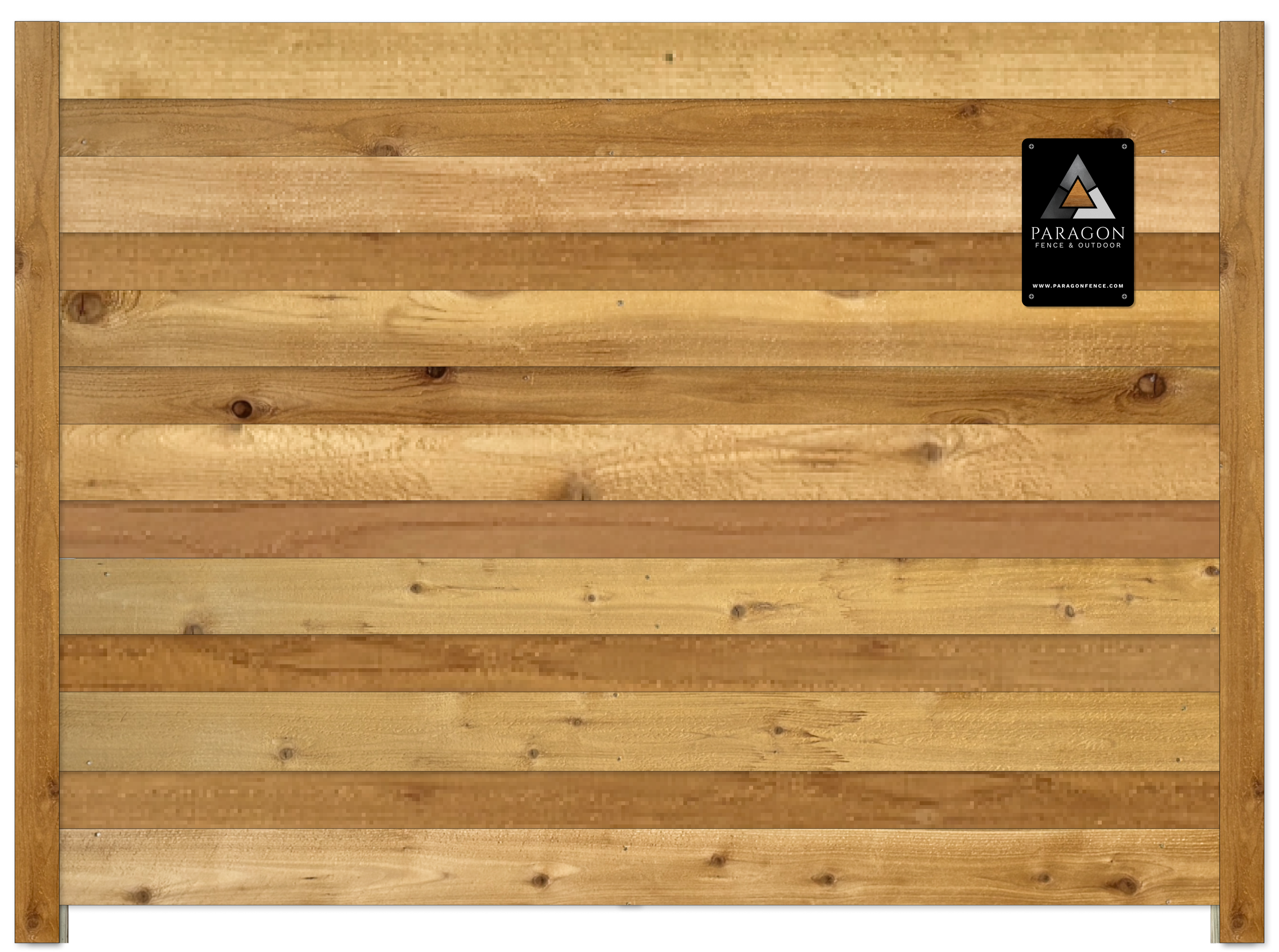
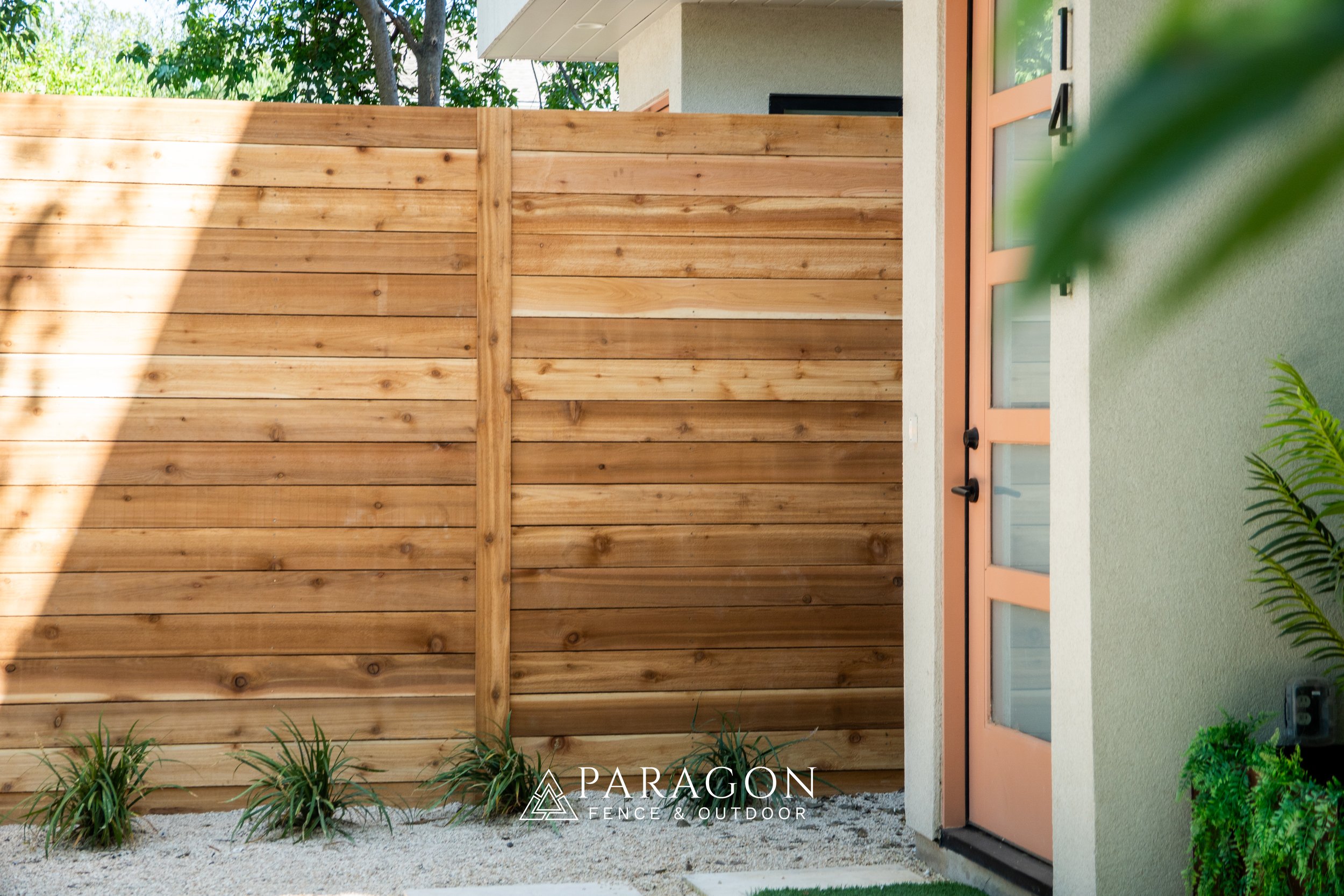
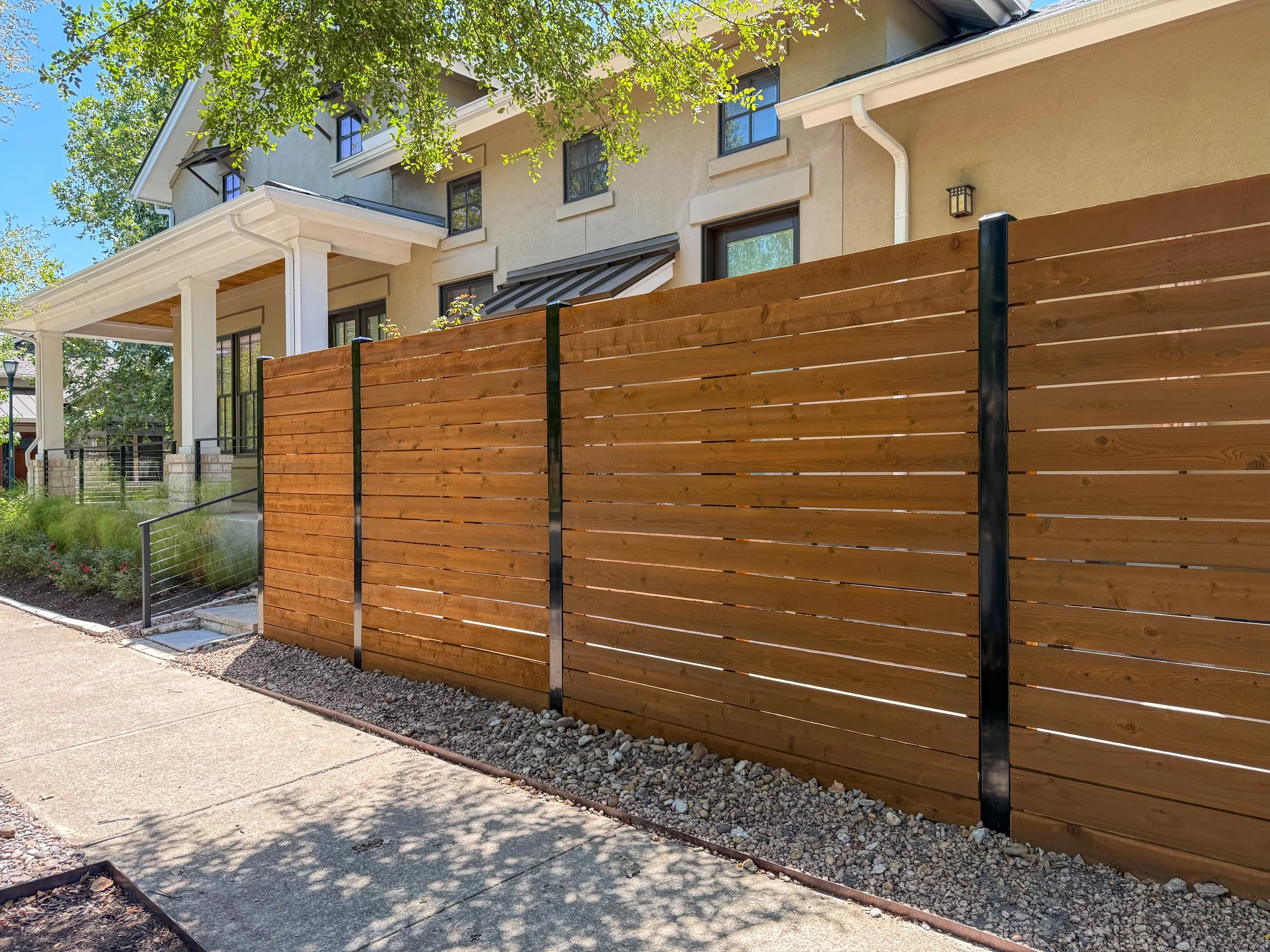
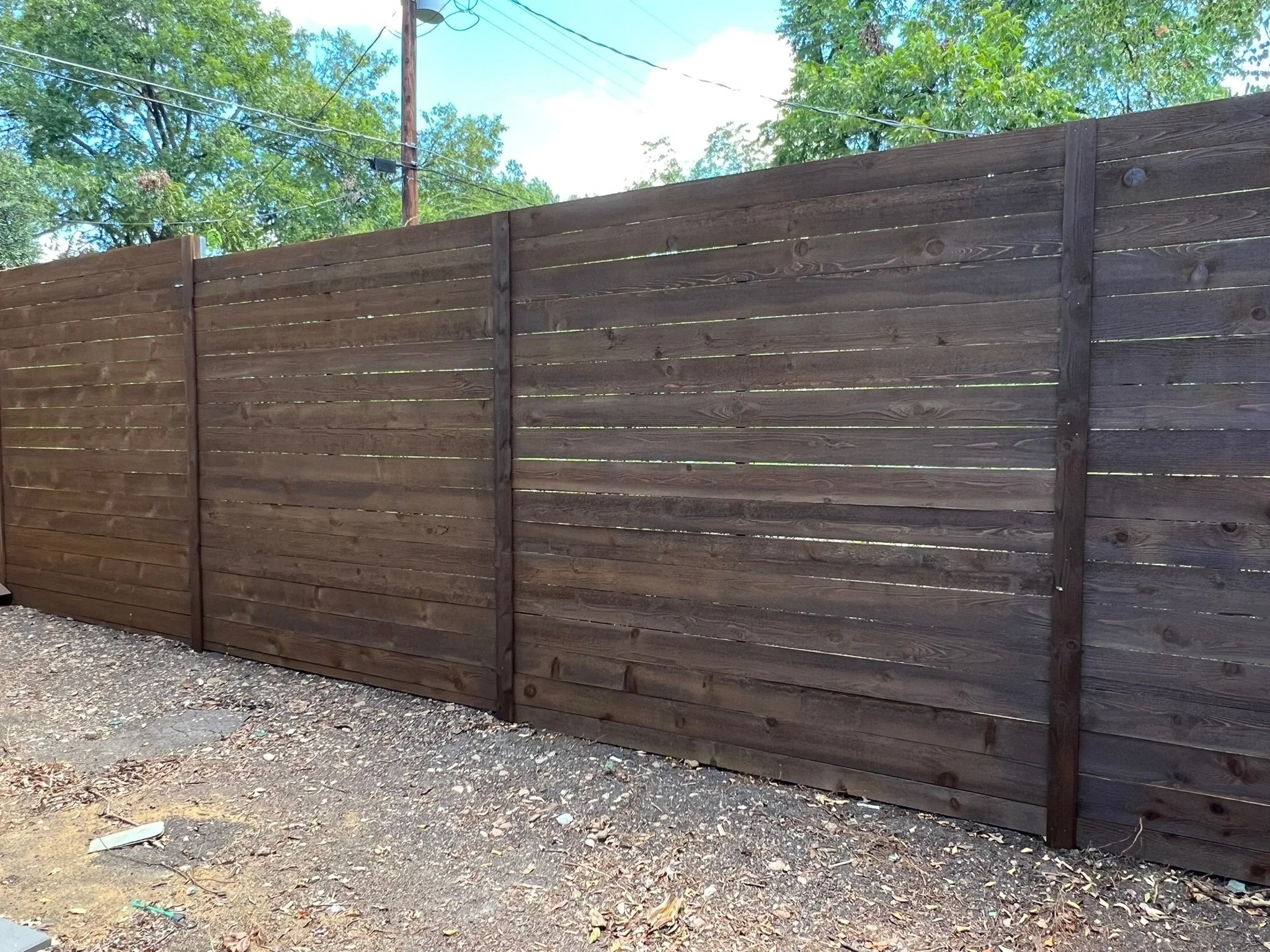
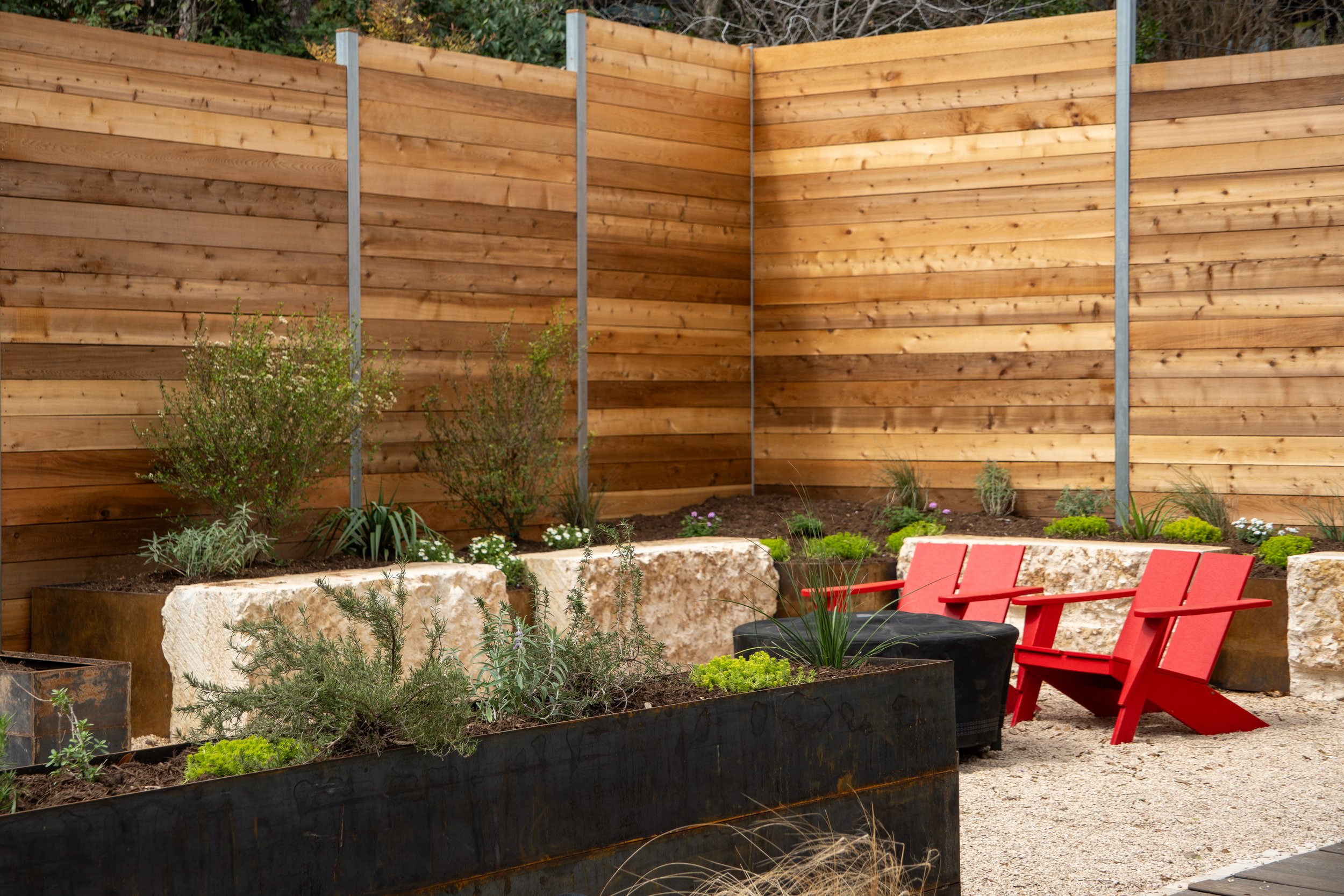
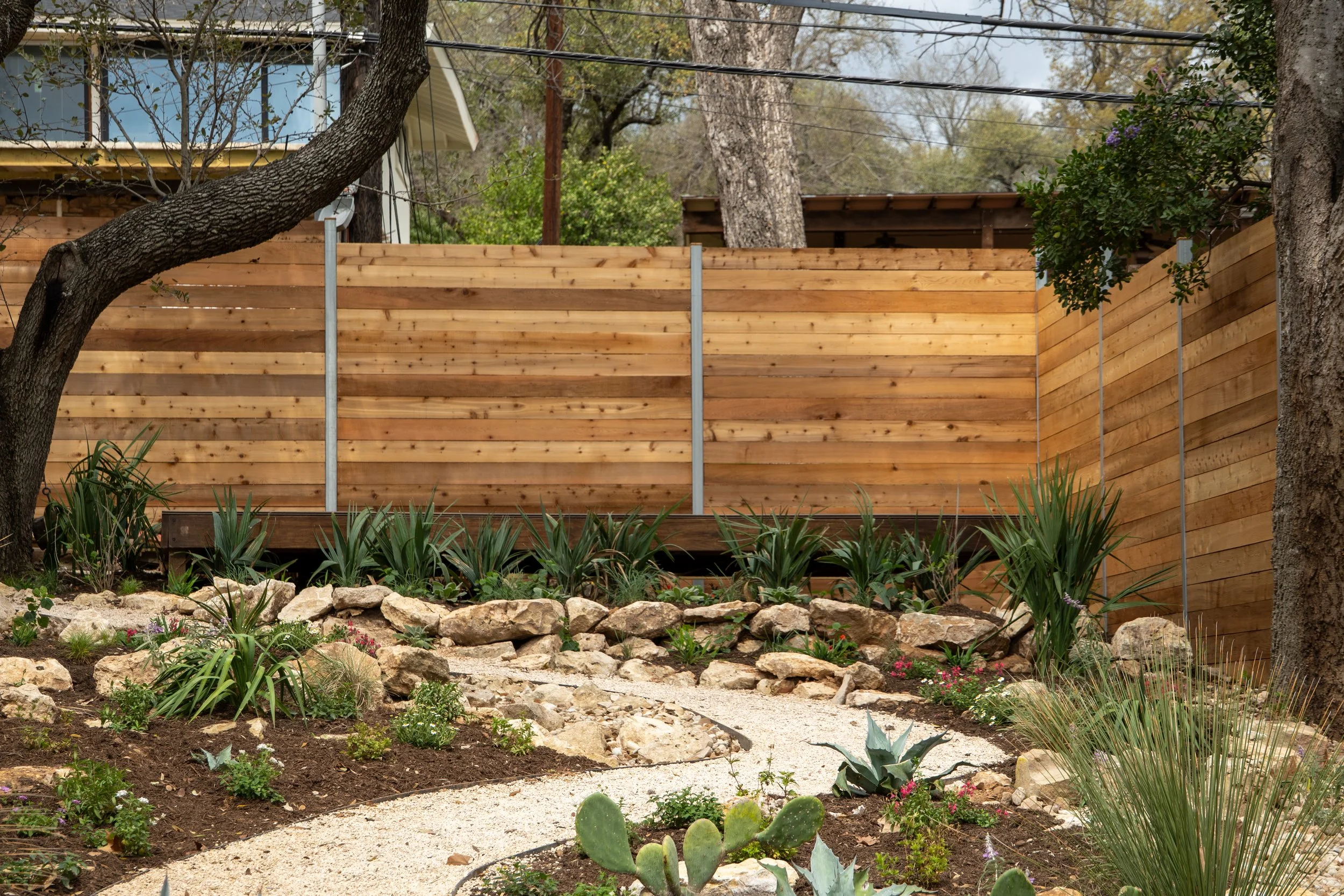
A horizontal privacy fence is the most common horizontal style we build across Austin — it works especially well on corner lots in Hyde Park, East Austin, and South Austin neighborhoods where the yard faces a busy street. It delivers a clean, modern look with full coverage and long, smooth lines.
A 2×6 cedar cap sharpens the top edge, while steel-framed sections keep everything straighter over time. For the most refined finish, pairing a 2×6 cap and trim with steel framing blends warm cedar with added strength.
Renderings below show how each upgrade changes the look.
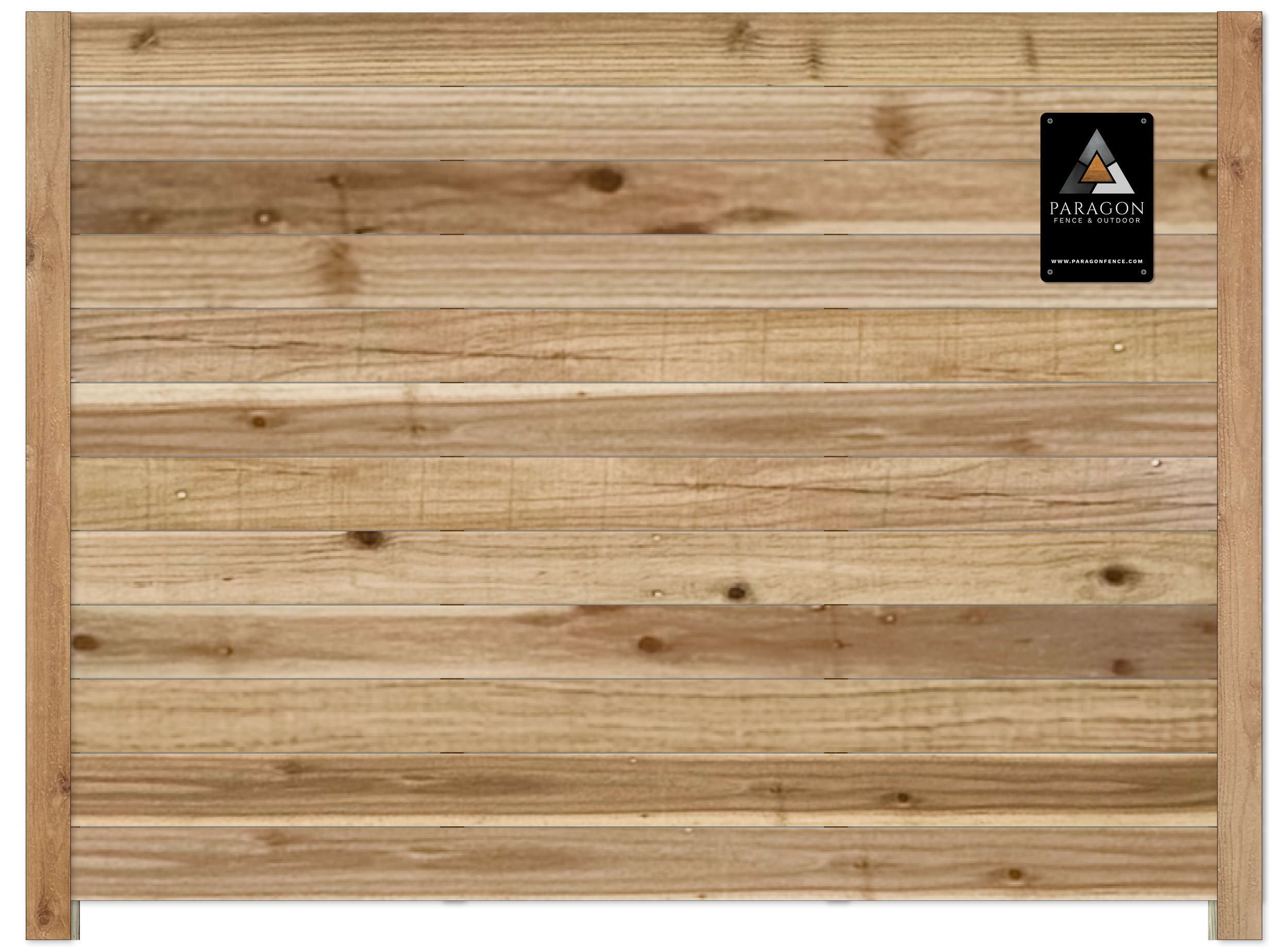
Essential materials: Includes 5/8”×6" Japanese cedar pickets, treated pine posts, and basic hardware
Our standard: Includes 5/8”×6" Western Red Cedar pickets, steel posts, and high-quality hardware
Premium materials: Thicker, 3/4”×6” Western Red Cedar pickets, steel posts, premium hardware
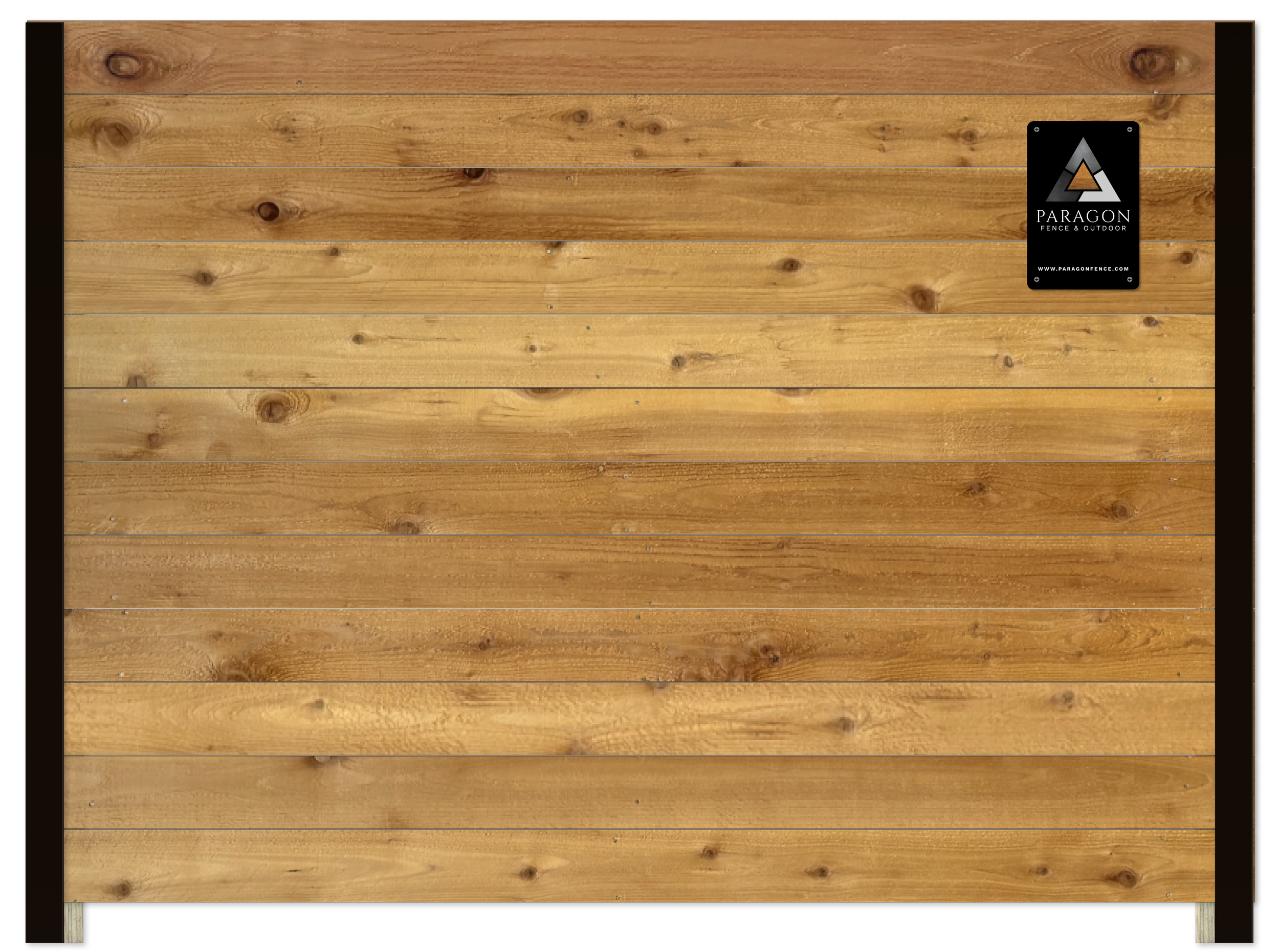
Upgrade option: Standard horizontal fence framed with black or galvanized 3" steel posts
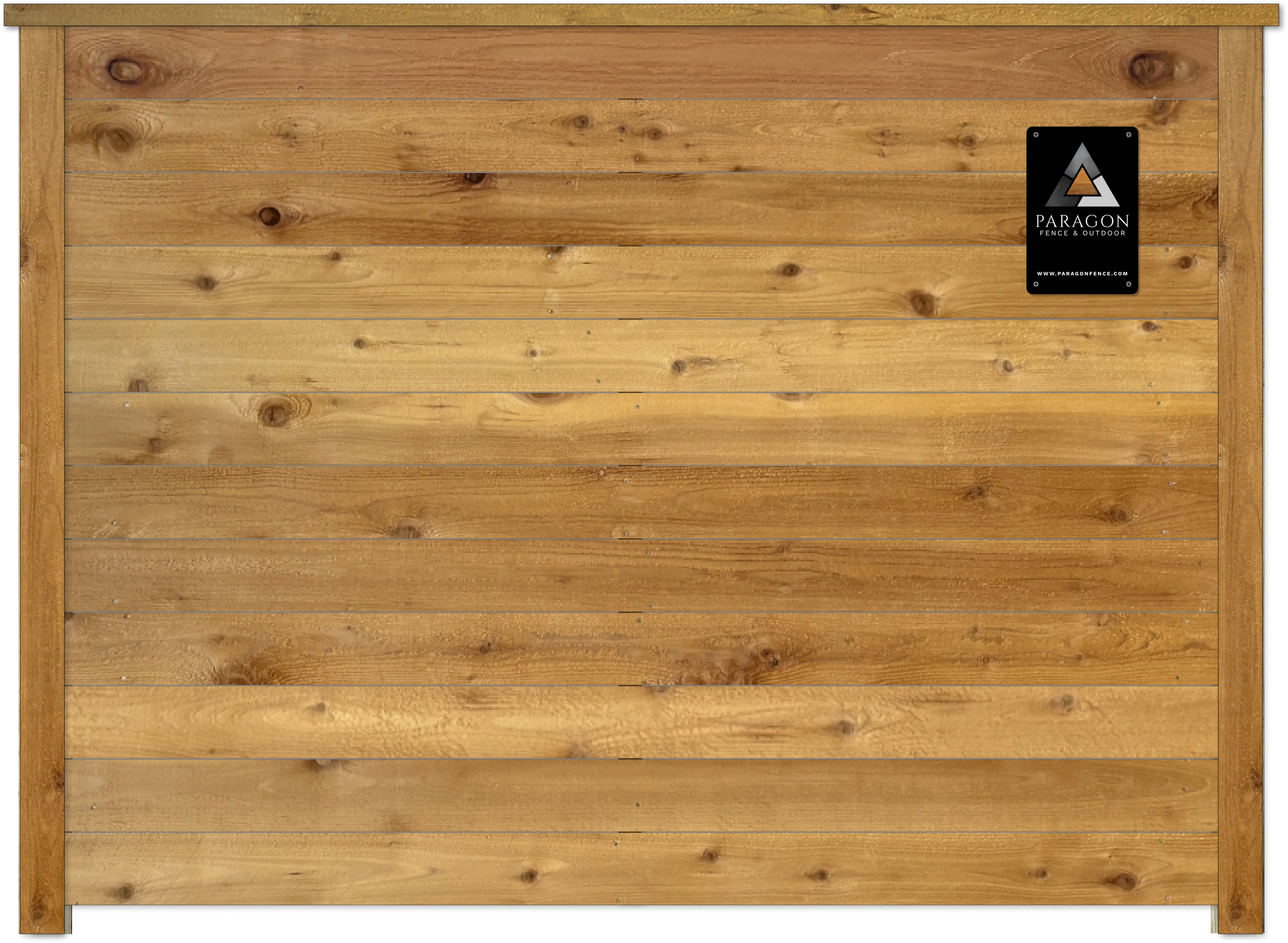
Upgrade option: Includes a 2x6 cedar cap along the top and framed with cedar trim on both sides
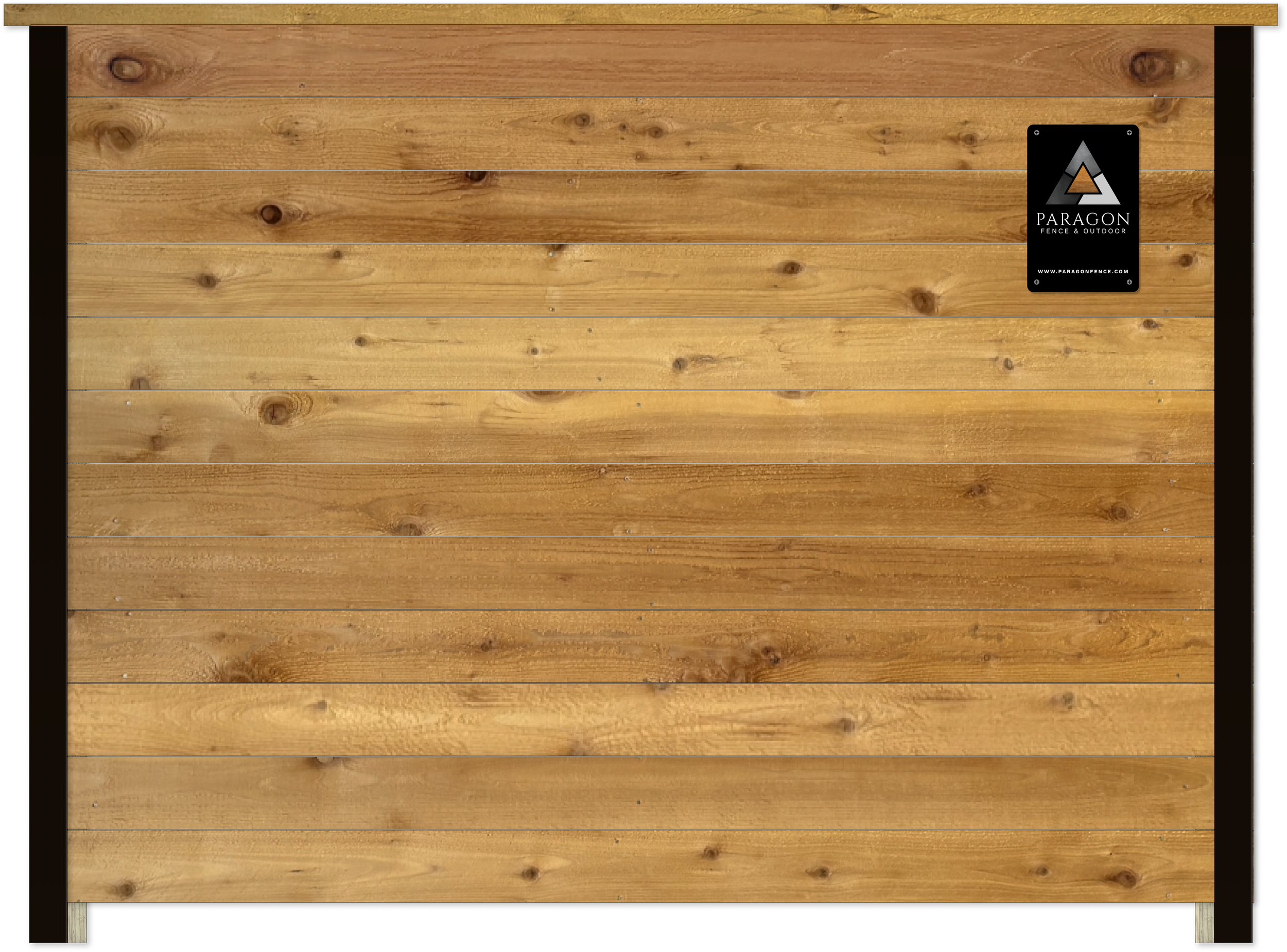
Upgrade option: Includes a 2x6 cedar cap and framed with black or galvanized 3" steel posts
horizontal semi-privacy
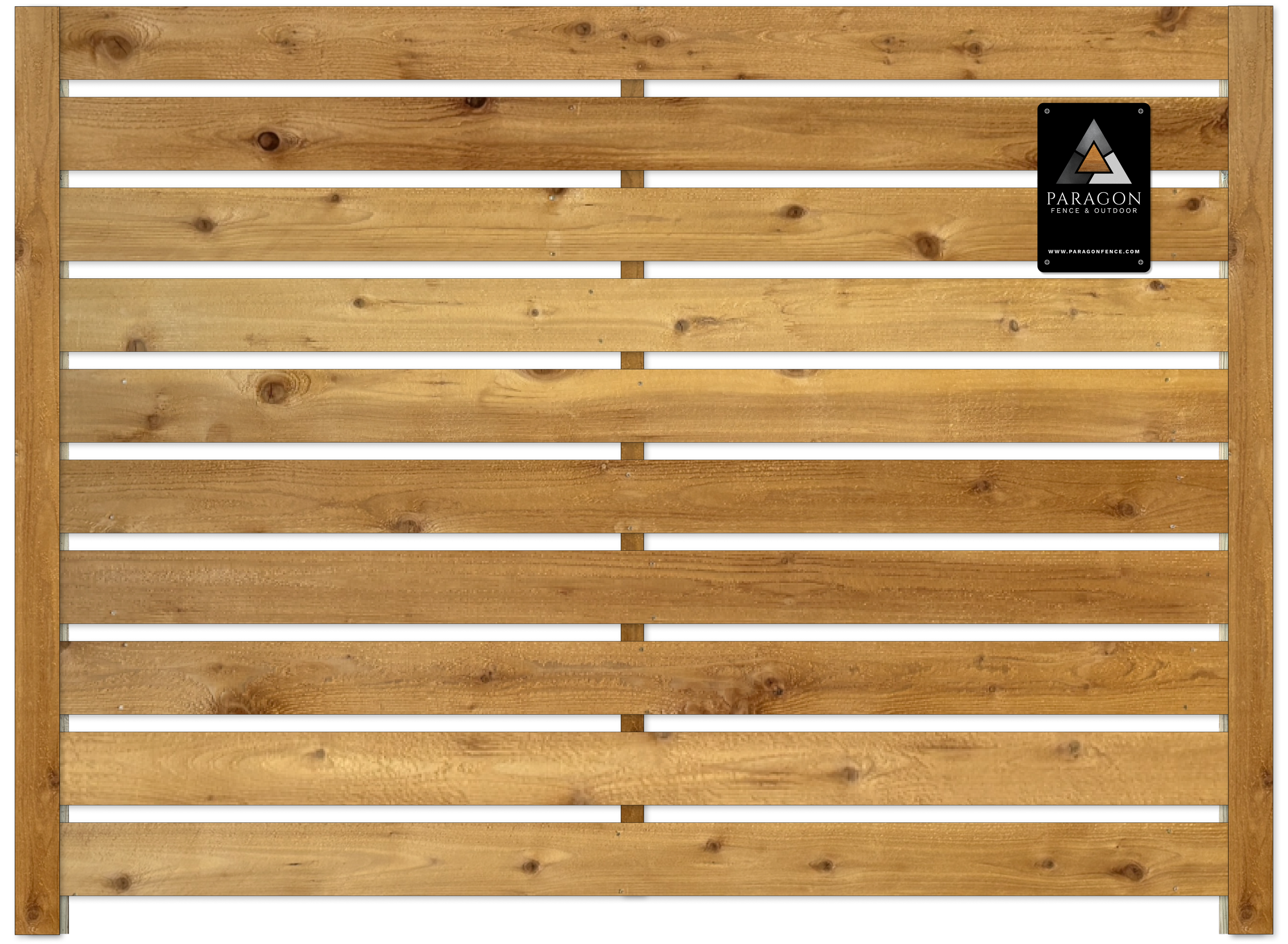
A horizontal semi-privacy fence is a good option for yards that back up to a greenbelt or open space in neighborhoods like Barton Hills or Circle C, where full privacy isn't the priority but the design still matters. It defines the yard without shutting it in, letting more light through while keeping that sleek, linear look.
A 2×6 cedar cap adds a clean finish, steel-framed sections with a cedar cap boost long-term stability, and 3” or 4” pickets let you fine-tune how open the fence feels.
Renderings below help show the spacing and upgrades.
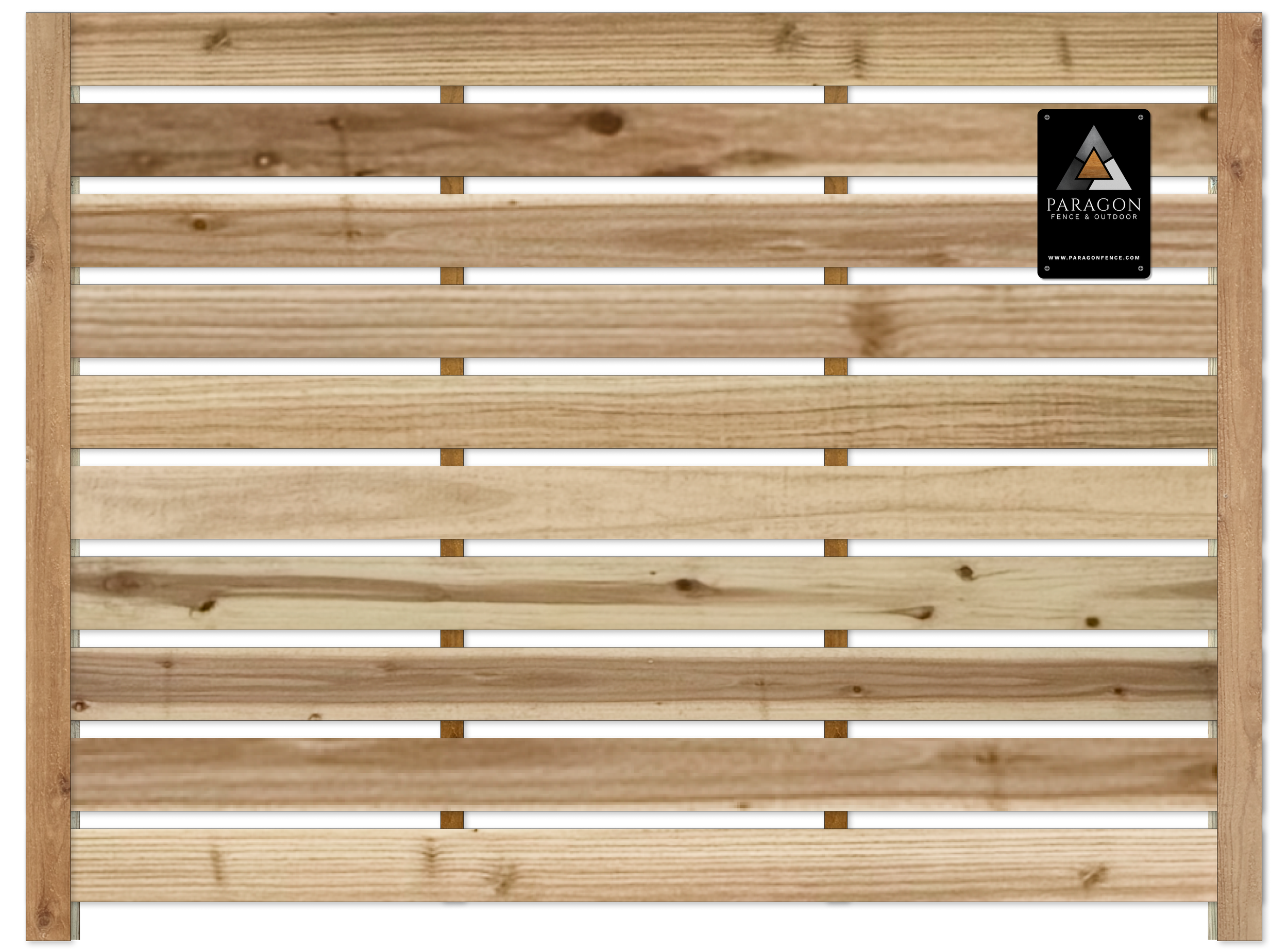
Essential materials: Includes 5/8”×6" Japanese cedar pickets, treated pine posts, and basic hardware
Our standard: Includes 5/8”×6" Western Red Cedar pickets, steel posts, and high-quality hardware
Premium materials: Thicker, 3/4”×6” Western Red Cedar pickets, steel posts, premium hardware
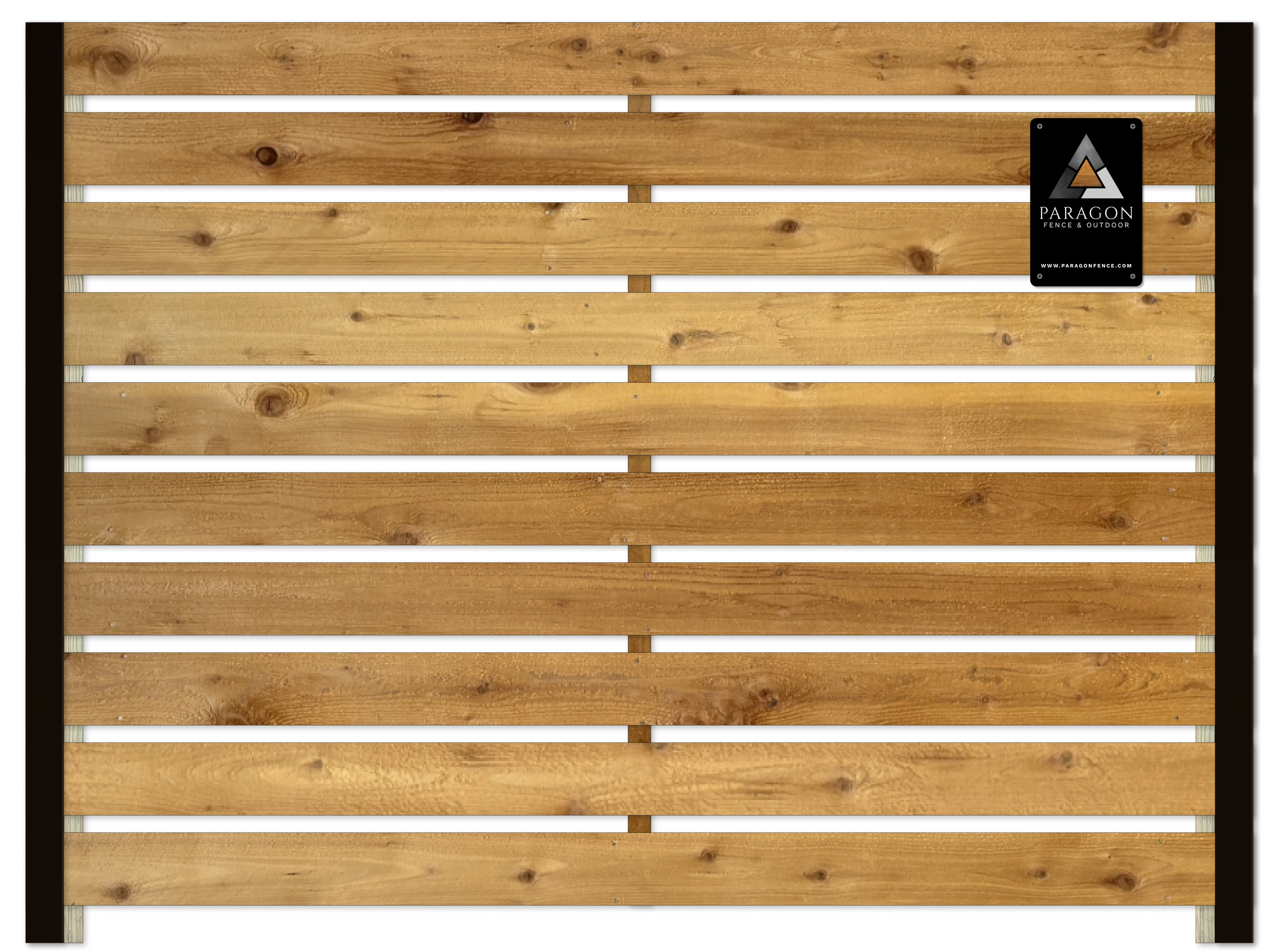
Upgrade option: Standard semi-privacy horizontal fence framed with black or galvanized 3" steel posts
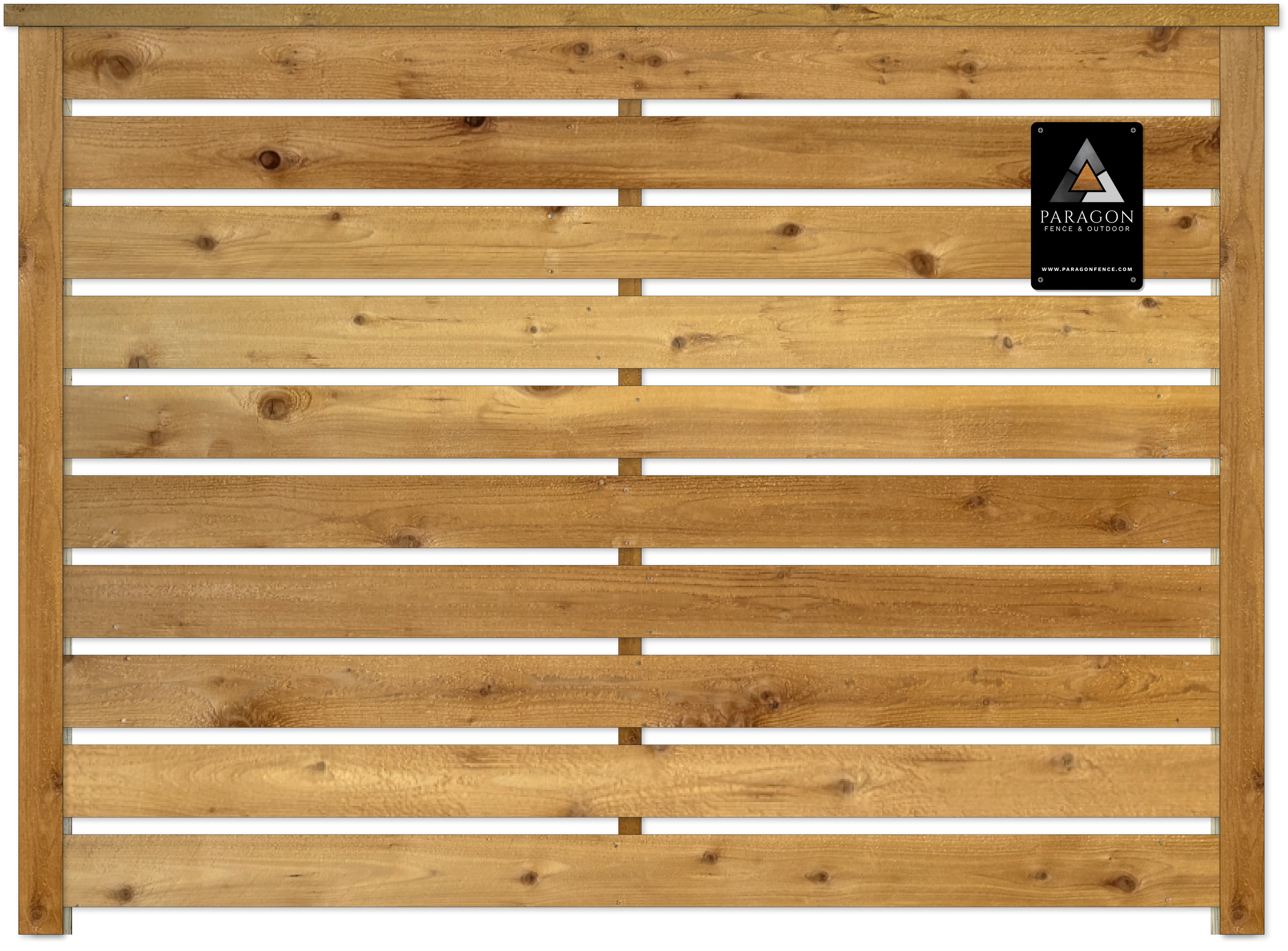
Upgrade option: Includes a 2x6 cedar cap along the top and framed with cedar trim on both sides
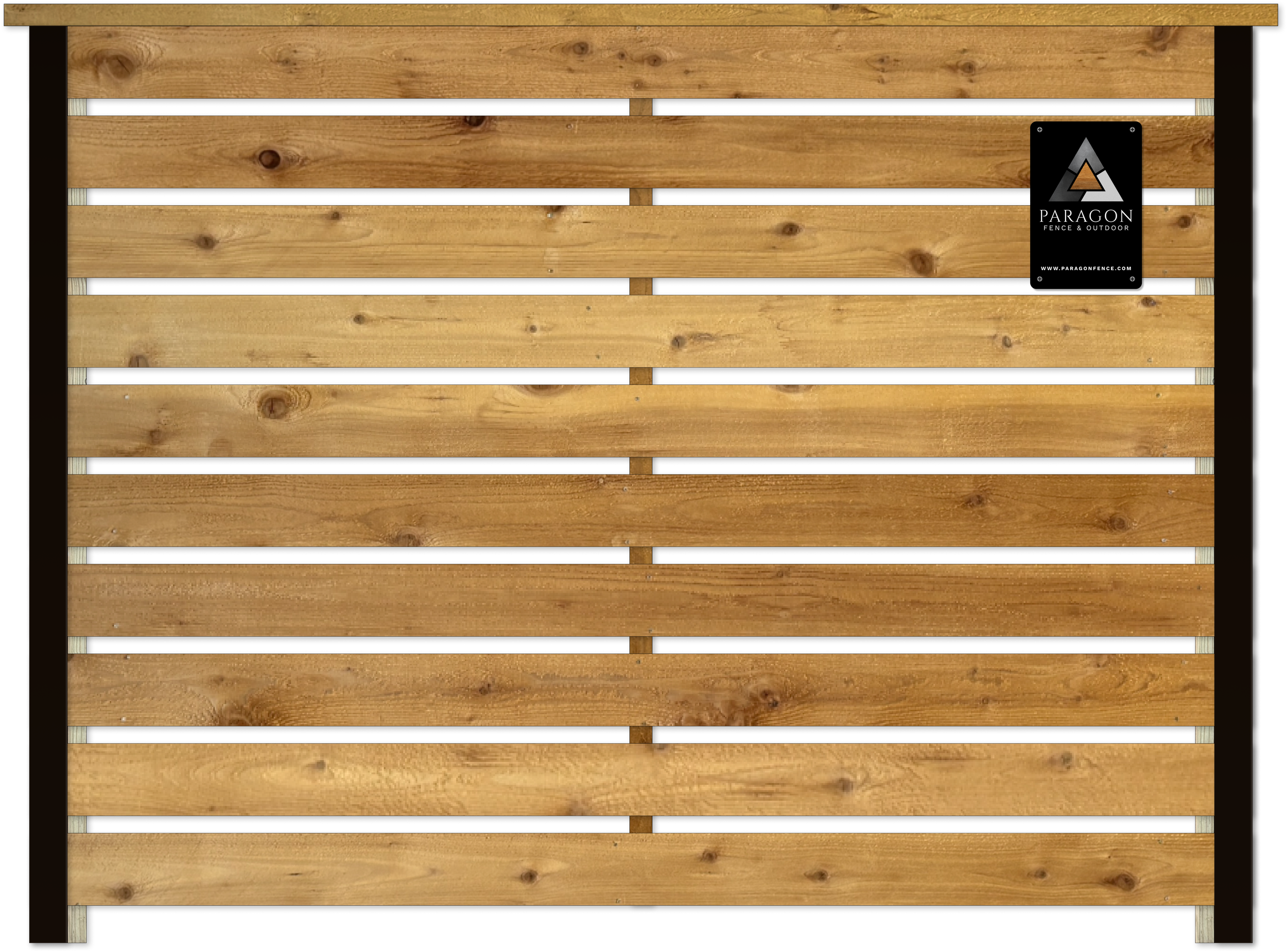
Upgrade option: Includes a 2x6 cedar cap and framed with black or galvanized 3" steel posts
horizontal board-on-board
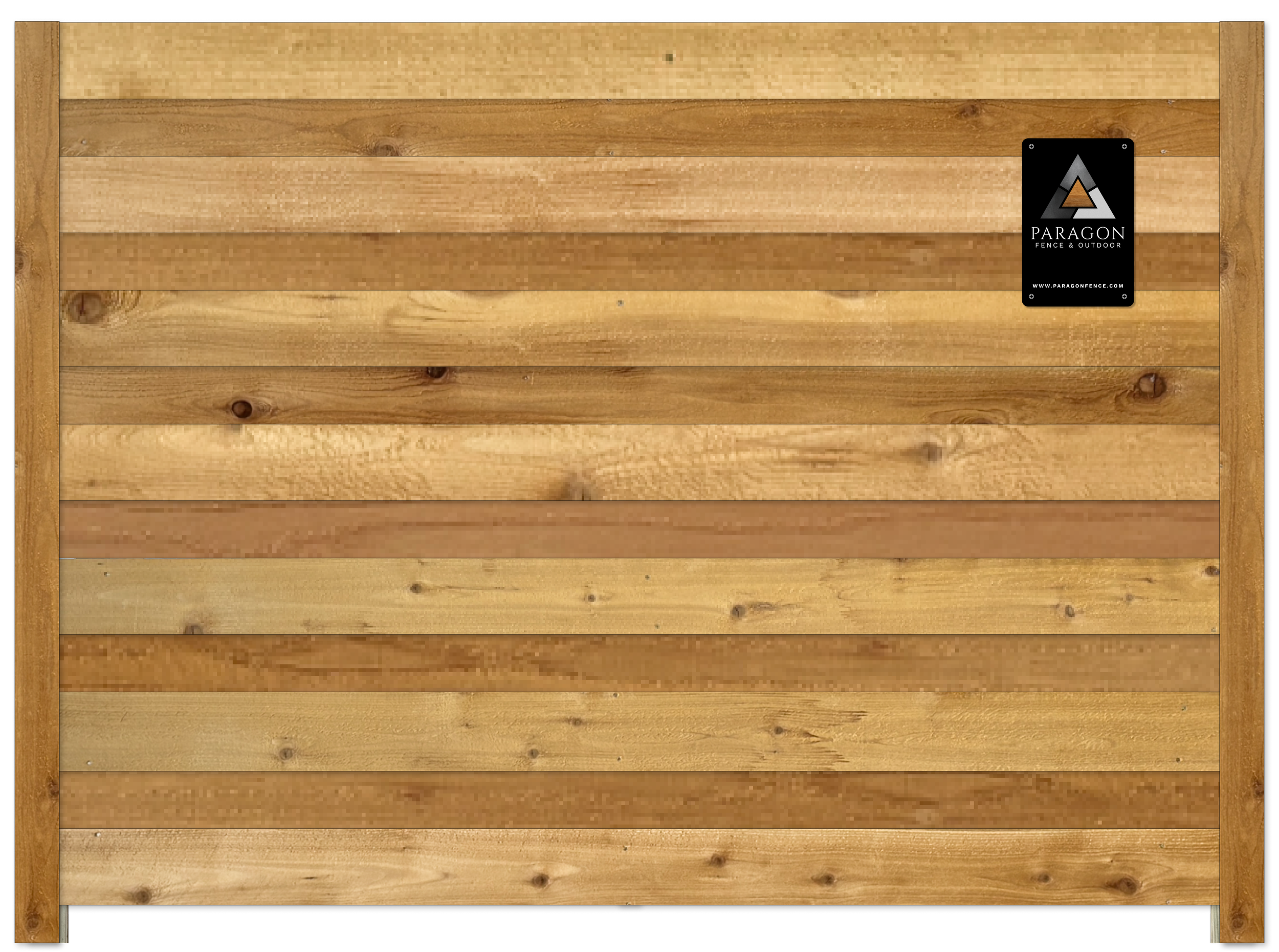
A horizontal board-on-board fence gives you total privacy. The layered overlap also handles Austin's storms better than a standard privacy fence — useful on exposed lots in West Austin or Cedar Park where gusts can put real pressure on a fence line.
A 2×6 cedar cap adds a bold, finished top line, and steel-framed sections with a cedar cap bring extra rigidity while keeping the face fully cedar.
You’ll see the variations in the renderings below.
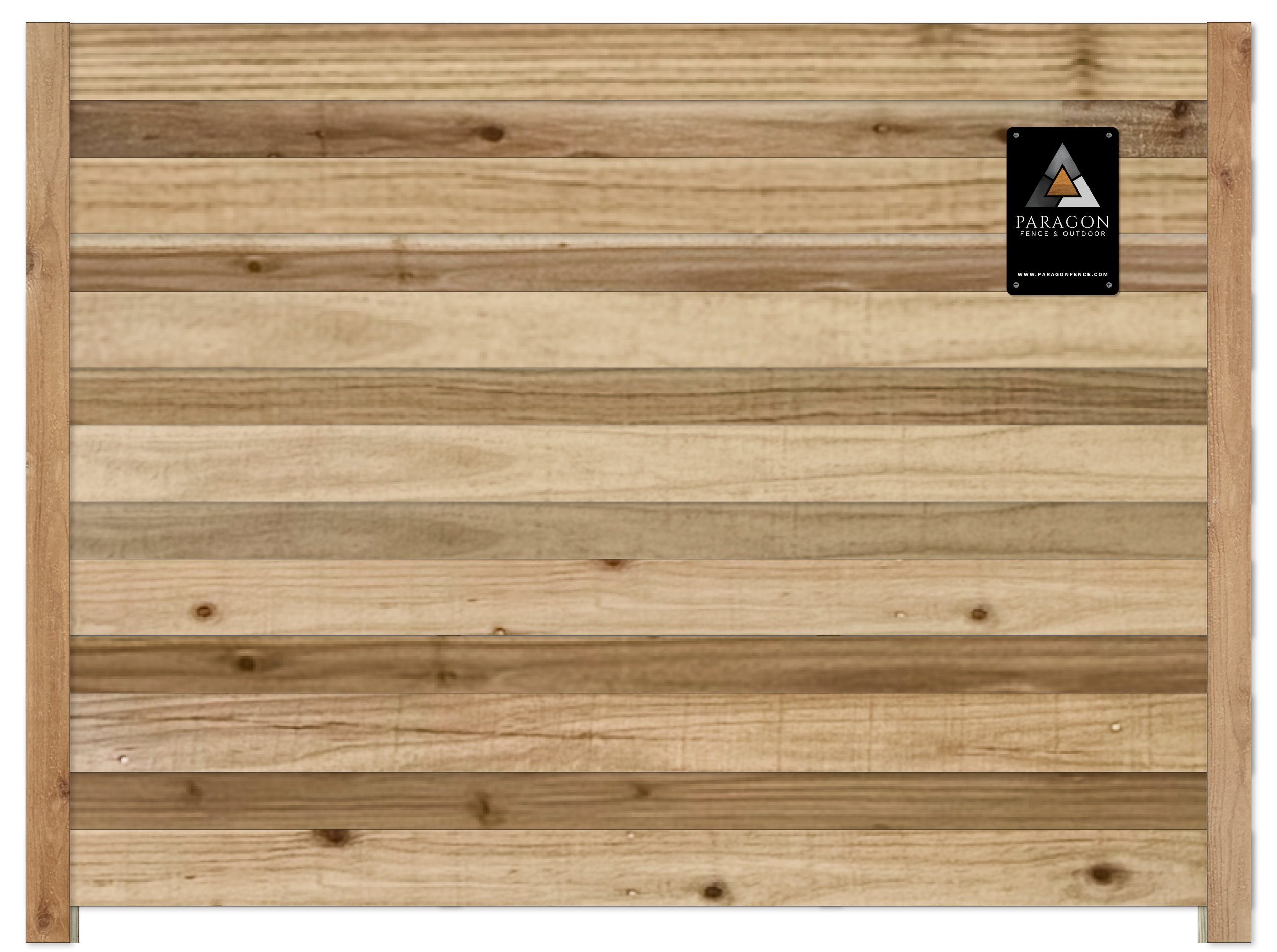
Essential materials: Includes 5/8”×6" Japanese cedar pickets, treated pine posts, and basic hardware
Our standard: Includes 5/8”×6" Western Red Cedar pickets, steel posts, and high-quality hardware
Premium materials: Thicker, 3/4”×6” Western Red Cedar pickets, steel posts, premium hardware
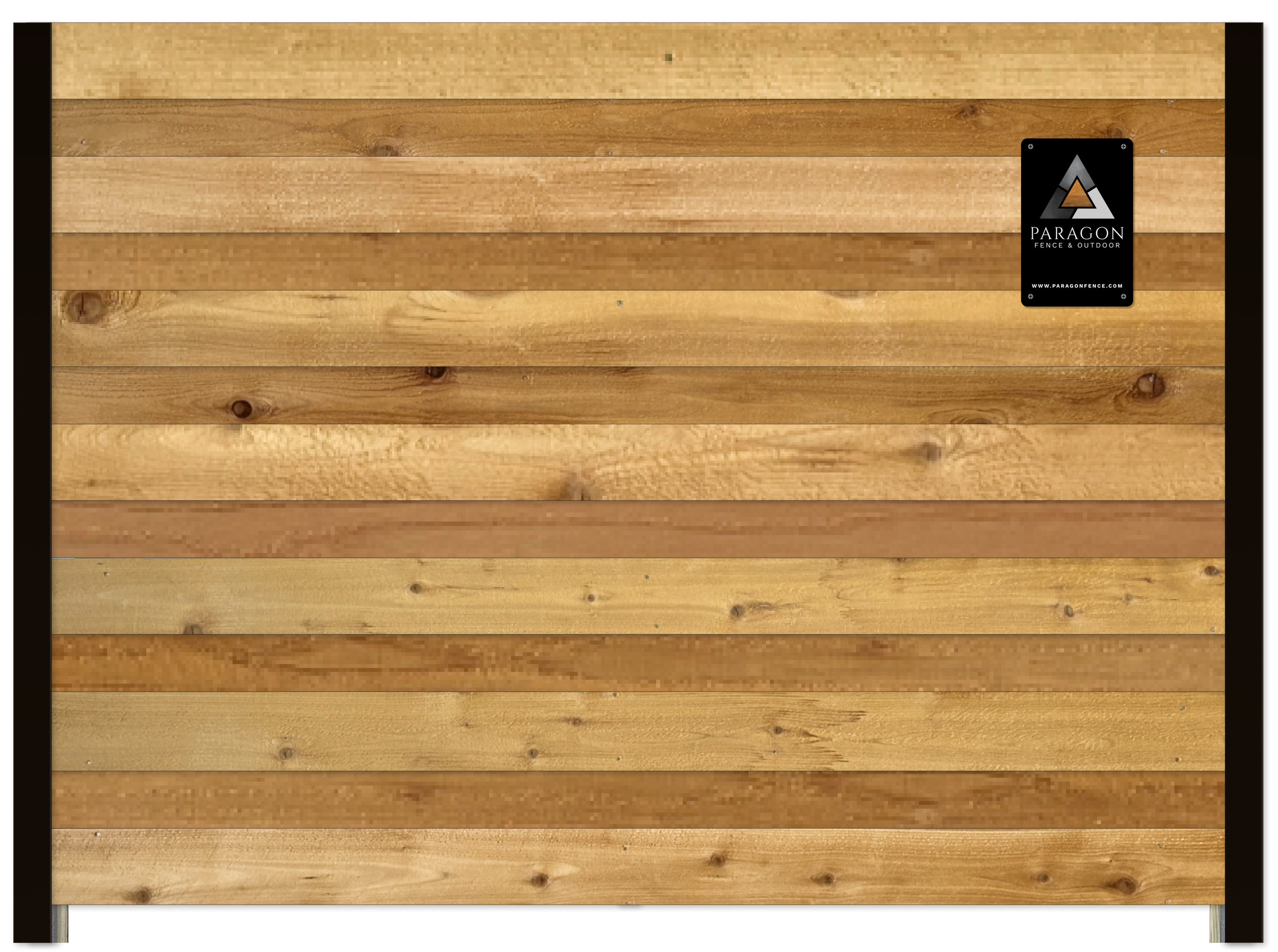
Upgrade option: Standard board-on-board horizontal fence framed with black or galvanized 3" steel posts
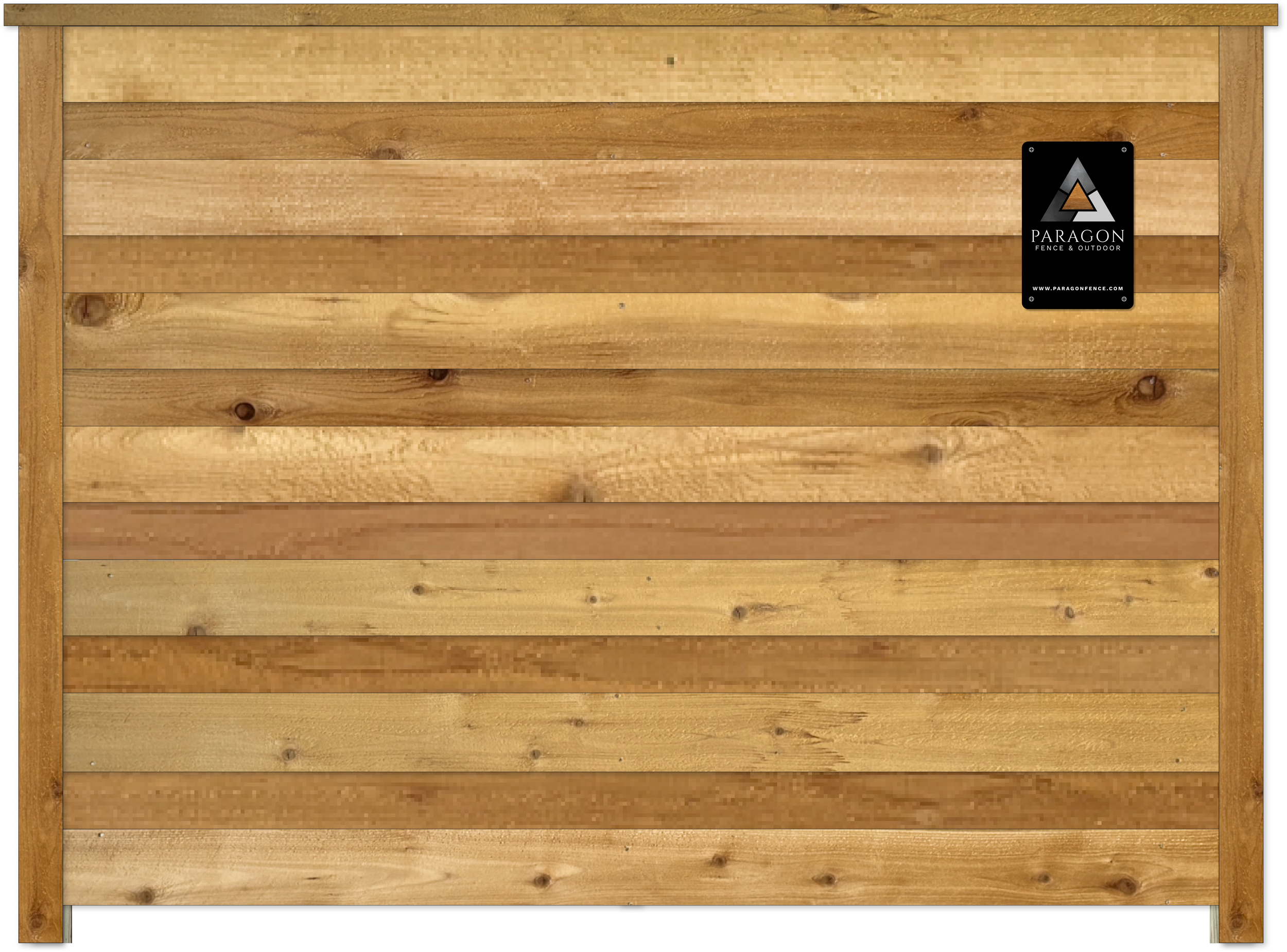
Upgrade option: Includes a 2x6 cedar cap along the top and framed with cedar trim on both sides
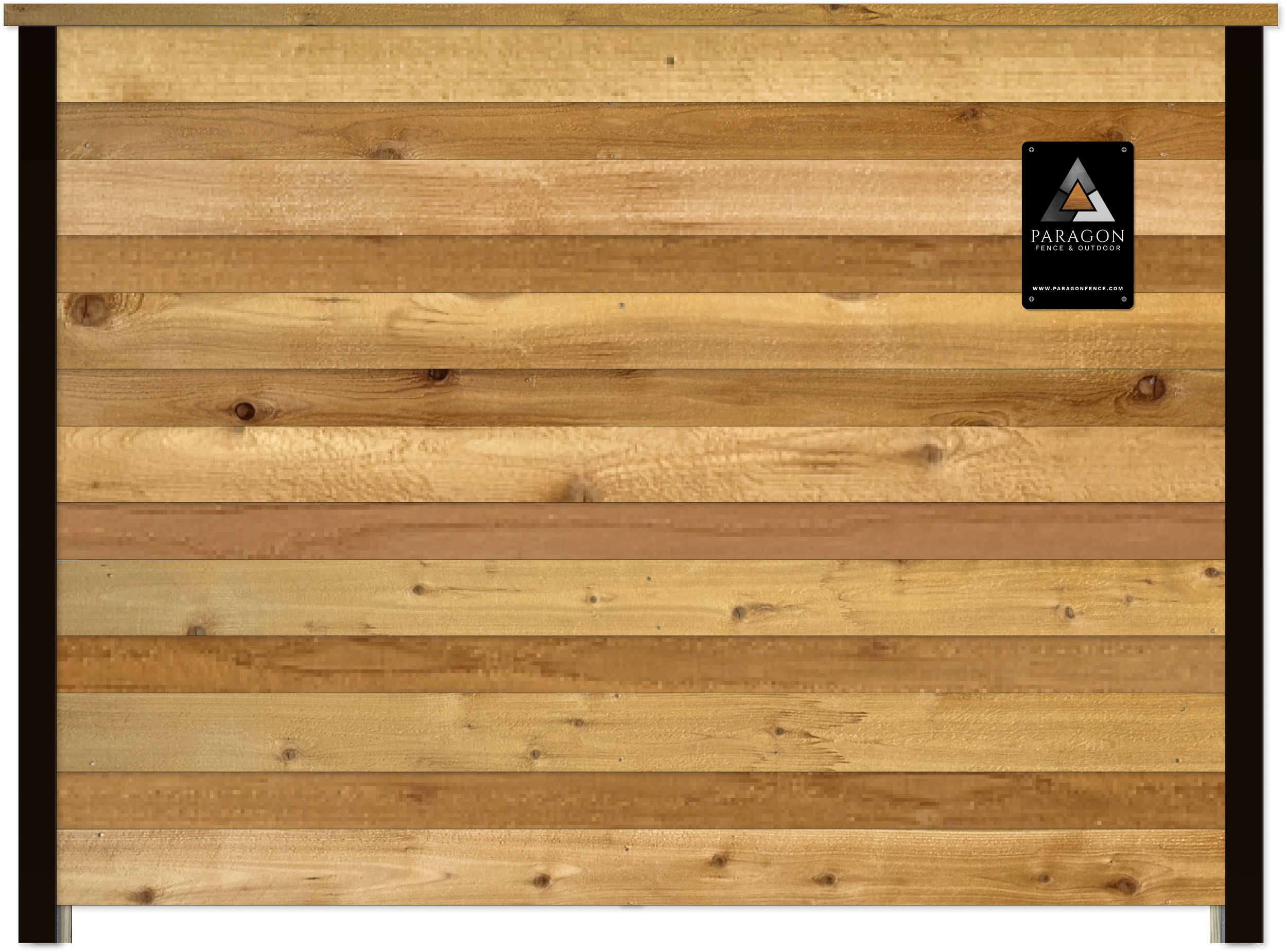
Upgrade option: Includes a 2x6 cedar cap and framed with black or galvanized 3" steel posts
horizontal shadow box
A horizontal shadow box fence is one of the better choices for shared property lines where both sides of the fence are visible — the staggered boards look intentional from either direction. It offers privacy with a lighter feel and the staggered boards create depth and allow airflow without fully opening the fence up.
A 2×6 cedar cap cleans up the top and ties the whole design together.
Check out the rendering below to see the layout.
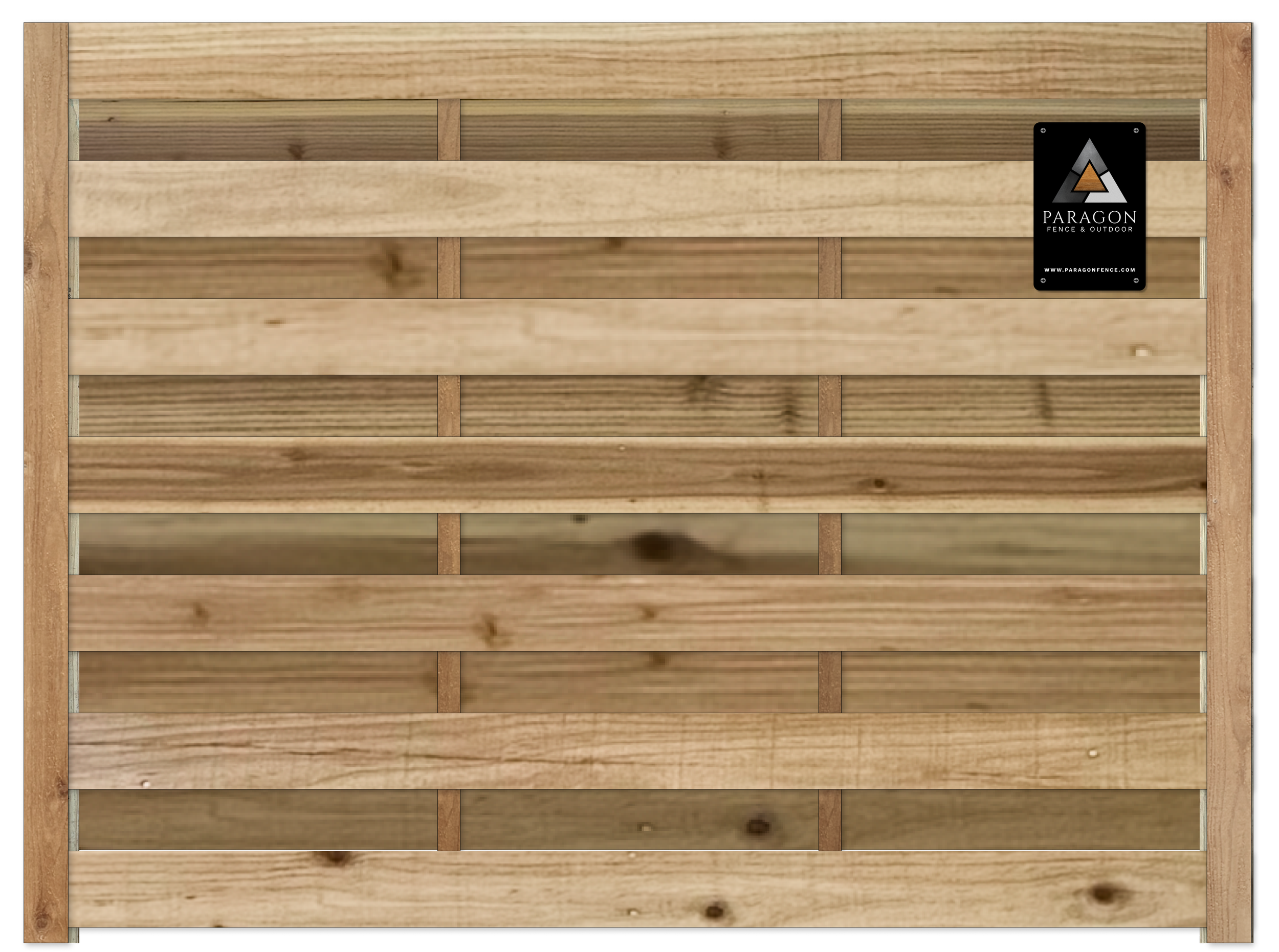
Essential materials: Includes 5/8”×6" Japanese cedar pickets, treated pine posts, and basic hardware
Our standard: Includes 5/8”×6" Western Red Cedar pickets, steel posts, and high-quality hardware
Premium materials: Thicker, 3/4”×6” Western Red Cedar pickets, steel posts, premium hardware
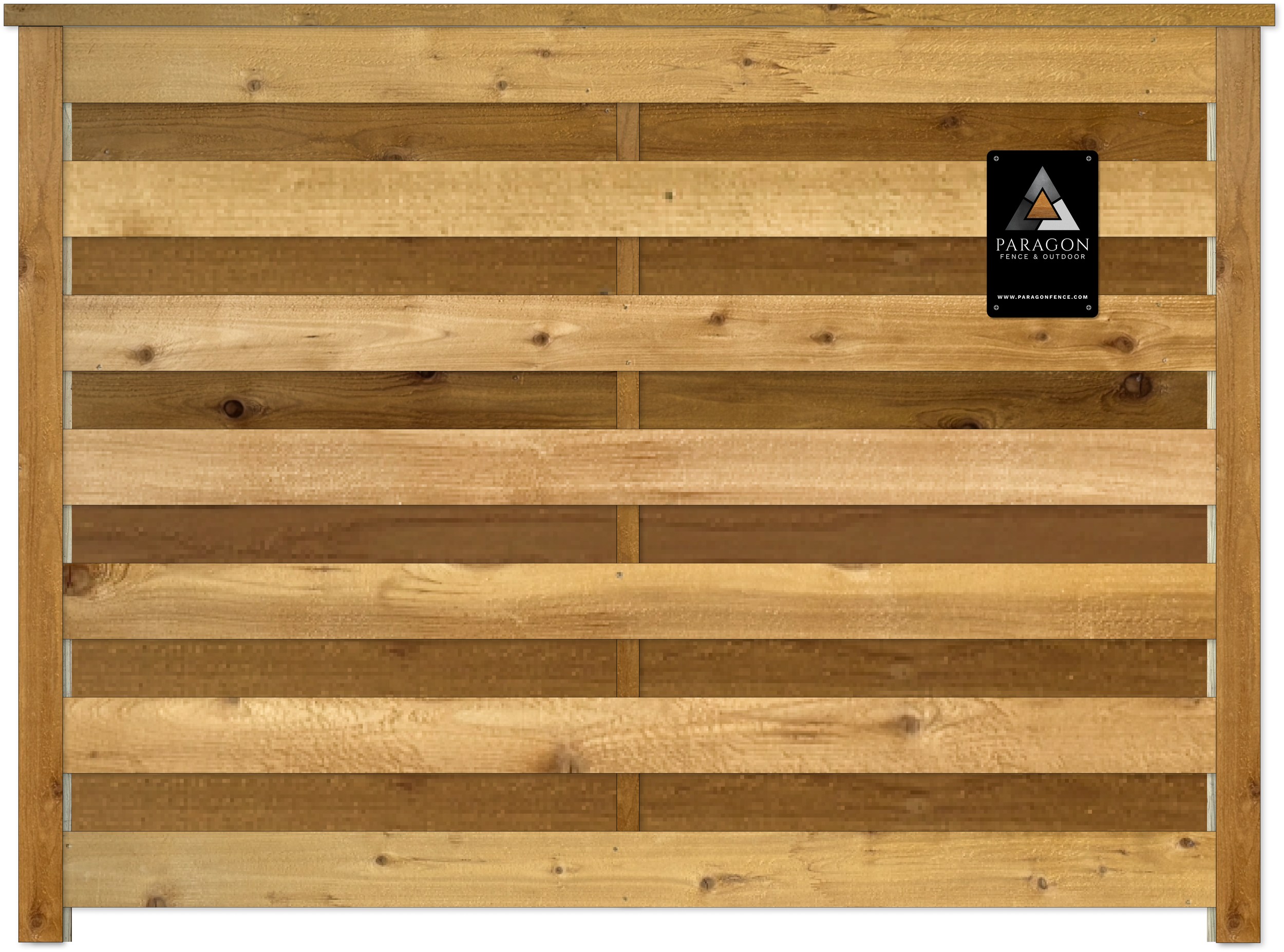
Upgrade option: Includes a 2x6 cedar cap along the top and framed with cedar trim on both sides

Upgrade option: Includes a 2x6 cedar cap and framed with black or galvanized 3" steel posts
horizontal semi-privacy top
A horizontal fence with a semi-privacy top blends solid privacy on the lower half with a lighter, semi-open top section for a modern look that isn’t too heavy.
A 2×6 cedar cap finishes the top line and brings the whole design together.
A rendering is included below so you can picture the proportions.
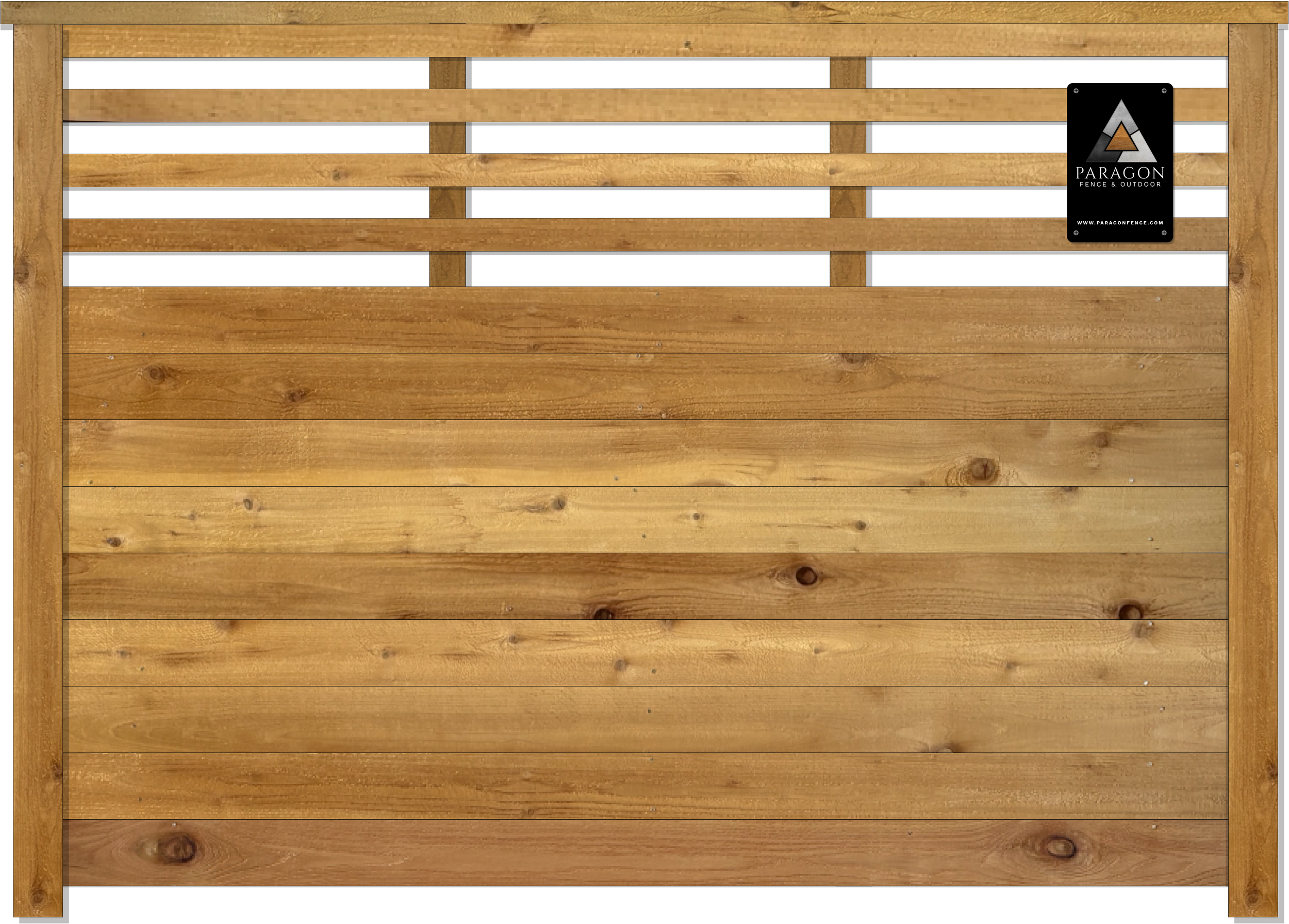
Upgrade option: Includes a 2x6 cedar cap along the top and framed with cedar trim on both sides
HORIZONTAL FENCE FAQS
-
Generally yes, but not dramatically. The main cost driver is post material — horizontal boards put more lateral pressure on posts than vertical pickets, so steel posts perform better on most horizontal builds. That's a modest upcharge over treated pine but worth it for the long-term stability. Material grade and any cap or trim upgrades factor in too.
-
With the right post setup, yes. The key is steel posts and proper spacing. A horizontal fence framed with 3×3 galvanized or powder-coated steel posts will outlast and outperform a treated pine post build — vertical or horizontal — in Austin's heat and soil conditions.
With horizontal fences, if the top or bottom picket rot due to moisture and exposure to the elements, it’s easier to replace one or two boards as opposed to all of them.
-
It requires stepped or racked panel sections to follow the grade, and how those transitions are handled makes a real visual difference in the finished fence. It's something worth talking through before anything gets designed — the solution varies a lot depending on how steep the slope is and what the yard is doing.
How much does a horizontal wood fence cost?
Horizontal fencing has its own pricing rhythm. The boards are typically wider, the layouts can be more design-driven, and the framing varies a bit from a standard vertical build. Just like any fence, though, your final cost comes down to three things: the total footage, the materials you choose, and the style you have your eye on.
To give you a ballpark, here’s what most homeowners can expect. These ranges are based on a minimum of 200 feet of 6’ high horizontal fencing and don’t include fence removal, upgraded style options, or gates. While we can use essential materials, like treated pine posts and Japanese cedar pickets to help keep costs down, it’s not something we often recommend for horizontal fences. This style really benefits from higher-grade lumber for both appearance and longevity, and many Austin-area HOAs also require it.
If you want help comparing styles or dialing in what fits your space and budget, we’re happy to walk through it with you.
Essential materials
$30-42
per ft.
4×4 treated pine posts
2×4 treated pine rails
5/8”×6 Japanese cedar pickets
Exterior-grade screws
Stainless steel nails
Our standard
$43-56
per ft.
Galvanized steel posts
2×4 treated pine rails
5/8”×6” Western Red Cedar pickets
Exterior-grade screws
Stainless steel nails
Premium materials
$51-67
per ft.
Galvanized steel posts
2×4 treated pine rails
3/4”×6” Western Red Cedar pickets
Exterior-grade screws
Stainless steel nails
If a horizontal fence has been on your list, the best next step is a quick consult followed by a site visit. Jefferson walks every job before anything gets estimated — it's the only way to account for slope, setback requirements, existing structures, and whatever else the yard is doing that a square-footage calculator won't catch.
Free quotes, no pressure.