BULL PANEL, CATTLE PANEL, HOG PANEL, BULL PEN: WHAT'S THE DIFFERENCE?
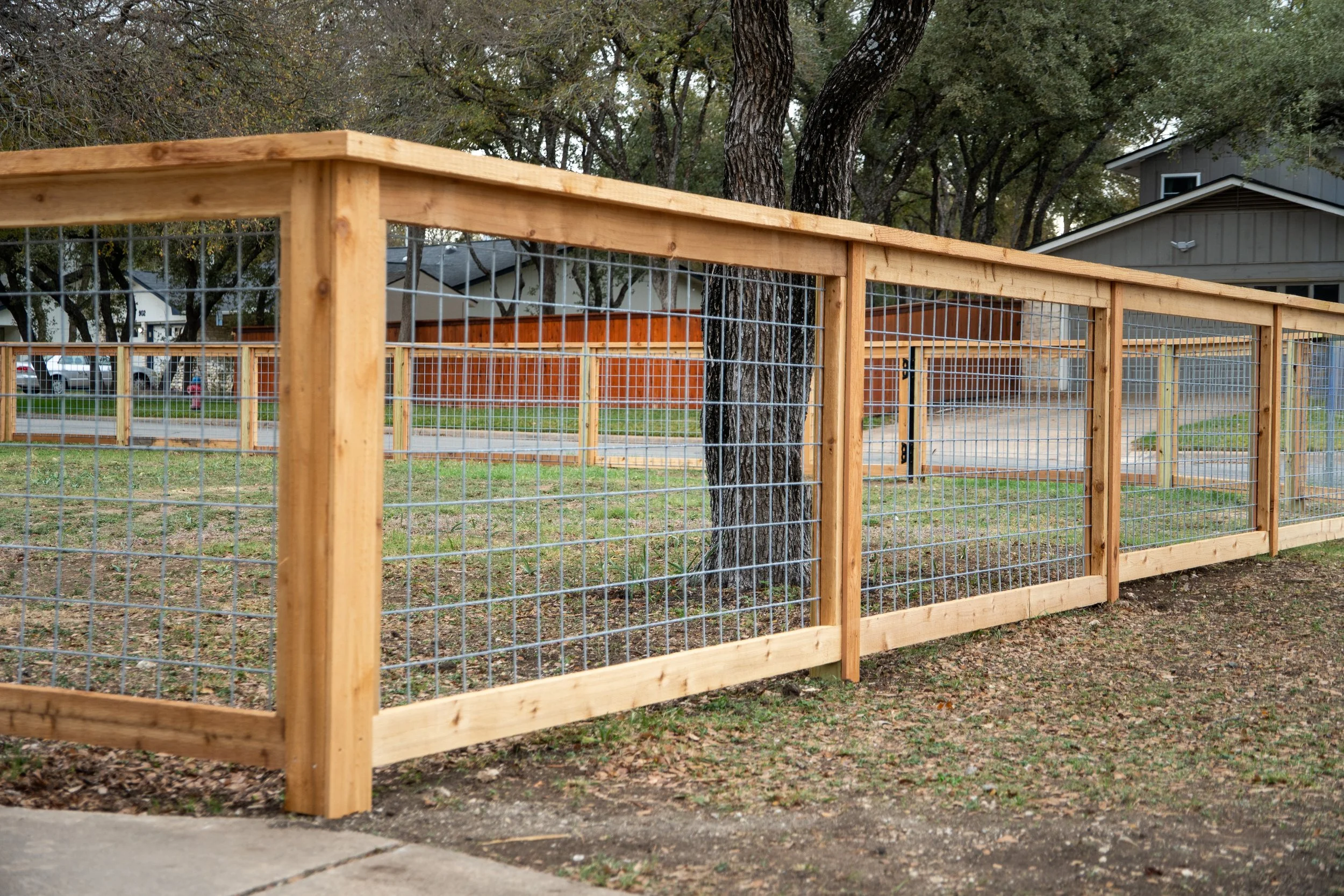
Wood-framed bull panel fence in Austin, TX with 4” x 4” welded wire panel.
If you've been shopping around for this style of fence — the one with the open welded wire panels set inside a wood or steel frame — you've probably noticed that nobody agrees on what to call it.
Bull panel fence. Cattle panel fence. Bull pen fence. Hog panel fence. Livestock panel fence. Welded wire fence. Ranch panel fence.
Depending on who you talk to, or which part of Texas you're from, you might hear any of these terms used to describe what is essentially the same concept: a sturdy welded wire panel framed in wood, steel, or a combination of both.
If you've Googled "cattle panel fence Austin" or "hog panel fence" or really any kind of livestock panel and ended up here, you're probably in the right place. Let's break down what these names actually mean, where the confusion comes from, and what actually matters when you're choosing this style of fence for your yard.
WHAT IS A BULL PANEL, EXACTLY?
A bull panel is a specific type of welded wire panel — typically around 16 feet long and available in various heights — made from heavy-gauge galvanized steel wire welded at every intersection. The wire is rigid, not flexible like chicken wire or chain link. It holds its shape under pressure, which is part of why it works so well as a fencing material.
The name comes from its agricultural use. Bull panels are designed to contain large livestock — and need to be strong enough to withstand impact and pressure from heavy animals. That same strength is what makes them so appealing for residential fencing in Austin, where homeowners want visibility, airflow, and a fence that can handle dogs, kids, and decades of Texas weather.
SO WHAT'S THE DIFFERENCE BETWEEN BULL PANEL, CATTLE PANEL, AND HOG PANEL?
Here's where it can get confusing. What the fence is called is based on the animal it was designed around.
Bull panel is typically the heaviest gauge of the three. The wire is thicker, the grid spacing is larger (usually around 4x4 inches, but it can be larger or smaller), and it's built to withstand significant force. This is what we use most often for residential fencing because the heavier gauge holds up better long-term and looks more substantial when framed in wood or steel.
Cattle panel is similar to bull panel and the terms are sometimes used interchangeably — even by people in the fencing and agricultural supply industry. You'll see cattle panels at most farm supply stores and they're functionally very close to bull panels. The main differences are sometimes in the wire gauge and the grid spacing, but these vary by manufacturer and there's no universal standard. When someone in Austin says "cattle panel fence," they almost always mean the same thing as a bull panel fence.
Hog panel — also called hog wire — is different in one important way: the grid spacing is smaller at the bottom and larger at the top. This graduated spacing was designed to keep smaller animals (like hogs) contained while still being practical to manufacture. In residential fencing this smaller bottom spacing is sometimes preferred by homeowners with small dogs or puppies.
The short version: bull panel and cattle panel are largely interchangeable terms for the same product. All livestock panel can be framed in wood or steel and installed as residential fences, and they get lumped together under the informal umbrella of "welded wire fence" or "ranch panel fence." And unfortunately, the terms can sometimes be used loosely, both in fencing and in agriculture.
Whatever it’s called, what we’re focused on is the gauge (for strength and durability) and grid size, which determines the overall look.
WHY DO HOMEOWNERS IN AUSTIN LOVE THIS STYLE?
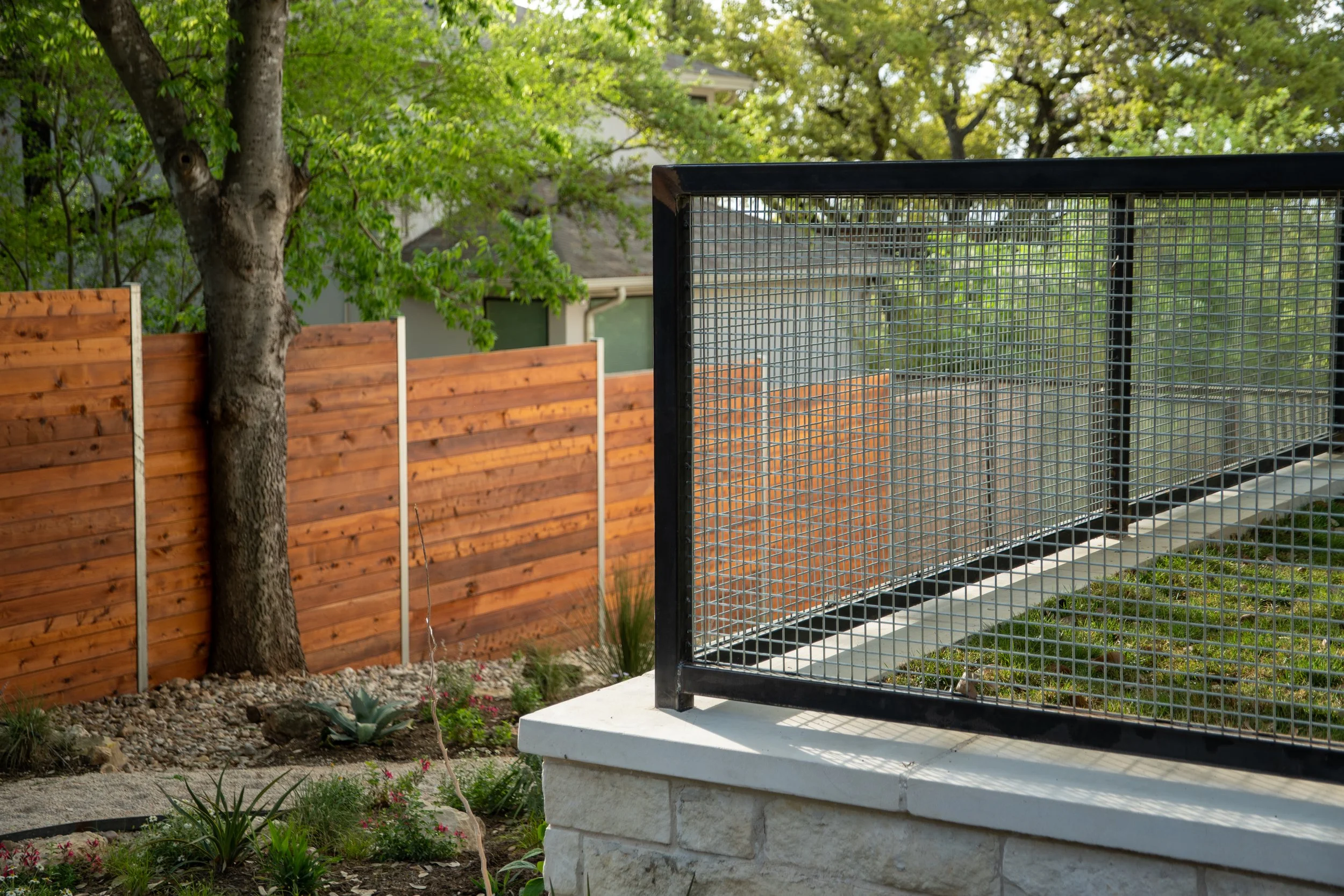
Steel-framed bull panel fence in Austin, TX with 1” x 1” welded wire panel.
A few reasons this fence style has taken off in Central Texas specifically:
It keeps the view. Unlike a cedar privacy fence, a bull panel fence defines your boundary without closing off your sightlines. For front yards, gardens, and properties with Hill Country views, that openness matters.
It works with the vibe. Framed in black powder-coated steel with cedar posts, a bull panel fence has a clean, modern-industrial look that fits the design-forward homes in Austin's central neighborhoods, Westlake, Travis Heights, and the Hill Country corridor particularly well.
It handles pets. The heavy gauge wire holds up to dogs running into it, leaning on it, and testing it repeatedly. With the right frame height and panel choice, it's one of the better options for containing large dogs while keeping the yard feeling open.
It's versatile. Frame it in wood for a more natural look, steel for a more modern feel, or combine both. You can add a cedar cap, raise the height, mix it with a privacy section, or pair it with a custom gate. There's a lot of room to build it how you want it.
WOOD-FRAMED VS. STEEL-FRAMED: WHICH IS BETTER?
The answer to this is…it depends on what you're going for, both aesthetically and structurally.
A wood-framed bull panel is a more traditional look. Cedar rails and treated pine posts with bull panel infill feel warm and natural, and they're generally less expensive than a fully steel-framed system. The tradeoff is longevity — wood is subject to rot, particularly if it’s in contact with dirt, leaves, and other things that can hold moisture.
A steel-framed bull panel is more expensive upfront but more durable in the long term. Black powder-coated or galvanized steel posts and rails won't warp, rot, or twist like wood can. The look is cleaner and more contemporary. For front yards or other areas where the fence is highly visible, steel framing tends to age better and require less maintenance. We can also go with a thick mild steel or corten steel if you like that rust patina look.
A combination of both — steel posts with cedar rails and a cedar cap and trim — is a popular middle ground that balances cost, look, and longevity.
WHAT ABOUT "WELDED WIRE FENCE" — IS THAT THE SAME THING?
Essentially, yes. "Welded wire fence" is a broader, more generic term that describes any fence using welded wire panels, including bull panel, cattle panel, hog panel, and other panel types. If you search "welded wire fence Austin TX" you'll largely land in the same category.
Some contractors and suppliers use "welded wire" as the technical term and "bull panel" as the colloquial one. Others flip it. In Austin, you'll hear both.
DOES THE PANEL TYPE MATTER FOR RESIDENTIAL FENCING?
For most residential projects in Austin, the difference between a true bull panel and a cattle panel from your local farm supply store is minimal. What matters more is the wire gauge — thicker is stronger and longer lasting — and the quality of the framing, posts, and installation.
A bull panel fence is only as good as the frame holding it. Undersized posts set at the wrong depth in Austin's clay soil will shift and lean over time, regardless of how good the panel is. Proper post depth, concrete footings sized for the load, and quality hardware at every connection point are what determine how long the fence actually lasts.
This is something worth asking about when you're getting quotes. The panel itself is often the least expensive part of the job — the difference in price between contractors usually comes down to post size, post depth, framing quality, and the hardware used at gates and corners.
WANT A SIMILAR LOOK WITHOUT THE LIVESTOCK PANEL?
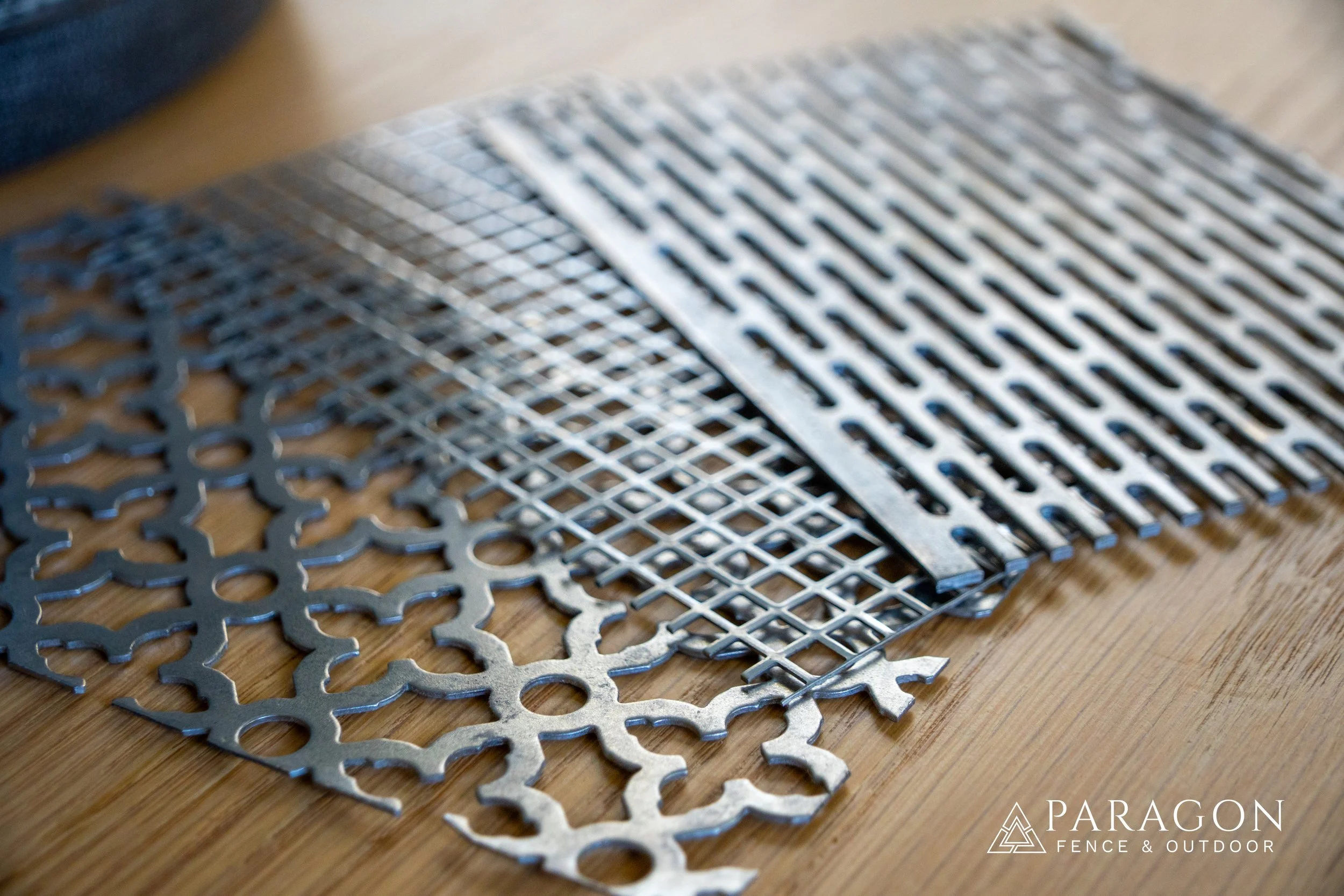
Perforated and expanded metal by McNichols.
If you love the open, airy feel of a bull panel fence but want something a little more refined or design-forward, there's another option worth knowing about: perforated steel panels.
Perforated steel — sometimes called laser cut steel — is exactly what it sounds like. A solid steel panel that has been cut with a specific pattern of holes or shapes, creating a design that lets light and air through while still functioning as a solid fence panel. The result is something that reads visually similar to a welded wire fence from a distance — open, modern, not a solid wall — but up close has an entirely different character.
Unlike a bull panel where the grid pattern is fixed, perforated steel is available in almost any pattern — geometric shapes, organic forms, custom designs that reference the architecture of your home, or even something completely one of a kind (more expensive, but still an option.) It's a super creative direction.
They're not the right fit for every yard or every budget, but for homeowners who want the openness of a welded wire fence with a more elevated, custom aesthetic — it's a conversation worth having.
WHAT DO WE CALL IT AT PARAGON?
We call it a bull panel fence because that's the panel we use most often — heavy gauge, sturdy, and built for the kind of long-term residential installation we stand behind.
But if you call it a cattle panel fence, a hog wire fence, a ranch panel fence, or just "that fence with the wire grid" — we’ll know what you mean, and we're happy to talk through which panel and framing combination makes the most sense for your yard.
You can see our full bull panel fence gallery of real Austin projects on our bull panel page, or reach out to schedule a free site visit.
READY TO TALK ABOUT YOUR YARD?
We serve Austin and surrounding areas including Cedar Park, Round Rock, Leander, Georgetown, Westlake, and the Hill Country corridor. Free quotes — reach out to schedule a site visit.