
WHAT’S THE BEST FENCE FOR AUSTIN, TX? A MATERIAL-BY-MATERIAL BREAKDOWN
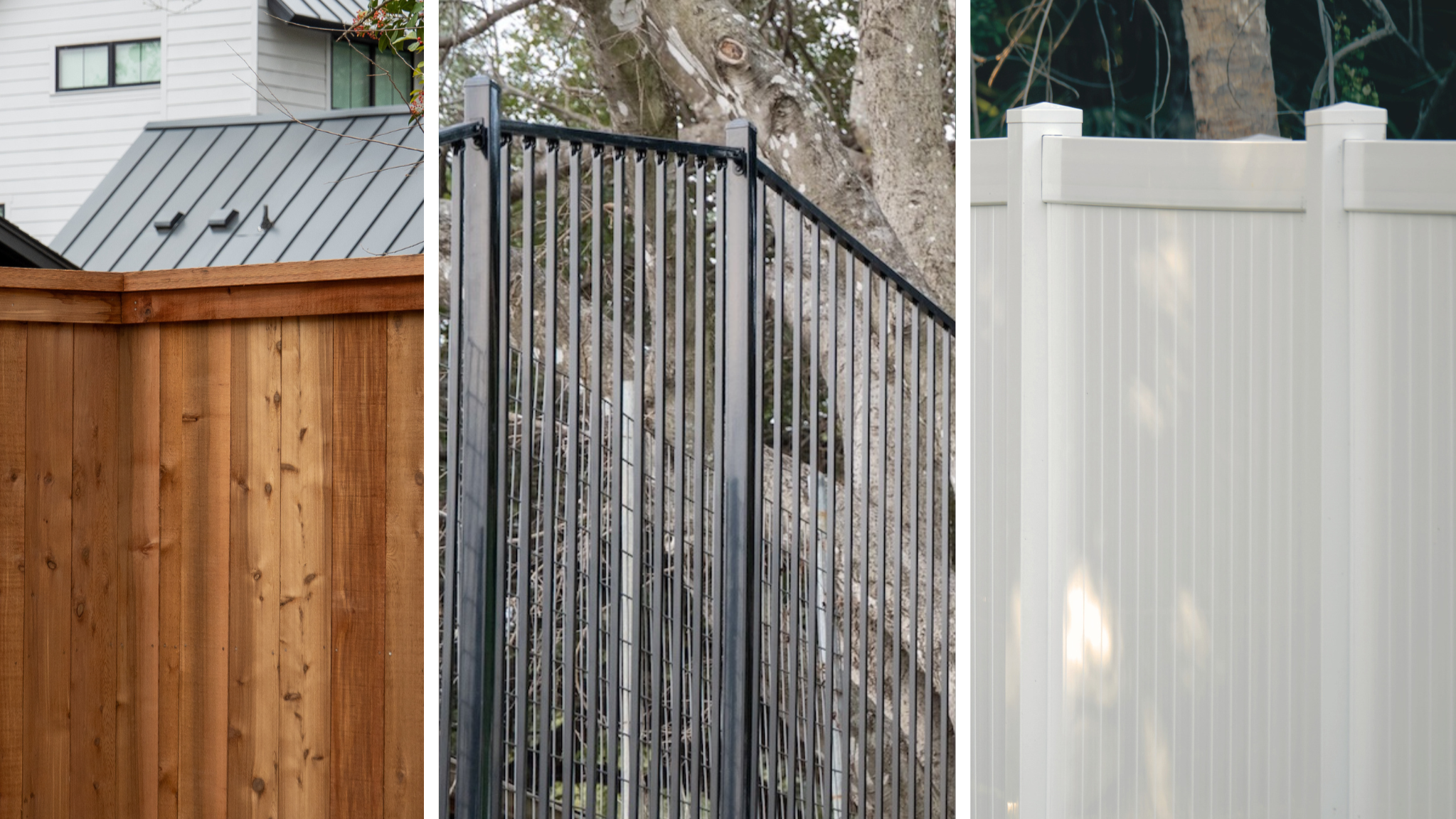
Wood, vinyl, metal, composite, concrete, or masonry—with so many options, here are some things to consider.
NOT ALL FENCES AGE THE SAME WAY
Most people focus on 2 things when picking a fence: cost and curb appeal. But it’s also important to consider how long the fence will last, how long it will look good, what maintenance it requires, and its overall environmental impact. Plus, materials react differently to sunlight, moisture, and temperature changes. And here in Austin, TX, we experience the extremes at times.
SO, WHAT ACTUALLY LASTS?
Here’s a simple breakdown to help you make a more informed choice, especially in places like Austin, where heat, sun, and soil type matter.
WOOD FENCING (10–25 YEARS)
Wood fencing can look good for around 20-25 years if it’s built right. If it’s not built well you can expect closer to 10-15 years.
“Built well” starts with using the right materials. A pretty durable way of building involves steel posts, treated pine framing (or better yet, steel if you want to get fancy), and Western Red Cedar pickets. Western Red Cedar is gorgeous and it handles Austin’s weather better than the alternatives.
The name of the game here is to keep the lumber dry and to let it dry quickly after it rains — if your fence is built flush with the ground, if vines are growing on it, or if dirt and leaves are piled against it, it won’t last as long as it should.
To get the most life out of a wood fence, it’s best to stain/seal every 3-5 years. Even with upkeep, most wood vertical and horizontal fences will need at least some repair or replacement within 20 years. When a fence is built right, individual pieces can be replaced as needed.
VINYL (PVC) FENCING (20–30 YEARS)
Vinyl stands up well to moisture and doesn’t need painting or staining. But in Austin's summers, where we regularly hit 100°+ for weeks at a time, vinyl's tendency to expand and warp is more of a real issue than the marketing materials let on. It’s easy to care for, but not perfect. In Texas, you need to choose thicker vinyl products that are supported with steel or aluminum, which prevents the vinyl from sagging in the heat.
METAL FENCING – ALUMINUM OR STEEL (20–100+ YEARS)
Depending on the thickness, metal fences last longer than most other options. Austin's wet-dry climate is actually ideal for corten steel — the seasonal rain cycles help the patina stabilize faster than in consistently humid climates. Powder-coated aluminum and steel resist rust and weather, and need very little care.
If installed well, steel fences can last for decades. Many of the custom fences and gates in Austin, TX that we install use thick mild steel and powder-coated steel. More and more of our clients are choosing corten steel for its protective rust patina that helps it last even longer.
When we weld galvanized or powder coated steel, we touch up the paint with galvanized spray. That spray will need to be touched up every 7-10 years to best match the color of the surrounding steel. With mild or corten steel, there’s no paint involved, and no maintenance needed.
COMPOSITE FENCING (25–35 YEARS)
Composite mixes wood fibers with plastic, so it looks like wood but needs less care. It resists rot and insects, making it a good choice for the medium to long term. When building with composite, it’s important to set posts deep so the fence looks good throughout its lifespan.
PRE-CAST CONCRETE FENCING (30–50+ YEARS)
Concrete lasts a long time and withstands harsh weather with minimal upkeep. But it’s heavy, costs more, and isn’t always the best or most attractive option for homes.
MASONRY WALL (50-100+ YEARS)
The Hill Country limestone that shows up naturally in a lot of West Austin yards pairs beautifully with masonry walls, and some of our best projects have used it. It’s also no surprise that historic Austin area homes often have rock walls and iron fencing. With good drainage and a solid foundation, masonry walls can last a very long time. Although, it’s not uncommon for cracks or mortar joints to need repairing from time to time since the Austin area is prone to shifting soil.
WHAT ABOUT THE ENVIRONMENTAL COST?
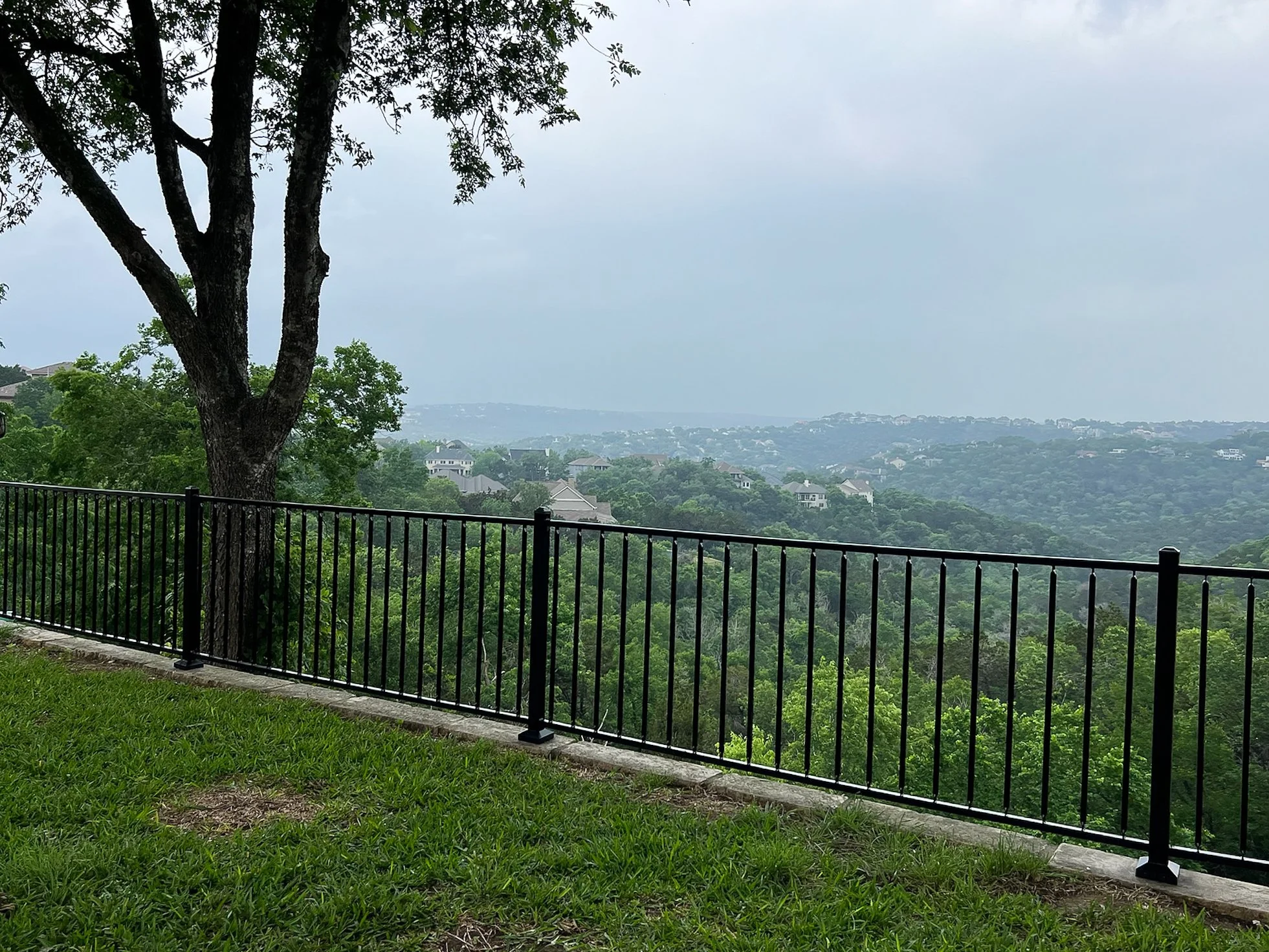
To understand environmental impact, you need to look at the whole lifecycle: raw materials, manufacturing, maintenance, and disposal. Generally speaking, the longer a fence lasts, the less impact it has over time. Replacing a fence twice in 30 years often costs more overall, in both money and environmental impact, than choosing a longer-lasting material from the start.
WOOD FENCING
Wood is renewable, especially if it’s sourced responsibly. But many fences use pressure-treated wood, such as pine, which has chemicals that can get into the soil. However, these tend to be durable and cost-effective, which is why many people opt for them. Regular staining and sealing also contribute to the long-term environmental impact, though options like low-VOC stain or the SUGI burn method have a lower impact.
VINYL (PVC) FENCING
Vinyl is made from petroleum and chlorine-based chemicals. Making it uses a lot of energy, and even though it lasts a long time, it doesn’t break down naturally. There are some recycling options, but most vinyl still ends up in landfills.
METAL FENCING
Metal production requires more energy due to mining and manufacturing. But it’s fully recyclable and often already made from recycled materials. Since it lasts so long, it usually has one of the lowest environmental impacts over its life.
COMPOSITE FENCING
Composite fencing often uses recycled materials, which is good. But since it mixes wood and plastic, it’s hard to recycle when it’s old. In terms of sustainability, it’s somewhere in the middle.
CONCRETE FENCING
Concrete has the highest environmental cost at the start. Producing cement generates significant carbon emissions worldwide.
MASONRY WALLS
Similar to concrete, masonry has a higher environmental cost at the start due to cement production and transportation of such heavy materials. However, because it can last so long, with little repair or replacement, it has a lower long-term material use.
SO, WHAT’S THE “BEST” OPTION?
There really isn’t a single “best” answer. The right fence depends on what matters most to you. But let’s break it down by the pros.
BEST:
Long-term environmental choice: Metal (especially steel)
Natural option: Sustainably sourced wood (such as untreated FSC-certified cedar)
Longevity: Metal, concrete, or masonry
Price: Usually wood
Ultimately, there doesn’t have to be a single best answer, and we often build with a mix of materials such as steel posts and cedar pickets. If you're still not sure where to land, that's what the quote conversation is for. We've installed wood, cedar, corten steel, iron, and masonry fences across Austin for nearly 20 years — from Cedar Park down to South Congress — and we're pretty good at helping people figure out what actually makes sense for their yard, their budget, and how they want it to look in 10 years. Reach out and let's talk through it.