
WHAT IS FENCE PICKET PLANING? (AND WHY IT MAKES A DIFFERENCE)
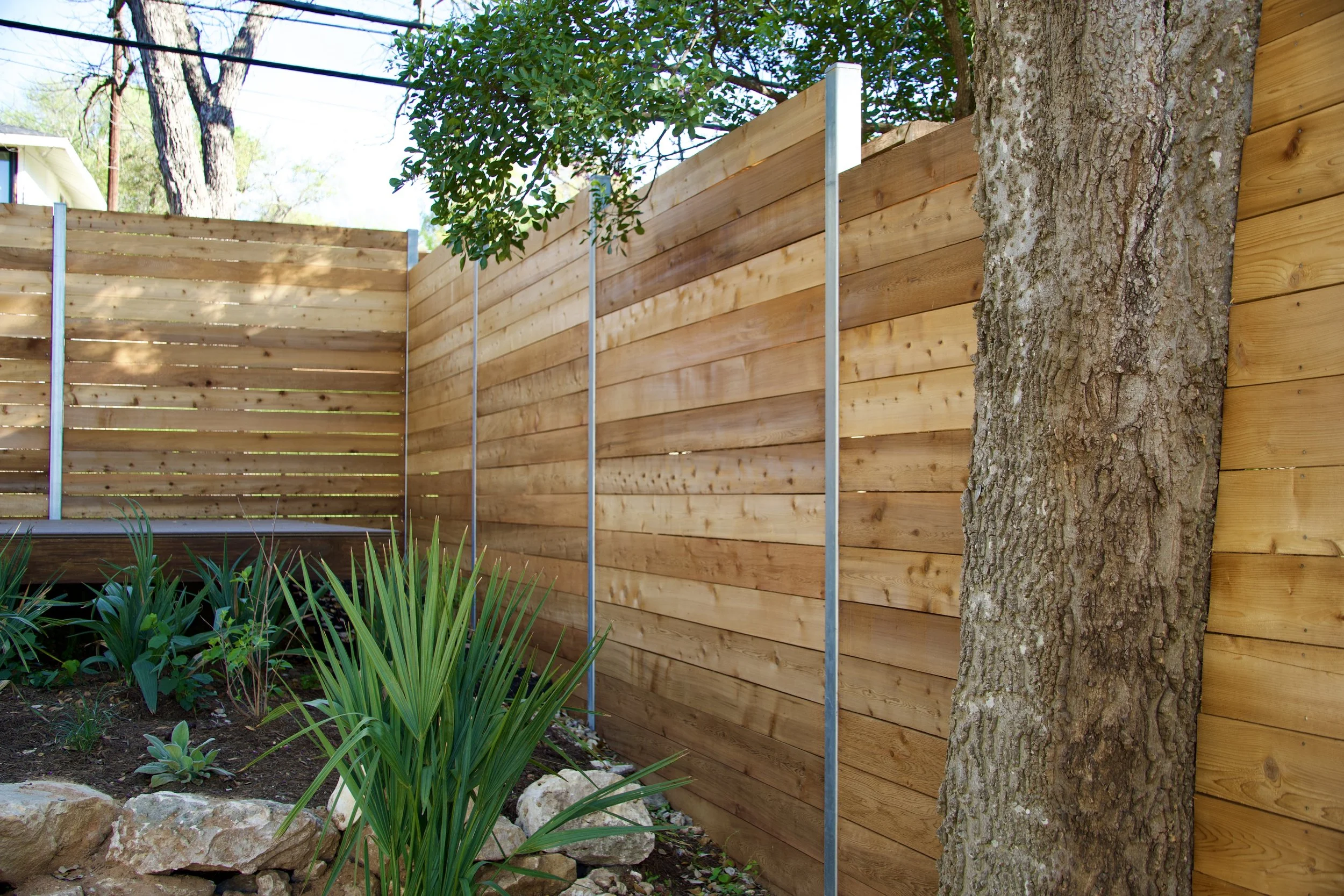
Project managed personally by Paragon’s owner prior to forming Paragon.
If you’ve ever run your hand across a standard cedar fence picket, you probably noticed it feels a little rough. That’s because most fence pickets come straight from the mill with a “rough-sawn” finish. It’s completely normal—and for most projects, it works just fine.
But every now and then, a homeowner wants something cleaner. Smoother. More refined.
That’s where fence picket planing comes in.
We’ll walk you through what it is, why some homeowners in Austin are choosing it, and why you don’t see it offered very often.
what is fence picket planing?
Planing is the process of running a wood picket through a planer machine to shave off a thin layer of the surface. That process:
Smooths out the rough mill texture
Creates a more consistent thickness
Removes small surface imperfections
Produces a cleaner, more finished look
If you want smooth pickets for your fence, this is the way to do it.
Most cedar fence pickets (including Western Red Cedar) are sold rough-sawn because that’s the way they come from the lumber mills. Planing adds an extra step.
And that extra step makes a noticeable difference.
why do homeowners choose planed fence pickets?
Here in Austin, we install a lot of cedar privacy fences and horizontal fences. When someone asks about smooth pickets, it’s usually for one of these reasons:
1. they want a smoother, more modern look
Planed pickets have a cleaner face. On a horizontal fence especially, that smooth surface creates crisp lines and a more contemporary appearance.
If you're going for that “architectural” feel instead of rustic ranch-style, planing helps get you there.
With smooth pickets, we can also achieve a different look with our stain and sealer. Some clients choose smooth lumber so they can put a slight sheen on the finish - our favorite to use for this purpose is Sikkens Log and Siding.
2. they want higher-quality aesthetic
The available smooth Western Red Cedar pickets typically have one smooth side and one rough side. The rough side is the one the lumber yards look at to grade the lumber. It’s their expectation the smooth side will be used as the “back” side of the picket, so it’s not prioritized in their quality standards.
3. fewer splinters
If you’ve got kids, smoother boards can be a plus.
Rough-sawn cedar can have raised fibers, which can occasionally lead to splinters. It’s not common, and we generally recommend not rubbing your face across your fence, but kids are going to do what kids do. Planing knocks potential splinters down significantly.
why don’t many fence companies offer planing?
Simple answer: It takes time and special equipment.
Planing pickets isn’t a quick add-on. Every single board has to be:
Sorted
Fed through the planer
Checked for consistency
Stacked properly to prevent warping
When you’re installing 300–500 pickets on a typical privacy fence in Cedar Park or South Austin, that’s a serious time investment.
Most fence companies focus on installation efficiency. Planing slows the process down, and it’s much easier to simply say “We don’t offer that.” We want our clients to be able to achieve the finish they want, and we’re willing to do what it takes to make that happen.
what about pre-planed pickets from suppliers?
Prior to 2021, there was nice smooth Western Red Cedar lumber available in our area. Since then, we haven’t found an available option we like.
Far too much of the smooth 3/4” lumber has had insect damage, dry rot, or still had a slightly rough texture.
For the smooth 1” lumber (called 5/4” lumber, typically used for decking), lumber quality has also diminished since 2021. These 1” boards also tend to be very white, indicating they come from the sapwood portion of the tree, which doesn’t have as much natural rot resistance. Even though it’s thicker (and higher cost), we’ve found it doesn’t last nearly as long as quality 3/4” lumber.
So instead of compromising on aesthetics or durability, we made the decision to plane high-quality Western Red Cedar ourselves.
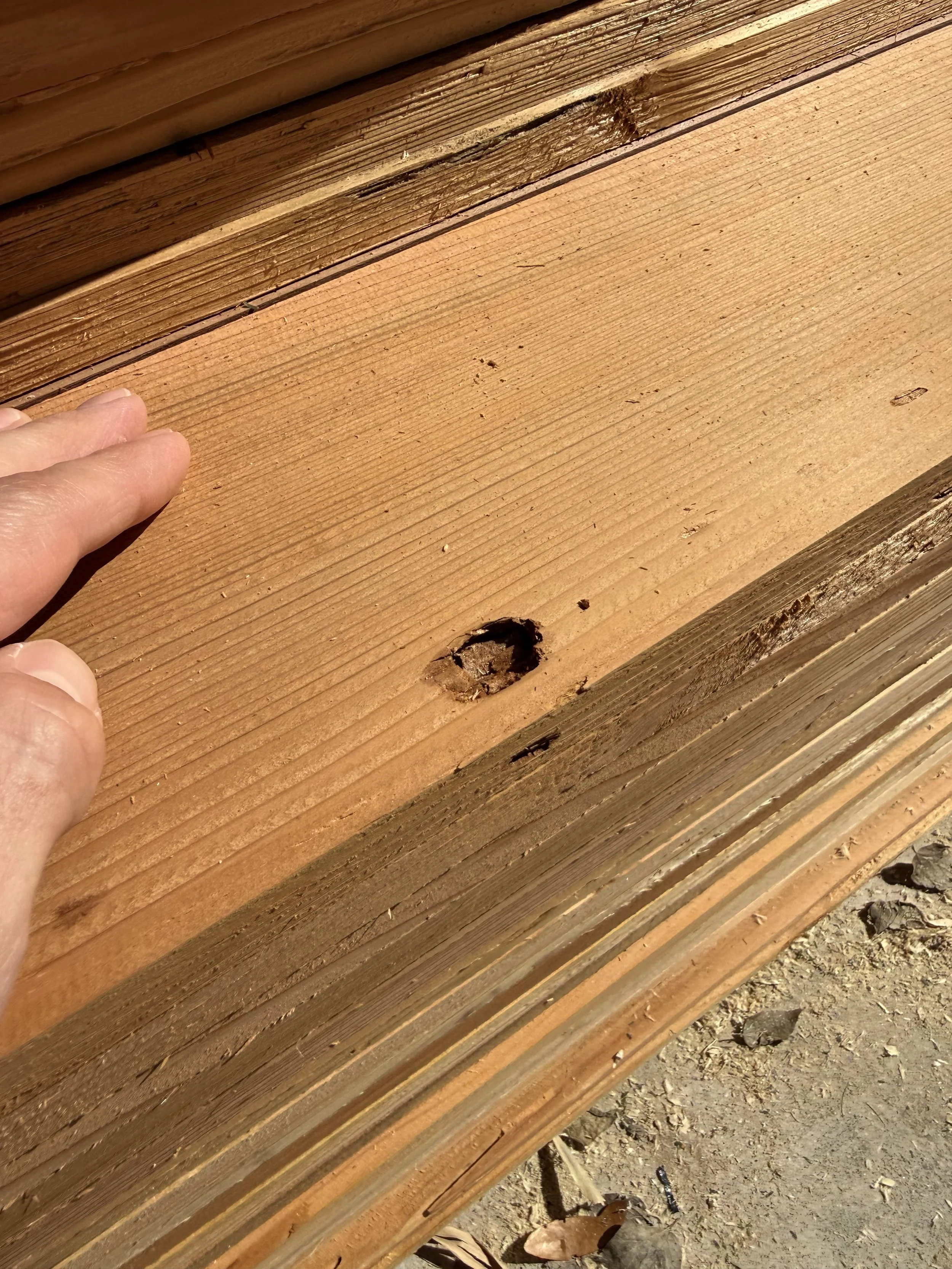
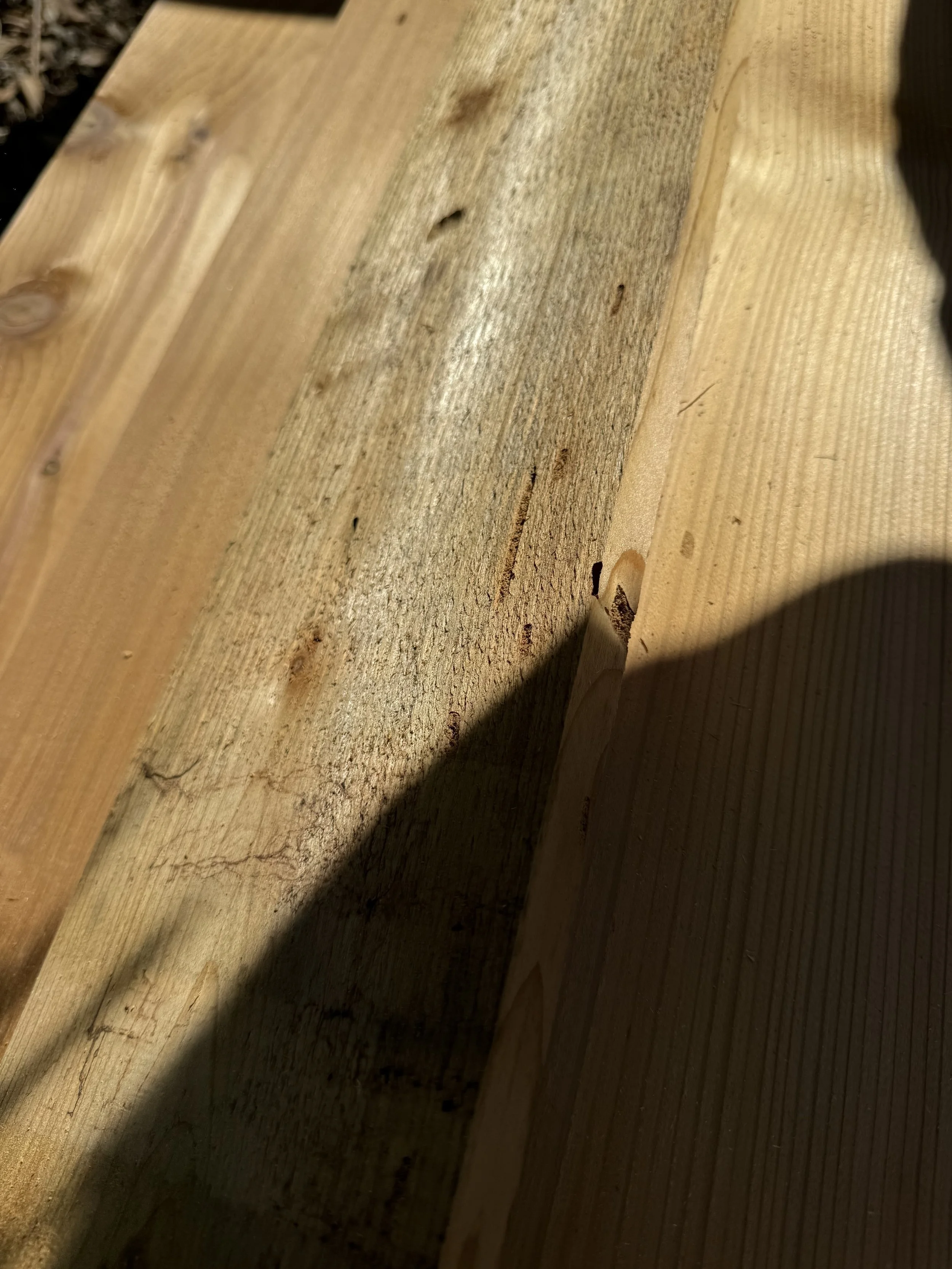
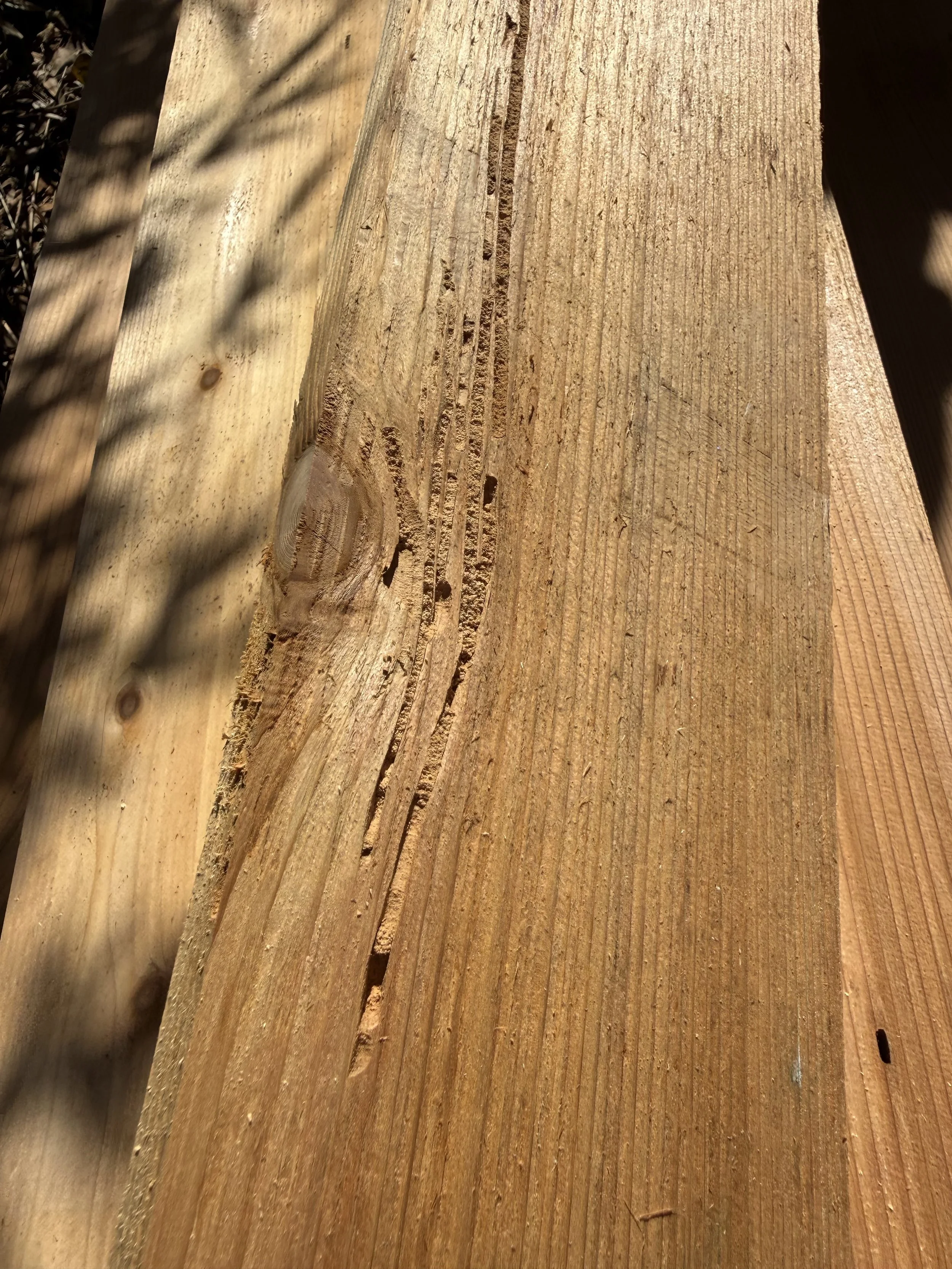
why we started planing pickets in-house
After running into quality issues with available smooth lumber, we decided to control the process ourselves.
When we plane pickets at Paragon Fence:
We select higher-grade Western Red Cedar
We control how much material is removed
We inspect every board
We maintain thickness consistency across the entire fence
It’s more work. No question.
But it allows us to deliver a smoother cedar fence that still maintains strength and structural integrity.
And for certain projects—especially modern horizontal fences—it’s worth it.
is planing right for every fence?
Not necessarily.
Rough-sawn cedar can also be gorgeous. Rough lumber absorbs stain well, looks natural, and is perfectly functional for most standard privacy fences in Austin neighborhoods.
Planed pickets are ideal if:
You’re building a modern horizontal fence
You want a sleek, clean finish
You want a satin sheen to your stain
The fence is a focal design feature of your yard
You’re matching smooth-lumber on other design aspects of your home
You prefer a refined look over rustic texture
If your goal is purely functional backyard privacy, rough cedar may make more sense and save cost.
how planing impacts fence cost
Because planing is labor-intensive, it does increase the cost of a project.
The added expense comes from:
Shop time
Labor
Equipment use
Slower installation timelines
Essentially, you’re paying for extra preparation time before that fence ever shows up in your yard.
how planed cedar performs in austin weather
Austin heat, UV exposure, and seasonal moisture swings are tough on fences.
Planing does not negatively impact durability when done properly. In fact:
Even stain coverage helps protect the wood
Smoother surfaces shed water more predictably
Consistent thickness improves overall visual uniformity over time
The key is not over-planing. Removing too much material weakens the board. That’s why controlling the process matters.
final thoughts: is it worth it?
Fence picket planing is one of those details that most people don’t know exists—until they see the difference side-by-side. If you’re investing in a cedar privacy fence, horizontal fence, or modern fence design in Austin, it’s worth asking about.
It’s not necessary for every project. But when you want that smoother, more finished appearance, it can elevate the entire look of your yard. And since we haven’t found a supplier that meets our standards, we’re happy to do the extra work in-house when a project calls for it.
If you’re curious whether planed pickets make sense for your fence project, reach out. We’re always happy to walk through options and explain the pros and cons so you can make the right call for your space.
Contact Paragon Fence & Outdoor, and let’s build something you’ll be proud to look at every time you step outside.